

Maddy summaryThis bill extends the exclusivity period for certain advanced drugs from 7 to 11 years. It defines "advanced drug product" as a drug using genetically targeted technology to modulate gene function (e.g., suppress or activate genes). This change directly affects pharmaceutical companies developing these specific advanced therapies by granting them longer market exclusivity. The policy change modifies the Social Security Act to provide extended protection for these innovative drugs, allowing companies more time to recoup research and development costs.
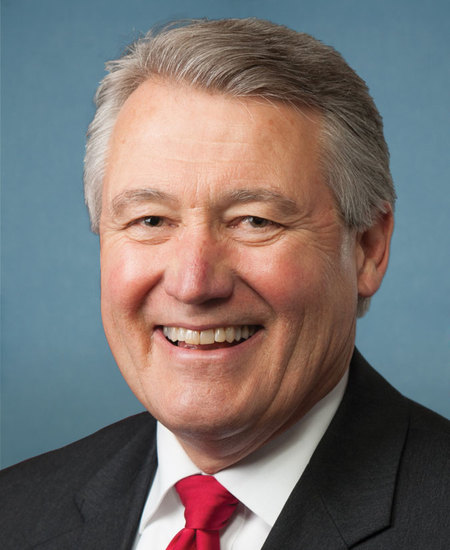
Rep. Rick W. Allen
Sponsored bills
Maddy summaryHR 1649, the Expanding Student Access to Mental Health Services Act, amends the Elementary and Secondary Education Act to allow states and school districts to use existing federal funds for student mental health services. It directs states to support mental health by identifying best practices for mental health first aid, establishing school emergency response teams, coordinating with local health providers, and expanding telehealth access. School districts must now specify how they will use funds for these mental health activities in their grant applications. The bill also permits schools to use technology infrastructure for mental health services without counting against separate technology funding limits.
Maddy summaryHR 1707, the Grown in America Act of 2025, creates a new tax credit for agricultural businesses that use predominantly domestically produced inputs. The credit equals 25% of a business's domestic agricultural input costs (capped at $100 million annually), but only if the business meets a 3-year average threshold for domestic sourcing (starting at 50% in 2026 and rising to 85% after 2033). It directly affects food and agricultural producers who source inputs like crops or fish raised in the U.S. for products sold domestically without further processing. The bill defines "domestic agricultural input costs" as expenses for U.S.-produced commodities used in U.S.-made food products, excluding certain commodities listed by the Secretary of Agriculture.
Maddy summaryHR 1651 would nullify a specific Environmental Protection Agency (EPA) rule finalized on May 9, 2024. This rule established emissions standards for greenhouse gases from new, modified, and reconstructed fossil fuel power plants, set guidelines for existing plants, and repealed the previous "Affordable Clean Energy Rule." The bill would make this EPA rule unenforceable, directly affecting fossil fuel power plants by removing these federal emissions requirements. It does not create new regulations but cancels an existing EPA rule.
Maddy summaryHRES 166 is a non-binding House resolution expressing U.S. support for the Iranian people's desire for a democratic, secular, and nonnuclear republic. It condemns the Iranian regime's terrorism, regional proxy wars, internal suppression of ethnic and religious minorities, and human rights abuses - including executions and repression of women-led protests. The resolution calls for holding the regime accountable through sanctions, supports the Ten-Point Plan for Iran’s democratic transition, and urges protection for Iranian political refugees in Albania. It does not create new laws but affirms U.S. policy alignment with Iranian protesters' demands.
Maddy summaryThis bill awards a Congressional Gold Medal to the 761st Tank Battalion (known as the "Black Panthers"), the first predominantly Black armored unit in World War II's European Theater. It recognizes their combat service from 1944-1946, including key roles in the Battle of the Bulge and breaking the Siegfried Line, despite facing racial prejudice during and after the war. The medal will be displayed at the National Museum of African American History and Culture, with bronze duplicates available for sale to cover costs. The bill commemorates the battalion's 130,000 enemy casualties inflicted, 50% casualty rate, and their 1978 Presidential Unit Citation. It does not create new laws or affect current policies.
Maddy summaryHR 1575, the "No American Land for Communist China Act," prohibits the People's Republic of China government and businesses with 25% or more Chinese government ownership from purchasing real estate adjacent to specific federal lands. The bill directly affects Chinese government agents and Chinese-affiliated businesses seeking to buy property near lands managed by the Departments of Interior, Defense, Agriculture (Forest Service), and Energy, as well as Indian country. Key provisions require the President to take necessary actions to block such purchases, defining "covered Federal lands" broadly to include national parks, military bases, and tribal lands. The law aims to prevent foreign government influence over land near sensitive U.S. properties through a clear purchase restriction.
Maddy summaryHRES 144 is a symbolic House resolution designating March 2025 as "National March into Literacy Month." It expresses the House's support for raising public awareness about literacy, encouraging parents, schools, and communities to promote reading during that month. The resolution does not create new laws, allocate funding, or directly affect any individuals or organizations. It focuses solely on recognizing the importance of literacy through awareness efforts, with no concrete policy changes.
Maddy summaryHR 1502 authorizes the creation of a Congressional Gold Medal to honor the volunteers and communities (primarily from Nebraska, Colorado, and Kansas) who supported the North Platte Canteen during World War II. The bill directs the Treasury Secretary to design and strike the medal, which will be presented to the individuals who contributed to the canteen’s operations and then permanently displayed at the Lincoln County Historical Museum in North Platte, Nebraska. It also permits the sale of bronze duplicates to cover production costs, with proceeds going to the U.S. Mint. This is a commemorative measure recognizing historical service, not a policy change affecting current laws or programs.
Maddy summaryThis bill prohibits U.S. government funds from being used to support organizations (both foreign and domestic) that provide, promote, or fund abortion services abroad, including referrals, counseling, or training related to abortions. It directly affects foreign NGOs, multilateral organizations, and domestic groups receiving U.S. aid if they perform or support such activities, even within programs funded by the U.S. government. The restriction includes all forms of financial support and co-location of abortion services with other funded programs, with exceptions only for abortions resulting from rape or incest, or when the mother's life is endangered. This policy change alters how U.S. foreign aid is allocated to ensure funds do not support abortion-related services.