

Maddy summaryHJRES 35 is a congressional resolution disapproving an Environmental Protection Agency (EPA) rule that established procedures for emissions charges on petroleum and natural gas systems. Specifically, it targets the EPA’s November 2024 rule titled "Waste Emissions Charge for Petroleum and Natural Gas Systems: Procedures for Facilitating Compliance, Including Netting and Exemptions," which would have required companies to pay fees based on emissions. The resolution, passed by both chambers in February 2025, nullifies the rule, preventing it from taking effect. This directly affects oil and gas companies subject to the EPA’s emissions regulations, removing a specific compliance mechanism they would have faced.
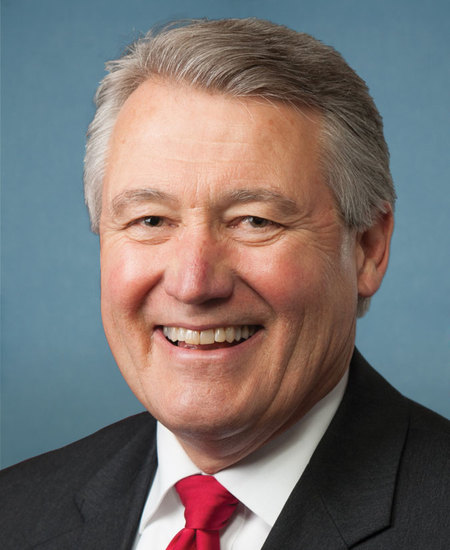
Rep. Rick W. Allen
Sponsored bills
Maddy summaryHRES 226 is a ceremonial resolution commemorating Delta Air Lines' 100th anniversary, marking the centennial of its founding on March 2, 1925. It recognizes Delta's history as the first U.S. airline to reach 100 years (originally as Huff Daland Dusters, an aerial crop-dusting company) and highlights its current scale, including 100,000 employees, 5,000 daily flights, and global connectivity. The resolution contains no policy changes or binding provisions - it simply expresses the House's recognition of Delta's milestone and its role in connecting people and supporting communities. As a commemorative resolution, it does not affect any individuals, businesses, or regulations.
Maddy summaryHR 2099 amends the Workforce Innovation and Opportunity Act to require a three-year federal study on entrepreneurial skills development programs. The study will review specific outcomes, including successful program practices, mentoring approaches, economic impacts on communities, business development results, participant earnings, and how programs identify participant readiness. This bill directly affects the Department of Labor, which must conduct the study through grants or contracts. It does not create new programs but mandates research to inform future state and local efforts supporting entrepreneurship. The bill’s key provision is the detailed study framework outlined in Section 169(b)(4)(K), covering 11 specific review areas.
Maddy summaryThe FOCA Act of 2025 prohibits federal agencies from requiring or banning contractors from using union agreements in construction project bids or contracts. It directly affects federal agencies, contractors, and subcontractors working on federally funded or assisted construction projects (like buildings or infrastructure). The law requires bid documents to not favor or penalize contractors based on whether they have union agreements, aiming to promote open competition and prevent discrimination. This changes how agencies structure bids but does not affect union agreements themselves. The bill applies to all new contracts and subcontracts after enactment, with limited exemptions only for public health/safety emergencies or national security.
Maddy summaryThe Credit for Caring Act of 2025 creates a federal tax credit for family caregivers of elderly or disabled relatives. It allows eligible caregivers (with over $7,500 in earned income) to claim a credit equal to 30% of qualified caregiving expenses exceeding $2,000, capped at $5,000 per year. Qualified expenses include human assistance, home modifications, respite care, counseling, lost wages for unpaid time off, and transportation, all requiring certification from a licensed healthcare provider that the care recipient has long-term needs. The credit phases out for higher earners (over $75,000 single/$150,000 joint) and requires documentation of expenses and care recipient certification.
Maddy summaryHR 1975, the BEAD FEE Act of 2025, sets new rules for fees charged by local governments or entities receiving federal broadband grant funds (BEAD Program). It prohibits these entities from charging fees for broadband infrastructure placement, construction, or modification unless fees are competitively neutral, publicly disclosed, based solely on actual costs (like review processing or repairs), and clearly categorized as recurring or nonrecurring. The bill directly affects local governments and political subdivisions managing rights-of-way when they receive BEAD grant funds. It aims to prevent arbitrary fees and ensure transparency in cost calculations for broadband deployment projects.
Maddy summaryThe SPEED for BEAD Act (HR 1870) amends the federal broadband deployment program (BEAD) to accelerate network expansion. It defines "gigabit-level broadband" as 1,000 Mbps download speeds, requires unused funds to be returned to the Treasury instead of reallocated, and allows states to remove high-cost locations from project areas. The bill prohibits grant conditions related to labor practices (e.g., union requirements), diversity initiatives, climate policies, or network management rules, while ensuring all broadband technologies meeting speed standards are eligible. It also explicitly bans government regulation of broadband pricing, directly affecting states administering BEAD funds and the internet providers they fund.
Maddy summaryHR 1873, the Broadband Grant Tax Treatment Act, excludes certain federal broadband grants from taxable income for recipients. It directly affects entities (like internet providers or local governments) receiving qualifying grants under specific programs, including the Broadband Equity, Access, and Deployment Program and State Digital Equity Capacity Grants established by the Infrastructure Investment and Jobs Act. The bill prevents double tax benefits by disallowing deductions for expenses covered by these excluded grants and reduces the adjusted basis of related property. This change applies to grants received in taxable years ending after March 11, 2023.
Maddy summaryHR 1772 designates English as the official language of the United States federal government, requiring all official government functions (like laws, regulations, and public proceedings) to be conducted in English. It directly affects federal agencies, naturalization processes (mandating English ceremonies and language standards for new citizens), and government communications. Key exceptions include language teaching, disability education, national security needs, census activities, and protections for Native American languages under existing law. The bill does not restrict the use of other languages in private settings or ban bilingual services for essential government functions. It amends U.S. Code to establish these requirements, with implementation set for 180 days after enactment.
Maddy summaryThe New Health Options Act of 2025 establishes a federal reinsurance program to lower premiums for certain individual health insurance plans. It provides payments to insurers covering "eligible individuals" enrolled in specific off-Exchange plans, with a $110,000 attachment point and 90% coverage up to $300,000 per claim, funded by $50 per member-month (capped at $6 billion annually). The bill also allows insurers to opt out of the standard risk pool (affecting how premiums are calculated) and removes limits on age-based premium variations for some plans, while maintaining a 3:1 age ratio for others. Additionally, it requires insurers to apply out-of-network costs to deductibles and mandates health care providers to disclose price comparisons for covered services.