Maddy summaryThis bill amends the Infrastructure Investment and Jobs Act to require the federal Broadband Equity, Access, and Deployment Program to comply with the Freedom of Information Act (FOIA). It allows the public to request government records about how broadband funding is allocated and spent, increasing transparency. This directly affects agencies like the Federal Communications Commission (FCC) managing the program and enables citizens to access information on federal broadband spending decisions. The change removes prior exemptions from FOIA requirements for this specific program.
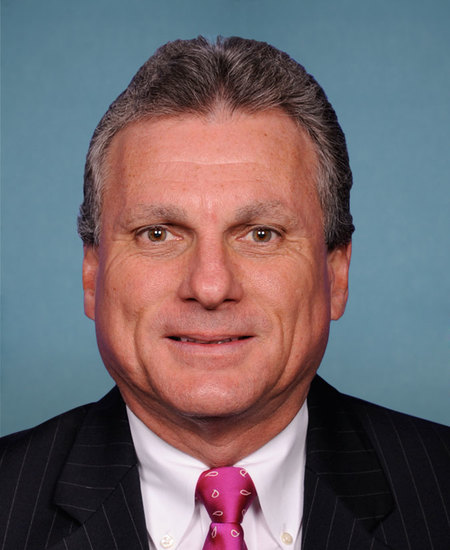
Rep. Earl L. "Buddy" Carter
Sponsored bills
Maddy summaryThe Child Online Safety Modernization Act of 2023 updates federal law to replace "child pornography" with "child sexual abuse material" across numerous statutes and legal definitions. It modernizes the CyberTipline reporting system to better identify and locate minors involved in cases of child sexual abuse material. The bill makes technical amendments to ensure consistent terminology in legal proceedings related to online child exploitation. These changes aim to improve law enforcement effectiveness in addressing online child sexual exploitation while maintaining legal clarity.
This resolution expresses support for the designation of Indian Independence Day: A National Day of Celebration of World's Two Largest Democracies. Further, the resolution acknowledges the contributions of Americans of Indian descent to society in the United States.
Maddy summaryHR 5130, the "Finish It Act," requires the Department of Defense to use stored border wall construction materials (valued at approximately $300 million) for building permanent barriers along the U.S.-Mexico border within 30 days of the bill's enactment. It mandates that states receiving materials certify they will use them exclusively for border barriers, with penalties for unused materials (requiring repayment of the original cost) and imposes a 1% budget cut for every two days of delay in implementation. The bill also demands a detailed report from the Department of Defense within 90 days, including internal communications about storage costs and contracts with private landowners. This legislation directly affects the Department of Defense and border states, focusing on redirecting existing resources rather than creating new funding or construction.
Maddy summaryThe Forest Data Modernization Act of 2023 updates the U.S. Forest Service's national forest inventory program to improve data collection on forest resources, with specific focus on forest carbon. It mandates new surveys of timber products and woodland owners, standardizes definitions for forest data reporting, and requires the Forest Service to develop a strategic plan every five years integrating remote sensing technology and carbon data (including soil carbon). The bill ensures collected data is publicly accessible while protecting the confidentiality of individual landowners' non-aggregated information. These changes aim to enhance the accuracy of forest resource tracking for management and policy decisions across public and private lands.
This resolution condemns Iran for the 1988 massacre of political prisoners. It also urges the Biden Administration and U.S. allies to publicly condemn the massacre and to pressure Iran to provide information to the families of the victims.
Critical Mineral Access Act This bill authorizes the U.S. International Development Finance Corporation (DFC) to provide support to high-income economy countries for developing or processing certain critical materials (such as aluminum, chromium, and rare earth elements). The support must further U.S. national security interests. For the purposes of this support, a high-income economy country is one classified as such by the International Bank for Reconstruction and Development and the International Development Association (two World Bank Group institutions). Under current law, the DFC generally prioritizes facilitating private investment in less-developed countries and countries transitioning to market economies to advance U.S. foreign policy interests.
Maddy summaryThis bill directs the U.S. Treasury to mint commemorative coins marking the Marine Corps' 250th anniversary in 2025. It authorizes three coin types: $5 gold coins (max 50,000), $1 silver coins (max 400,000), and half-dollar coins (max 750,000), with surcharges of $35, $10, and $5 respectively. The surcharge proceeds will fund the Marine Corps Heritage Center's educational programs, with no net cost to taxpayers as the Treasury must recover all minting costs through the surcharges. The coins can only be issued during 2025, and the Treasury must ensure all costs are covered before distributing funds to the Heritage Foundation.
Stop China’s Continuous Purchase of Land Act or the Stop CCP Land Act This bill requires states that receive certain federal program funds to restrict the purchase of agricultural land by a covered foreign country. Covered foreign country means a country included in Department of State regulations as subject to certain prohibitions (i.e., Belarus, Burma, China, Cuba, Iran, North Korea, Syria, and Venezuela), as well as Russia. Specifically, a state may not receive funds for certain programs funded by the Inflation Reduction Act of 2022 (e.g., certain energy efficiency and conservation programs) unless that state has a law prohibiting a covered foreign country (or persons acting on behalf of the country) from purchasing agricultural land in the state. Further, a state must require that a person from a covered foreign country that holds agricultural land in the state prior to the state law's enactment submit an annual report to the state on the agricultural holdings. The Department of Agriculture must submit a report to Congress on how the Agricultural Foreign Investment Disclosure Act of 1978 should be updated to ensure accurate documentation and monitoring of foreign investment in agricultural land. The Government Accountability Office must submit a report to Congress that includes (1) an assessment of this bill's impact on national security, and (2) any measures that can be taken to better secure U.S. real estate from foreign manipulation.

Maddy summaryThis bill creates two tax credits to support local media and small businesses. It provides a credit for small businesses (under 50 full-time employees) that advertise in qualifying local newspapers or broadcast stations, covering 80% of first-year ad costs up to $5,000 and 50% of subsequent-year costs up to $2,500. It also establishes a payroll tax credit for employers hiring local news journalists, covering 50% of wages for the first four quarters (capped at $12,500 per journalist) and 30% thereafter, with a maximum of 1,500 journalists per employer. Both credits expire after five years and require strict definitions of "local media" (e.g., publishers with local journalists and community focus) to prevent misuse.