

Maddy summaryThis non-binding resolution expresses the House's support for in vitro fertilization (IVF) access, noting that 19% of women in the U.S. face infertility challenges. It states IVF is necessary for those unable to conceive naturally, emphasizes policies enabling family growth, and recognizes "life is precious." The resolution does not create new laws or change regulations but symbolically affirms the House's position on IVF as a vital medical option for individuals struggling with infertility. It was introduced by Rep. Chavez-DeRemer and others on February 29, 2024.
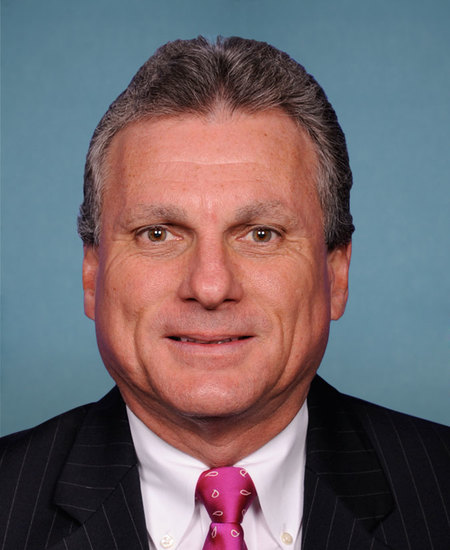
Rep. Earl L. "Buddy" Carter
Sponsored bills
Maddy summaryHR 7563, the Food Traceability Enhancement Act, modifies FDA food safety rules to ease requirements for certain businesses. It shortens recordkeeping periods from 2 to 1 year and exempts restaurants, retail food establishments, and warehouses from maintaining or sharing traceability lot code information. The bill mandates 9 pilot projects testing outbreak investigations without lot codes and evaluating low-cost tracing technologies, with specific sector and commodity diversity requirements. It delays compliance for existing traceability rules until 2 years after the pilots conclude, and requires a report on FDA information-sharing barriers with food businesses.
Maddy summaryHR 7577, the CHEERS Act, creates a new tax deduction for restaurants, bars, and entertainment venues by expanding eligibility under the energy efficiency tax code (Section 179D). It defines "qualified energy-efficient draft property" as stainless steel or aluminum containers and tap equipment used for alcohol distribution in these businesses, treating them as eligible for the existing energy efficiency tax deduction. This change applies to equipment placed in service after the bill's enactment date, directly benefiting hospitality businesses that own or lease such equipment. The provision modifies existing tax code language without creating new tax rates or altering other regulations.
Maddy summaryThe Immigration Detainer Enforcement Act of 2024 requires state and local law enforcement agencies to hold individuals for up to 48 hours if the Department of Homeland Security (DHS) issues a detainer, primarily targeting people with criminal records who may be removable from the U.S. It mandates that local agencies share immigration status information with DHS and provides federal funding to states that detain qualifying criminal aliens - defined as those convicted of felonies or multiple misdemeanors who entered without inspection or violated visa status. States failing to comply with detainer requests risk losing priority for federal law enforcement grants and equipment. The bill allocates $750 million for 2024 to cover detention costs for these individuals, with annual funding increasing through 2030.
Maddy summaryThis bill reauthorizes the Preventing Maternal Deaths program through 2028, extending existing provisions under the Public Health Service Act. It requires maternal mortality review committees to include obstetricians and gynecologists and improves death certificate accuracy by directing coordination with death certifiers. The Centers for Disease Control and Prevention must annually share evidence-based best practices for preventing maternal mortality with hospitals, state health groups, and perinatal quality collaboratives. The changes directly affect state maternal mortality review committees, healthcare providers, and hospitals receiving CDC guidance. The bill does not create new funding but extends the current program's authorization period from 2019-2023 to 2024-2028.
Maddy summaryHRES 1053 is a non-binding House resolution reaffirming the U.S.-Canada partnership, not a legislative bill with new policy provisions. It states that the U.S. House of Representatives recognizes the strategic importance of the relationship, citing existing economic ties (e.g., $1.3 trillion in bilateral trade in 2022 supporting 7.5 million U.S. jobs) and security cooperation (including NORAD, border security programs, and shared climate efforts). The resolution emphasizes mutual dependence in areas like energy security, supply chains, and defense, but does not create new obligations or funding. It serves as a symbolic statement of support for the existing partnership, referencing established frameworks like USMCA and joint climate initiatives. As a resolution, it has no legal effect on policy or operations.
Maddy summaryHR 7361, the Flowers for Fallen Heroes Act of 2024, requires the American Battle Monuments Commission to establish a low-cost program allowing the public to order flowers for military gravesites at Commission-managed cemeteries. The bill mandates the Commission to partner with third-party florists (without excess fees) and create a user-friendly website and phone system for ordering by one year after enactment. It also authorizes credit card and electronic payment processing for these orders, with customers responsible for any third-party processing fees, and requires annual reports to Congress detailing program implementation, including order data and florist engagement. This bill directly affects the public seeking to honor fallen service members and the Commission’s operations at 25 overseas military cemeteries.
Maddy summaryHR 7455, the Sunset Act of 2024, requires federal agencies to automatically expire significant rules after 10 years unless Congress passes a new law extending them. Agencies must submit reports 180 days before expiration, and Congress can extend rules via joint resolution within 3 legislative days of receiving the report. The bill also mandates annual reviews of 10% of active agency rules for 9 years, with rules not extended by Congress after the 10-year period expiring. It applies to all major agency rules (e.g., environmental or safety regulations) and includes limited presidential exemptions for emergencies, but does not affect existing rules already in effect.
Maddy summaryHR 7450, the Protecting Privacy in Purchases Act, prohibits payment card networks and covered entities (like payment processors) from requiring or assigning merchant category codes that specifically identify firearms retailers as different from general stores or sporting goods retailers. This directly affects firearms retailers and payment networks by preventing them from using business classification codes that could flag firearm sales. The bill establishes an enforcement process where the Attorney General investigates complaints, issues remediation notices, and can seek court injunctions for non-compliance, while preempting state or local laws on this issue. It does not create private lawsuits for individuals.
Maddy summaryHR 7384, the Creating Hope Reauthorization Act of 2024, extends the deadline for issuing priority review vouchers to pharmaceutical companies developing treatments for rare pediatric diseases. The bill amends the Federal Food, Drug, and Cosmetic Act to push the program’s expiration from 2024 to 2028 and adjusts another related deadline to 2030. This directly affects drug manufacturers seeking faster FDA review for new treatments targeting rare childhood illnesses. The extension ensures continued incentives for developing these critical therapies without altering the core voucher mechanism.