

Maddy summaryThis bill amends the Law Enforcement Officers Safety Act (LEOSA) to expand where current and retired law enforcement officers can carry concealed firearms. It specifically allows qualified officers to carry in Federal facilities like post offices and courthouses (previously restricted), clarifies they may carry on public property and transportation, and updates firearms training requirements to accept certification from any state-certified instructor. The key change requires officers to meet recent firearms training standards (using flexible state-based criteria), rather than relying solely on their former agency's standards. This directly affects retired officers seeking to carry in more public spaces and federal buildings without needing prior agency certification.
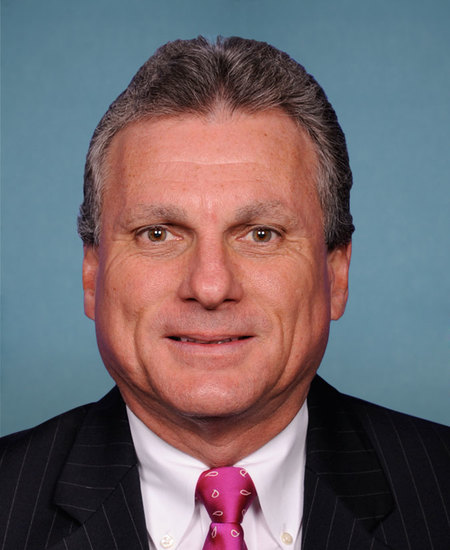
Rep. Earl L. "Buddy" Carter
Sponsored bills
Maddy summaryThis bill extends federal funding for poison control centers through fiscal years 2024-2028, replacing previous funding periods (2020-2024). It directly affects all 55 poison control centers nationwide by ensuring continued operation of the national toll-free number (1-800-222-1222), ongoing public education efforts, and the grant program that supports center infrastructure. The key change is simply extending the authorization period for these existing programs without altering their structure or requirements. This provides stability for centers that handle millions of annual poison exposures and emergency calls.
Maddy summaryHRES 1063 is a non-binding resolution passed by the U.S. House of Representatives to reaffirm America's commitment to NATO ahead of its 75th anniversary. It formally recognizes NATO's role in collective security, emphasizes Article 5's importance for mutual defense, and supports Finland and Sweden's membership. The resolution also calls on NATO allies to meet the 2% defense spending target, but does not create new laws or affect specific individuals or groups.
Maddy summaryThe Cost Estimates Improvement Act (HR 8341) requires the Congressional Budget Office (CBO) and Joint Committee on Taxation (JCT) to include, to the extent practicable, the costs of servicing the national debt - such as interest payments - in their budget estimates. This change makes cost analyses more comprehensive by reflecting the full financial burden of government borrowing. The bill amends the Congressional Budget and Impoundment Control Act of 1974 to add this requirement, directly affecting how the CBO and JCT produce their budget reports. It does not alter spending or tax laws but ensures estimates better account for long-term debt costs when Congress reviews legislation.
Maddy summaryThis bill strengthens oversight of administrative spending actions by requiring the Director to submit detailed waiver explanations and budgetary impact estimates to congressional Budget Committees for any executive branch action exempting spending from budget neutrality rules. It modifies the threshold for such exemptions to apply only to actions increasing direct spending by $1 billion over 10 years or $100 million in any single year. The bill also clarifies that the purpose of the administrative PAYGO rules is to maintain budget neutrality for discretionary spending decisions. These changes apply directly to federal agencies making administrative spending decisions that exceed the new thresholds. The bill repeals a sunset provision and adds new reporting requirements for budget submissions.
Maddy summaryThis bill establishes a Critical Supply Chain Resiliency Program within the Department of Commerce to strengthen U.S. supply chains for critical goods essential to national security and economic security. It directs the Assistant Secretary of Commerce to map critical supply chains, identify vulnerabilities, develop contingency plans for disruptions like pandemics or cyber attacks, and encourage partnerships with domestic manufacturers and allies. The program requires annual reports to Congress on supply chain resilience strategies, promotes use of technologies like blockchain for traceability, and will operate for seven years. The bill directly affects the Department of Commerce, domestic manufacturers of critical goods, and U.S. partnerships with key international allies. It focuses on concrete policy changes to enhance supply chain security without mandating private sector compliance.
Maddy summaryThis bill requires Medicare to pay separately for certain high-cost diagnostic drugs used in nuclear imaging (like those for cancer detection) starting in 2024. It applies to drugs with a daily cost of $500 or more (adjusted annually), ensuring they are not bundled with other services. Payments will be based on either the drug's average sales price or wholesale cost, with adjustments to keep overall Medicare spending unchanged. This directly affects Medicare Part B providers (hospitals, clinics) and beneficiaries receiving these specific diagnostic treatments.
Maddy summaryHJRES 143 is a congressional resolution seeking to block a Department of Labor rule that would amend specific exemptions for retirement investment transactions. The bill targets a rule (published April 25, 2024) that would change how retirement funds can invest, particularly affecting retirement plan providers and fiduciaries managing employee savings. It directs Congress to disapprove the rule under a specific federal law, meaning the rule would not take effect if passed. This is a procedural step to halt the rule's implementation, not a new policy change.
Maddy summaryHJRES 140 is a resolution requesting Congress to disapprove a Department of Labor rule that amended Prohibited Transaction Exemption 2020-02. The rule, published in the Federal Register on April 25, 2024, would have changed how retirement plan fiduciaries can engage in certain investment transactions, specifically affecting retirement account providers and administrators. If approved, this resolution would block the rule from taking effect, directly impacting entities managing retirement funds that rely on the exemption framework. The bill uses the statutory disapproval process under Chapter 8 of Title 5, U.S. Code, to halt the rule’s implementation.
Maddy summaryH.J.Res. 141 is a congressional resolution disapproving a Department of Labor rule (89 Fed. Reg. 32302, April 25, 2024) that amended Prohibited Transaction Exemption 84-24. This rule would have changed regulations governing retirement investment transactions, specifically affecting how financial institutions and retirement plan administrators handle certain transactions. The resolution, if passed, would block the rule from taking effect by invoking the disapproval process under Title 5 of the U.S. Code. It directly impacts retirement plan providers and financial firms that rely on this exemption for investment activities. The bill does not create new policy but seeks to prevent the implementation of the specific Department of Labor rule.