

Maddy summaryHRES 1226 is a non-binding resolution honoring 282 law enforcement officers killed in the line of duty during 2023, listed by name in the resolution. It formally acknowledges their sacrifice, expresses unwavering support for current officers, and recognizes the need for adequate resources to protect them. The resolution does not create new laws or policies but serves as a ceremonial tribute to memorialize fallen officers and support their families, aligning with existing National Police Week observances established since 1962.
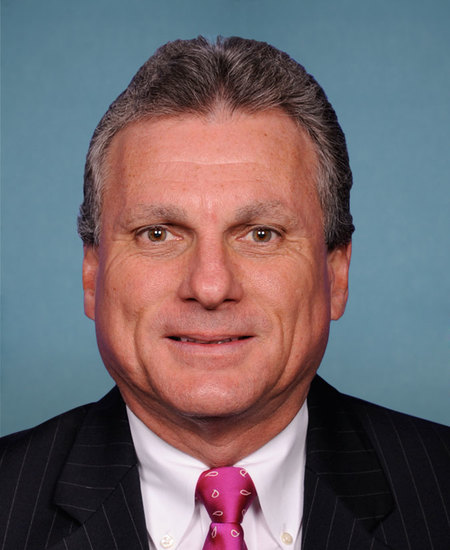
Rep. Earl L. "Buddy" Carter
Sponsored bills
Maddy summaryThis bill renames the Department of Veterans Affairs community-based outpatient clinic in Hinesville, Georgia, to the "John Gibson, Dan James, William Sapp, and Frankie Smiley VA Clinic." The change updates the clinic's official name in all federal references, including documents, maps, and records. It directly affects the clinic's identification and veterans who use its services, though the bill does not alter healthcare services or funding. The renaming is procedural and commemorative, with no new policy or funding mechanisms.
Maddy summaryHR 8303 requires the U.S. Postal Service (USPS) to notify customers and local officials when a post office temporarily closes. For planned closures, USPS must provide at least 60 days' notice detailing the reason, expected closure/resumption dates, and replacement services (like nearby retail access or mail handling), while unplanned closures require 14 days' notice. The bill mandates USPS to offer replacement retail services (such as box sales and mail access) within 10 days, in the same geographic area if possible, and to allow public comments on the closure. This applies to all temporary closures starting after the bill's enactment, directly affecting USPS operations, customers, and local representatives (e.g., mayors, congressional members).
Maddy summaryHJRES 98 is a congressional resolution seeking to block a National Labor Relations Board (NLRB) rule that defined how businesses are considered "joint employers" for labor law purposes. The bill targets the NLRB's October 2023 rule (88 Fed. Reg. 73946), which would have changed how companies like franchisors or staffing agencies are held responsible for workers' rights. If passed, this resolution would cancel the rule, directly affecting businesses managing multiple employer relationships and labor organizations enforcing workplace standards. The measure uses a standard process under federal law to disapprove an agency rule, not creating new policy but reversing an existing regulation.
Maddy summaryThis bill (HR 3944, Public Law 118-57) renames a specific U.S. Postal Service facility at 120 West Church Street in Mount Vernon, Georgia, as the "Second Lieutenant Patrick Palmer Calhoun Post Office." It directly affects the official designation of that post office location and any future references to it in federal documents. The bill requires all federal records, maps, and documents to use the new name instead of the previous designation. As a naming resolution, it has no policy impact beyond this ceremonial renaming.
Maddy summaryHR 8231, the James Earl Jones Congressional Gold Medal Act, authorizes a Congressional Gold Medal to be awarded to actor James Earl Jones in recognition of his distinguished career in theater and film, and his role in advancing inclusion and equal opportunities for people of all backgrounds in the entertainment industry. The Treasury will strike the medal with an image and inscription of Jones, and may produce and sell bronze duplicates to cover costs, with proceeds deposited into the U.S. Mint's public enterprise fund. This bill serves as a ceremonial honor with no new legal requirements or policy changes.
Maddy summaryHR 615, the Protecting Access for Hunters and Anglers Act of 2023, prevents federal agencies from banning lead ammunition or tackle on public lands and waters managed for hunting or fishing, except in specific cases. The bill allows exceptions only if a state wildlife department confirms lead use is harming local wildlife, and the federal action aligns with state law or state agency approval. It directly affects hunters and anglers using federal lands and waters, ensuring they can continue using lead products unless a state verifies a local wildlife issue requiring a ban. The law requires federal agencies to justify any exception with state data and policy compliance in official notices.
Maddy summaryHR 6046, the Standing Against Houthi Aggression Act, requires the Secretary of State to designate Ansarallah (the Houthis) as a Foreign Terrorist Organization within 90 days of enactment and mandates the President to impose sanctions under existing authorities (Executive Orders 13224 and 13780) against Ansarallah and its members, agents, or affiliates. The bill directly affects Ansarallah and any foreign entities linked to it by triggering U.S. sanctions. Key provisions set strict 90-day deadlines for both the designation and sanctions implementation. The law focuses on reversing a prior designation revocation and enforcing existing legal mechanisms against the group.
Maddy summaryThis resolution (HRES 1150) is a symbolic House measure expressing support for designating April 16, 2024, as "FairTax Day." It does not change tax law or directly affect any individuals or entities. The resolution cites the FairTax proposal - which would replace income taxes with a consumption tax - as a policy goal, but the resolution itself only advocates for the symbolic designation. It serves as a statement of support for the FairTax concept, not a legislative action.
Maddy summaryHR 5530, the VA Emergency Transportation Access Act, prevents the Department of Veterans Affairs (VA) from lowering payment rates for specialized transportation used by veterans and eligible individuals (like ambulances or wheelchair vans) without strict requirements. It mandates that any rate change that could reduce access to care must first undergo a detailed review analyzing economic impacts on the VA and transportation industry, and ensure the new rate covers actual costs. The VA must also develop a formal process for rate changes and consult with industry experts, veterans' groups, and healthcare agencies before implementing such changes. This bill directly affects veterans relying on specialized transportation for medical care, particularly those in rural or underserved communities, by safeguarding their access to necessary emergency transport services.