

Maddy summaryThis bill directs the U.S. Treasury to mint commemorative coins marking the Marine Corps' 250th anniversary in 2025. It authorizes three coin types: $5 gold coins (max 50,000), $1 silver coins (max 400,000), and half-dollar coins (max 750,000), with surcharges of $35, $10, and $5 respectively. The surcharge proceeds will fund the Marine Corps Heritage Center's educational programs, with no net cost to taxpayers as the Treasury must recover all minting costs through the surcharges. The coins can only be issued during 2025, and the Treasury must ensure all costs are covered before distributing funds to the Heritage Foundation.
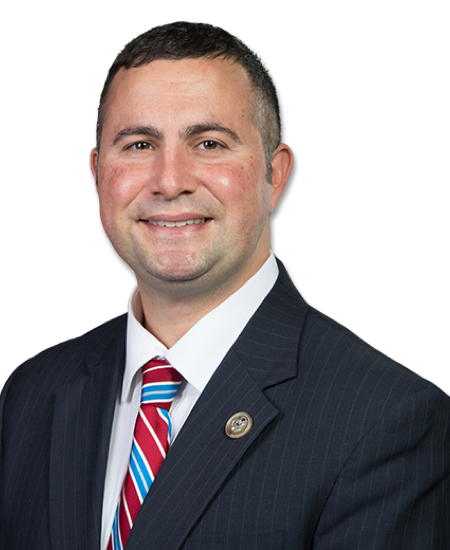
Rep. Darren Soto
Sponsored bills
Maddy summaryThis bill directs the Federal Communications Commission (FCC) to streamline how commercial space companies access specific radio frequencies (like 2025-2110 MHz) needed for launches and reentries. Within 90 days, the FCC must finalize rules for secondary use of these frequencies after government needs are met, and within 180 days, create faster approval processes - including multi-site authorizations and automated reviews. It directly affects commercial space companies operating under FAA space launch licenses, reducing bureaucratic delays for their spectrum access.
Maddy summaryHR 4889, the Raise the Wage Act of 2023, would gradually increase the federal minimum wage for most workers to $15.50 per hour by 2027, with specific annual targets: $9.50 starting in 2023, rising to $11.00 after one year, $12.50 after two years, and $15.50 after four years. It would also phase out the separate lower minimum wage for tipped employees (starting at $6.00/hour) by aligning their pay with the regular minimum wage by 2028, while requiring employers to let workers keep all tips. The bill includes similar phased increases for workers under 20 and transitions toward fairer wages for workers with disabilities under special certificates, which would sunset after 2028. Future annual increases after 2028 would tie the minimum wage to the median hourly wage of all workers.
Maddy summaryHR 4769, the PFAS Alternatives Act, funds research and training to develop PFAS-free turnout gear for firefighters. It authorizes $25 million annually (2024-2028) for grants to eligible organizations to research, develop, and test next-generation gear without per- and polyfluoroalkyl substances (PFAS), which are linked to firefighter cancer risks. The bill requires partnerships with firefighting organizations to ensure research translates into practical training and gear care guidance, including decontamination protocols. It also allocates $2 million yearly for training programs on proper gear use and maintenance, aiming to reduce exposure to hazardous chemicals during fire operations.
Maddy summaryHR 4796, the Reproductive Health Patient Navigator Act of 2023, establishes a federal grant program to fund organizations that help individuals access abortion services. Eligible entities - such as abortion funds, community groups, or local governments - would receive grants to provide services like connecting people to providers, coordinating travel/financing costs, offering culturally appropriate information, and ensuring data confidentiality. The bill includes strong legal protections, prohibiting states from restricting or penalizing navigators for assisting people seeking abortion services, even in states where abortion is illegal. It also allows affected navigators to sue states that violate these protections. The program is funded for fiscal years 2023 through 2027.
Maddy summaryHR 4733 provides EPA grants to local air quality agencies to help communities prepare for wildfire smoke and extreme heat. Funds support concrete actions like monitoring air quality, installing air filtration in public buildings, distributing masks and protective equipment, and community outreach in areas vulnerable to poor air quality. The bill prioritizes communities with high wildfire smoke exposure or extreme heat risks, particularly those already facing air quality challenges. It also establishes research centers and planning grants, but the primary mechanism is direct funding for local preparedness efforts.
Protecting Pandemic and All-Hazards Preparedness Act of 2023 or the Protecting PAHPA Act of 2023 This bill extends through FY2028 and modifies various programs and activities that support public health preparedness and response. The bill also addresses matters concerning shortages of drugs and medical devices and recalls of drugs. For example, the bill modifies activities of the Office of the Assistant Secretary for Preparedness and Response, the Centers for Disease Control and Prevention, and the Biomedical Advanced Research and Development Authority; grants to support preparedness and response activities of health departments, hospitals, and public health laboratories; programs to facilitate the response of volunteer health providers and other professionals during disasters and emergencies; efforts related to the management and operation of the Strategic National Stockpile; federal partnerships and initiatives for collaborating and coordinating during public health and other emergencies and with the development of medical countermeasures and diagnostic testing capacity; and requirements for collecting and reporting public health and health care data and information. Additionally, the bill makes various changes to address and mitigate shortages of drugs and devices, including by (1) setting out a process to safely extend the expiration date of certain medical countermeasures and other life-saving drugs, and (2) expanding requirements for drug manufacturers to notify the Food and Drug Administration concerning potential shortages. Further, the bill expands the authority of the Secretary of the Department of Health and Human Services to order the recall of controlled substances to cover all drugs.
Maddy summaryHRES 608 is a non-binding House resolution recognizing the value of diversity, equity, and inclusion (DEI) efforts at colleges and universities. It affirms that DEI initiatives help create supportive learning environments where all students, faculty, and staff thrive, and specifically supports programs like implicit bias training and cultural competence resources. The resolution emphasizes that DEI efforts strengthen institutions’ ability to recruit diverse talent and align with academic freedom principles. It also notes concerns about state-level efforts to restrict DEI programs and states that such restrictions threaten campus inclusivity. As a symbolic resolution, it does not create new laws or funding but expresses congressional support for DEI work in higher education.
This resolution (1) recognizes the Latino community’s commitment to conservation and the importance of getting outdoors, and (2) supports the designation of Latino Conservation Week.
Maddy summaryH.J.Res. 25 would remove the 1979 deadline for states to ratify the Equal Rights Amendment (ERA), which was originally proposed in 1972. This bill directly affects states that ratified the ERA after the deadline (such as Nevada, Illinois, and Virginia in 2017-2018) by making their ratifications legally valid. The key provision states that the ERA is valid as part of the Constitution if ratified by three-fourths of states, regardless of the original deadline. The bill does not create new rights but aims to finalize the constitutional amendment process by eliminating the time limit.