

Maddy summaryThe Farm and Food Cybersecurity Act of 2024 requires the U.S. Department of Agriculture to conduct biennial studies assessing cyber threats and vulnerabilities across the entire food supply chain - including farmers, processors, distributors, and retailers - and submit reports to Congress detailing risks to food safety, public health, and national security. It also mandates annual cross-sector simulations with agencies like Homeland Security and Health and Human Services to test emergency responses to food-related cyber incidents, involving government and private sector stakeholders. The bill authorizes $1 million annually (2024-2028) to fund these studies and simulations, aiming to identify gaps and improve coordination. These requirements directly affect federal agencies, state/local governments, and food industry entities responsible for food production, distribution, and security.
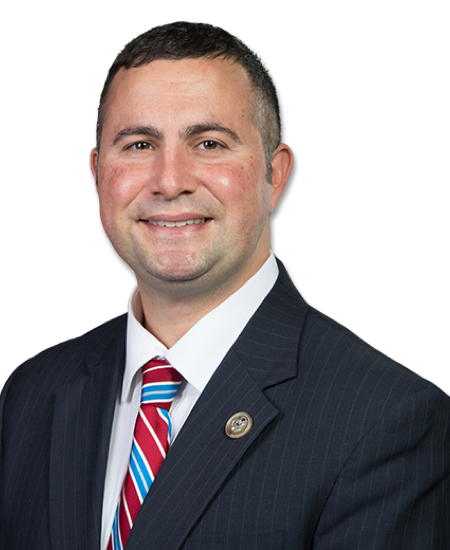
Rep. Darren Soto
Sponsored bills
Maddy summaryHR 7056, the Access to Family Building Act, establishes federal rights for individuals to access assisted reproductive technology (ART) like IVF without unreasonable restrictions, directly affecting patients seeking fertility treatments and health care providers offering ART services. The bill prohibits states from imposing limitations on ART that are more burdensome than those for comparable medical procedures, fail to advance safety, or unduly restrict access, while allowing health and safety regulations that are necessary and least restrictive. It creates federal enforcement mechanisms, including lawsuits by the Attorney General or affected individuals to challenge violating state laws, and preempts conflicting state regulations. The bill explicitly preserves state authority over health/safety regulations and does not alter existing state insurance coverage laws for ART.
Maddy summaryThis resolution expresses the U.S. House of Representatives' support for designating October 1-7, 2023, as "National 4-H Week." It recognizes 4-H as the nation's largest youth development organization, serving nearly 6 million young people through programs in health, science, agriculture, and civic engagement, delivered by land-grant universities and over 600,000 volunteers. The resolution does not create new laws or funding but formally acknowledges 4-H's role in empowering youth leadership and encourages public recognition of its impact. It directly affects 4-H members, volunteers, and the broader network of land-grant institutions and the USDA's Cooperative Extension System.
Maddy summaryThe Stronger Communities through Better Transit Act establishes a new federal grant program to improve public transportation service. It provides funding to urban areas, states, and Indian tribes to cover up to 50% of public transit operating costs (up to 80% in persistent poverty areas and 100% for Indian tribes), with requirements to report on service frequency, access to jobs, and conduct community surveys. The program mandates that a majority of funds must benefit underserved communities and areas of persistent poverty, defined as census tracts with high poverty rates or minority populations. Recipients must maintain their transit funding levels and report on improvements in access to essential services. The bill authorizes $20 billion annually for fiscal years 2024-2027.
Maddy summaryHR 5877 creates the USDA Express Guaranteed Farm Ownership Loan Program, allowing participating lenders to process farm ownership loan guarantees within 36 hours. It sets a $1 million annual loan limit per farm, with guarantees covering 75% of loans up to $750,000 and 50% for loans between $750,000-$1 million. Borrowers must use funds exclusively for agricultural production, and lenders must verify borrower creditworthiness before submission. The bill also establishes a similar express program for farm operating loans.
Maddy summaryHRES 962 is a ceremonial resolution honoring Reverend Dr. Martin Luther King, Jr.'s legacy, specifically celebrating his 95th birthday on January 15, 2024. It symbolically affirms his teachings by condemning hate, discrimination, and prejudice against Black Americans, Indigenous people, Jewish, Asian-American/Pacific Islander, Muslim, Hispanic/Latino communities, and LGBTQ+ individuals. The resolution does not create new laws or affect any policies - it solely expresses the House's support for Dr. King's values of diversity, tolerance, and equality through non-binding statements. As a symbolic gesture, it has no legal effect or direct impact on any group or individual.
Maddy summaryHRES 963 is a symbolic resolution honoring Korean American Day, which commemorates the January 13, 1903 arrival of the first large wave of Korean immigrants to the U.S. It recognizes Korean Americans' contributions to U.S. society, including their economic, cultural, and military impacts, and marks the 121st anniversary of this historic migration. The resolution urges all Americans to observe Korean American Day to appreciate these contributions. As a commemorative measure, it does not create new policies or affect specific groups beyond this ceremonial recognition.
Maddy summaryHR 6963, the Pediatric Cancer Drug Supply Act of 2024, creates a federal pilot program to prevent shortages of essential pediatric cancer drugs. The Secretary of Health and Human Services will enter agreements with manufacturers to maintain a 6-month reserve supply of each covered drug - defined as drugs on a list developed by the Secretary that treat pediatric cancer and meet specific criteria - held in the U.S. by manufacturers. Manufacturers must store extra inventory beyond normal levels, ensure drugs have over a year of shelf life, and allow the government to audit compliance. During shortages, the Secretary can order these reserves distributed to patients, with recipients paying the government's purchase price to replenish the supply. The program is funded with $500 million for fiscal year 2024.
CONtinuity in Necessary Evaluative Crisis Treatment Act of 2024 or the CONNECT Act of 2024 This bill requires the Substance Abuse and Mental Health Services Administration to award grants to certain crisis centers for providing follow-up care to individuals who receive suicide prevention and crisis intervention services.
Maddy summaryThis bill increases loan limits for farmers under the Farm Service Agency. It raises the maximum farm ownership loan amount from $600,000 to $850,000 (and guaranteed loans from $1.75 million to $3.5 million), and operating loans from $400,000 to $750,000 (guaranteed from $1.75 million to $3 million). It also doubles the microloan cap from $50,000 to $100,000. Additionally, the bill creates a new process allowing distressed guaranteed loans to be refinanced into direct loans if borrowers can't resolve issues with lenders and the farm operation can become financially viable. These changes directly affect farmers and ranchers seeking credit through the Farm Service Agency.