

Maddy summaryThe Affordable Connectivity Program Extension Act of 2024 allocates $7 billion in funding for the Affordable Connectivity Program (ACP) during fiscal year 2024. The ACP provides subsidies to low-income households to help cover the cost of internet service and connected devices like laptops or tablets. This funding ensures the program can continue supporting eligible households throughout the year, with the money remaining available until fully spent. The bill extends existing program funding without changing eligibility criteria or service requirements.
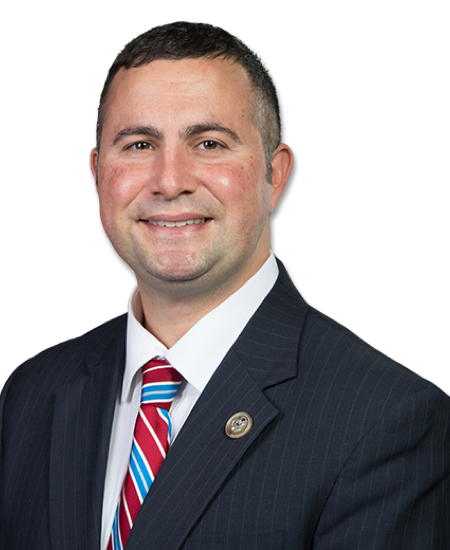
Rep. Darren Soto
Sponsored bills
Maddy summaryThe PFAS Action Act of 2023 establishes federal regulations to address PFAS contamination across multiple environmental and health domains. It requires the EPA to designate specific PFAS (like PFOA and PFOS) as hazardous substances, set drinking water standards for PFAS, and mandate testing and reporting by manufacturers. The bill provides $500 million for community water systems to install PFAS treatment systems, $100 million for school water testing and filtration, and creates a website to help homeowners test well water. It also establishes labeling requirements for PFAS-free products and mandates better public communication about PFAS risks.
Maddy summaryHR 6802, the RAPID Reserve Act, requires the Secretary of Health and Human Services to establish a reserve of critical drugs and their key ingredients to prevent shortages. It directs the Secretary to award contracts to eligible manufacturers or distributors (with strong quality records and domestic/OECD manufacturing capacity) to maintain a 6-month reserve of both the finished drug and its active ingredient, regularly replenished with new supply. During public health emergencies or shortages, the Secretary can direct the transfer of reserves between manufacturers or allocate reserves to address critical needs. The program, funded with $500 million for fiscal year 2024, targets drugs with vulnerable supply chains - such as those with geographic manufacturing concentration or few producers - to strengthen domestic drug security.
Maddy summaryHRES 904 is a House resolution supporting World AIDS Day goals. It encourages efforts to achieve zero new HIV transmissions, zero discrimination, and zero AIDS-related deaths by 2030, while commending existing programs like PEPFAR and the Ryan White CARE Act. The resolution also supports continued funding for HIV prevention, treatment, and research, with specific focus on communities disproportionately affected by HIV in the U.S. and globally. As a symbolic statement, it does not create new laws or allocate funds.
Maddy summaryHR 6664 requires the FDA to apply pediatric drug testing requirements to orphan drugs (treatments for rare diseases) that were previously exempt. It directs the FDA to issue guidance within 18 months on how these requirements will work, including when waivers for impractical studies are allowed, and increases annual funding for pediatric studies to $50 million. Drug sponsors developing orphan medications must now provide more pediatric safety data, while the FDA gains clearer enforcement rules for compliance. The bill also mandates an FDA report on compliance and a government study on the law's impact on rare disease drug development.
Maddy summaryHR 6600, "Tyler’s Law," requires the Secretary of Health and Human Services to study how often hospital emergency departments test for fentanyl during overdose cases, along with the costs, benefits, risks, and patient privacy impacts. The study must be completed within one year of the bill’s enactment, followed by guidance issued within six months on whether fentanyl testing should become routine. This guidance will address how hospitals can inform clinicians about testing protocols and how fentanyl testing might affect future overdose risks and patient health outcomes. The bill directly affects hospitals and emergency departments treating overdose patients, focusing on improving data-driven practices for fentanyl detection.
Maddy summaryHR 6592, the Fight Book Bans Act, provides federal grants to reimburse public school districts for legal costs when they choose to keep instructional or library materials after parental objections. It directly affects school districts (covered local educational agencies) that select materials for students and handle challenges to their removal. The bill authorizes up to $100,000 per case in grants to cover attorney fees and court costs, provided the district didn’t remove the materials and wasn’t reimbursed by the state. Funding of $15 million is authorized for fiscal years 2024-2028. The grants are strictly for legal challenges to decisions not to remove materials, not for the content of the materials themselves.
Maddy summaryThe REBATE Act (HR 6536) amends existing federal rebate programs to allow eligible local governments - such as cities or counties - to directly access funds for home energy efficiency upgrades, rather than requiring state energy offices to administer all rebates. It specifically expands the HOMES Rebate Program (for whole-house energy improvements) and the High-Efficiency Electric Home Rebate Program to include local governments in states where state offices have not established or plan to run these programs. Local governments must apply by December 31, 2024, and funds are distributed so that total allocations per state match amounts reserved for state energy offices. This change aims to increase access to rebates in communities currently underserved by state-level programs.
Maddy summaryHR 6451, the Mental Health Justice Act of 2023, provides $250 million in federal grants to states, tribes, and localities to hire mental health professionals as first responders for specific emergencies. It directs these professionals to replace police in situations involving mental health crises, substance use, or intellectual/developmental disabilities - such as when a 911 caller describes a mental health emergency or a first responder identifies someone needing mental health support. The bill requires grantees to train responders in de-escalation techniques, link individuals to community-based services (not incarceration), and report on outcomes like reduced arrests or use of force. It also mandates data collection on demographics and prevents funneling people into institutional settings, with annual reports to Congress on program effectiveness.
Maddy summaryHRES 881 is a symbolic House resolution commemorating the 50th anniversary of the Endangered Species Act of 1973. It honors the Act's role in preventing the extinction of species like the bald eagle and humpback whale, citing its success in protecting 99% of listed species. The resolution does not create new legal requirements or affect any specific group, as it serves solely as a ceremonial recognition of the Act's conservation achievements.