

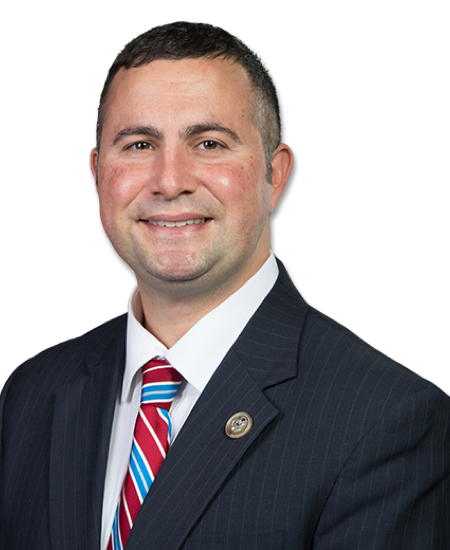
Photo of Darren Soto
D United States House · District 9 · Florida On the 2026 ballot

Rep. Darren Soto

Compare
Total votes
2,837
all sessions
Attendance
100%
10 missed
Higher than 96% of chamber peers
With party
96%
of cast votes
Lower than 84% of chamber peers
Bipartisan score
2%
crosses aisle rarely
Higher than 83% of chamber peers
Sponsored
1,951
bills & resolutions
Higher than 84% of chamber peers
Committees
6
assignments
1,951 bills and resolutions

Sponsored bills

Total
1,951
Primary
75
Co-sponsor
1,876
This page
1,951
matching current filters
Co-sponsor HRES 966
Passed · United States House · Co-sponsor
Condemning rape and sexual violence committed by Hamas in its war against Israel.

Maddy summaryHRES 966 is a symbolic resolution condemning alleged sexual violence committed by Hamas during its October 7, 2023, attack on Israel. It specifically references eyewitness accounts, forensic evidence, and Hamas fighters' admissions of ordering gang rape, sexual mutilation, and assault against Israeli civilians. The resolution calls for international condemnation of such acts as weapons of war, urges nations to criminalize sexual violence, and supports investigations into Hamas' actions. As a non-binding resolution, it does not create new laws or directly affect any individuals but formally expresses the House's position on the issue.

Passed Feb 14, 2024 1 co-sponsor
Co-sponsor HR 7352
In committee · United States House · Co-sponsor
Identify Gun Stores Act

Maddy summaryThis bill prevents states from banning or discouraging the use of specific financial industry codes (merchant category codes) that identify firearm and ammunition merchants. It directly affects financial institutions and payment processors that use these standardized codes for transaction tracking. The law requires states to allow the use of these codes, and the Attorney General can enforce this through civil lawsuits. The bill does not change gun laws or affect gun owners; it only addresses financial coding standards.

In committee Feb 14, 2024 1 co-sponsor
Co-sponsor HR 7272
In committee · United States House · Co-sponsor
Shining a Spotlight on Safer Communities Act

Maddy summaryHR 7272, the Shining a Spotlight on Safer Communities Act, requires the Attorney General to submit annual reports to Congress starting in 2024, detailing how the Bipartisan Safer Communities Act's provisions (specifically sections 932 and 933 of title 18) are being implemented. These reports must include data on investigations, prosecutions, demographic information of defendants, and seized firearms or assets related to gun trafficking and straw purchasing. The bill mandates these reports for fiscal years 2024 through 2027, with a funding limit of $2 million annually for this reporting. It is a procedural bill focused solely on transparency and accountability for existing gun safety measures, not creating new policies.

In committee Feb 7, 2024 1 co-sponsor
Co-sponsor HR 4051
Passed · United States House · Co-sponsor
Supporting the Health of Aquatic systems through Research Knowledge and Enhanced Dialogue Act

Maddy summaryThis bill establishes a 7-year task force under the Commerce Secretary to address shark interactions with fishing gear (referred to as "shark depredation"). The task force, including representatives from regional fisheries councils, coastal states, and shark experts, will identify research priorities (like shark behavior causes and non-lethal deterrents), develop management strategies, and create educational materials for the fishing community. It directly affects coastal states, fisheries management councils, and commercial fishermen by improving coordination and funding for shark interaction research. The task force must submit biennial reports to Congress and will sunset after 7 years. The bill does not change fishing regulations but focuses on research and education to reduce harmful shark-human interactions.

Passed Feb 6, 2024 1 co-sponsor
Co-sponsor HR 7242
In committee · United States House · Co-sponsor
Loans in our Neighborhoods Act

Maddy summaryThis bill, HR 7242 (Loans in our Neighborhoods Act), increases the maximum loan size for Small Business Administration (SBA) 7(a) loans from $5 million to $10 million. It directly affects small businesses seeking SBA financing for expansion, equipment purchases, or working capital by allowing them to access larger loans. The key change amends the Small Business Act to double the cap on these standard loans, making it easier for qualifying businesses to secure more substantial funding without needing alternative loan structures. This is a straightforward policy adjustment to the existing SBA loan program.

In committee Feb 5, 2024 1 co-sponsor
Primary HR 7124
In committee · United States House · Lead sponsor
Roboblock Act

Maddy summaryHR 7124, the Roboblock Act, requires phone service providers to offer free robocall-blocking services to all their customers within 180 days of the law's enactment. The bill defines "robocalls" as automated calls or texts made using dialing systems or prerecorded messages (excluding calls needing substantial human input), and the blocking service must target calls "highly likely to be illegal." This directly affects phone companies (voice service providers) and their customers by mandating no-cost protection against unwanted automated calls and texts. The law amends the Communications Act to make this blocking service a standard, free feature for all customers.

In committee Feb 2, 2024 0 co-sponsors
Co-sponsor HR 7116
In committee · United States House · Co-sponsor
Do Not Disturb Act

Maddy summaryHR 7116, the Do Not Disturb Act, updates federal rules to combat robocalls and deceptive telemarketing. The bill requires clear disclosure when AI is used to mimic human voices in calls or messages, enhances penalties for AI impersonation scams, and mandates free robocall-blocking services for consumers. It also creates a tracking system for the top 100 illegal robocall campaigns and expands telemarketing regulations to include text messages, applying to telecommunications providers, VoIP services, and businesses making automated calls or sending text messages.

In committee Feb 2, 2024 1 co-sponsor
Co-sponsor HR 7123
In committee · United States House · Co-sponsor
QUIET Act

Maddy summaryThe QUIET Act requires businesses and organizations to disclose at the start of any robocall or text message that uses artificial intelligence to mimic a human voice or writing. This applies to automated communications generated by AI, excluding calls or texts requiring substantial human involvement. The bill also doubles the maximum civil and criminal penalties for violations where AI impersonation is used to defraud, cause harm, or obtain property. It directly affects entities that send AI-powered automated calls or texts to consumers.

In committee Feb 2, 2024 1 co-sponsor
Co-sponsor HR 7165
In committee · United States House · Co-sponsor
Credit for Caring Act of 2024

Maddy summaryThe Credit for Caring Act of 2024 creates a new federal tax credit for family caregivers. It allows eligible caregivers to claim a credit equal to 30% of qualified caregiving expenses (like home modifications, medical supplies, or respite care) exceeding $2,000 per year, capped at $5,000 annually. To qualify, caregivers must earn over $7,500 in income and provide care for a relative (like a spouse or parent) certified by a healthcare provider as needing long-term care for at least 180 days. The credit phases out for higher earners, with a $75,000 income threshold for single filers and $150,000 for joint returns.

In committee Jan 31, 2024 1 co-sponsor
Co-sponsor HR 7127
In committee · United States House · Co-sponsor
FAIR Act

Maddy summaryHR 7127, the FAIR Act, establishes pay adjustments for federal employees in 2025. It increases base pay by 4% for most federal workers under statutory pay systems and for "prevailing rate" employees (like those in specific geographic areas), while raising locality pay rates by 3.4%. The bill directly affects all federal employees receiving pay under these systems, as it modifies their 2025 salary calculations. These changes are based on statutory formulas under Title 5 of the U.S. Code, with no new policy mechanisms beyond the specified percentage increases. The adjustments apply to pay rates in effect as of the end of fiscal year 2024.

In committee Jan 30, 2024 1 co-sponsor
Showing 771 to 780 of 1,951 bills
Previous 1 … 77 78 79 … 196 Next