

Maddy summaryHRES 1432 designates September 10, 2024, as "National Firearm Suicide Prevention Day" to raise public awareness about firearm suicides and promote safe storage practices. The resolution encourages healthcare professionals to discuss safe firearm storage with patients and supports the day's goals of reducing firearm suicides through education. It directly affects the general public and healthcare providers by highlighting evidence that safe storage lowers suicide risk, referencing statistics like 54.6% of U.S. suicides in 2022 involving firearms. The bill is symbolic, with no new legal requirements, and aligns with existing awareness efforts like Firearm Suicide Prevention Day.
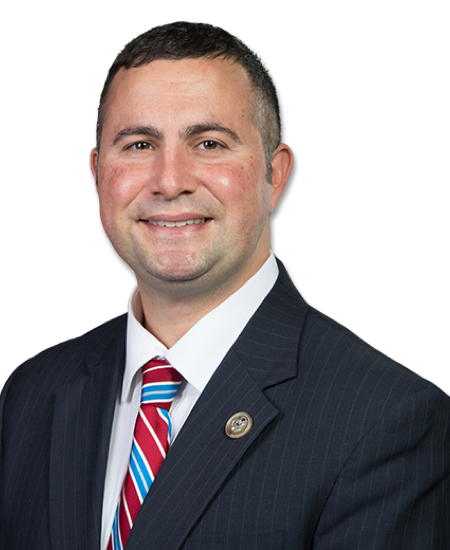
Rep. Darren Soto
Sponsored bills
Maddy summaryHRES 1436 is a symbolic resolution (not a law) introduced in the U.S. House of Representatives. It recognizes suicide as a preventable public health crisis by citing statistics from the CDC, VA, and SAMHSA showing rising suicide rates across age groups, including veterans and adolescents. The resolution formally supports designating September as "National Suicide Prevention Month" and September 10, 2024, as "World Suicide Prevention Day." It does not create new policies, allocate funding, or directly affect any individuals - its purpose is solely to express congressional support for suicide prevention awareness and efforts.
Maddy summaryThis bill extends survivor benefits to spouses of veterans who die from amyotrophic lateral sclerosis (ALS). It revises eligibility rules so that veterans who die from ALS are treated as having met the required service duration for benefits, and surviving spouses must have been married for at least eight years prior to the veteran's death. The bill also requires the Department of Veterans Affairs to submit a report within 180 days identifying other service-connected disabilities with high mortality rates that might qualify for similar treatment. These changes apply to veterans dying from ALS on or after October 1, 2023.
Maddy summaryThis bill prioritizes funding for rural healthcare facilities through the USDA's Community Facilities Program. For fiscal years 2025-2031, the Secretary of Agriculture must give priority to rural hospitals and healthcare providers seeking loans or grants to develop essential facilities. Funds can be used for medical supplies, telehealth expansion, staffing support, or renovating closed facilities. Additionally, 10% of guaranteed loan funds under the program must be reserved annually to support these rural healthcare projects.
Maddy summaryHR 8138 requires the Agriculture Secretary to create a training program for Farm Service Agency (FSA) employees who assist farmers and ranchers after natural disasters. The program trains these employees to provide outreach, technical assistance, and information about available disaster relief, including on-demand modules about specific disaster types and farmer needs. It mandates annual training for covered employees, collects feedback via completion surveys for staff and exit surveys for farmers, and requires annual reports to Congress on training participation and survey results. This bill directly affects FSA staff deployed for disaster relief and aims to improve how they support affected agricultural producers.
Maddy summaryHRES 1159 is a symbolic resolution (not a law) recognizing the existing partnership between the U.S. Department of Agriculture (USDA) and NASA. It highlights how the agencies share data - like NASA’s satellite soil moisture monitoring and USDA’s ground-based research - to improve agricultural practices, resource conservation, and food security. The resolution encourages them to strengthen collaboration, including STEM education efforts, to support farmers and ranchers who produce food, fuel, and fiber. It does not create new policies or funding but formally acknowledges their mutual benefits and urges continued cooperation.
Maddy summaryThis bill would require the federal government to cover 100% of state agencies' costs for SNAP program staff salaries, hiring, and training. It sets minimum wage standards for SNAP workers at the same rate as federal employees, with annual updates tied to federal pay increases. States must submit detailed wage plans for federal approval. The policy aims to improve staffing stability and retention for SNAP operations.
This resolution supports the designation of National FFA Week. It also (1) recognizes the important role of the National FFA Organization (Future Farmers of America) in developing the next generation of globally conscious leaders who will change the world; and (2) celebrates the 10th anniversary of the Give the Gift of Blue program, which has donated more than 17,000 FFA blue jackets to FFA members in need.
Maddy summaryThis bill creates a new federal income tax deduction for homeowners insurance premiums. It allows individual taxpayers to deduct up to $10,000 annually for insurance premiums paid on their principal residence, reducing their taxable income. The deduction applies to premiums for standard homeowners insurance policies covering the primary home, as defined by existing tax law. This change would take effect for tax years beginning after the bill's enactment date. The bill directly affects homeowners who pay for insurance on their primary residence and file federal income taxes.
Maddy summaryThe Elder Pride Protection Act of 2024 establishes a new federal task force (the ELDER Task Force) within the Department of Justice to address elder abuse targeting LGBTQI+ seniors. The task force, formed within 90 days of the bill's enactment, will study abuse patterns against LGBTQI+ individuals aged 60+, develop best practices for law enforcement, and create educational materials for prevention and response. It will coordinate federal, state, and local efforts and report to Congress within one year. The bill directly affects LGBTQI+ seniors facing abuse, focusing on concrete policy actions through research, resource development, and interagency coordination.