

Maddy summaryHRES 1473 is a non-binding resolution passed by the U.S. House of Representatives that condemns racism, bigotry, and misinformation targeting Haitian people and their descendants. It celebrates the historical contributions of Haitian Americans to U.S. society, including founding cities (like Chicago via Jean Baptiste Point du Sable), advancing civil rights (W.E.B. Du Bois), and enriching healthcare, education, and culture. The resolution specifically calls on all Americans to reject racist tropes and misinformation, and urges elected officials to promote inclusivity and responsible communication. It was introduced in response to recent false claims that fueled threats against Haitian communities, such as the bomb threats in Springfield, Ohio.
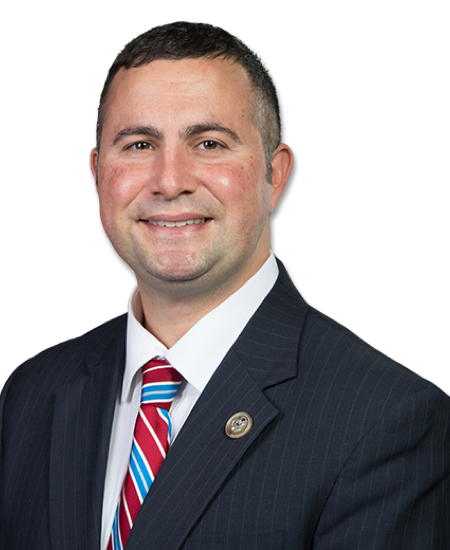
Rep. Darren Soto
Sponsored bills
Maddy summaryHR 9692, the STOP MADURO Act, authorizes a $100 million reward for information leading to the arrest and conviction of Venezuela's President Nicolás Maduro Moros. The reward would be funded exclusively by assets already frozen from Maduro and his regime under existing U.S. sanctions, including those from the Foreign Narcotics Kingpin Designation Act. The bill specifically targets Maduro based on U.S. criminal charges related to drug trafficking and narco-terrorism conspiracy. It modifies the State Department's rewards program without creating new sanctions or funding sources.
Maddy summaryHRES 1464 is a symbolic House resolution recognizing the Latino community's engagement in outdoor recreation and conservation efforts. It expresses support for designating the third week of September as "Latino Conservation Week" to highlight community involvement in protecting natural resources. The resolution does not create new laws or allocate funds; it is purely a statement of recognition. It aims to acknowledge existing community activities like park cleanups and educational events focused on environmental stewardship.
Maddy summaryThe Kids Online Safety Act (HR 7891) would require major online platforms (with high revenue or user numbers) to implement safety features for children and teens, including default protective settings, parental controls, and age verification. It would mandate platforms to report annually on risks to minors and their safety measures, and prohibit advertising harmful products (like tobacco, alcohol, or gambling) to minors. The bill directly affects social media platforms, online video games, and video streaming services that are used by minors, with the goal of preventing mental health harms, compulsive usage, and cyberbullying.
Maddy summaryHR 6033, the SPEAK Act of 2024, creates a task force within the Department of Health and Human Services to address telehealth barriers for patients with limited English proficiency (LEP). The task force - comprising healthcare providers, tech vendors, language services, and patient advocates - will assess current obstacles and develop best practices for improving access to telehealth platforms, video interpretation, and digital patient portals. Within 90 days of each annual report, the Secretary must publish a public website sharing these best practices, including guidance on integrating interpreters and making telehealth instructions accessible. The bill directly affects LEP patients and healthcare providers who serve them, aiming to make digital health tools more usable through concrete, evidence-based recommendations.
Maddy summaryThis bill modifies Medicaid and CHIP rules to let eligible out-of-state healthcare providers enroll without extra state screening. It applies to providers already in Medicare or their home state program, with low fraud risk, serving children under 21 with complex medical conditions. Providers would receive 5 years of enrollment under this streamlined process, eliminating state-level barriers. The change directly affects children seeking specialized care across state lines and the providers who serve them.
Maddy summaryThe JUDGES Act of 2024 authorizes new federal district court judgeships across multiple states to address rising case backlogs in the federal judiciary. It specifies new permanent judgeships for districts including California (multiple districts), Florida, Texas, Delaware, Indiana, Iowa, New Jersey, and New York, with implementation phased through 2035, and creates temporary judgeships for Oklahoma districts with specific vacancy rules. The bill authorizes funding for these positions and requires reports on judicial caseloads and detention space needs, while mandating public access to the Judicial Conference's judgeship recommendations. The bill directly affects federal district courts in the specified locations by increasing judicial staffing to handle growing case volumes.
Maddy summaryThe PROTECT Our Children Reauthorization Act of 2024 reauthorizes and updates the 2008 PROTECT Our Children Act, primarily focusing on strengthening federal efforts to combat child exploitation. It requires the National Strategy for Child Exploitation Prevention to be updated every four years instead of every two, with detailed provisions including trend analysis, resource estimates, and assessments of Internet Crimes Against Children (ICAC) task forces. The bill also modifies ICAC task force operations to include liability protections for prioritization decisions (unless misconduct occurs), expands coordination requirements with Tribal and military agencies, and increases funding to $70 million for 2025, $80 million for 2026, and $90 million for 2027. These changes directly affect federal agencies like the DOJ, FBI, and ICAC task forces, as well as state and local law enforcement partners working on child exploitation cases. The legislation aims to enhance data-driven coordination and resource allocation for preventing and prosecuting child exploitation crimes.
Maddy summaryHRES 1448 is a non-binding House resolution stating that the House believes every person has the right to emergency health care, including abortion care, during medical emergencies. It specifically addresses concerns that abortion restrictions force medical providers to choose between treating patients in life-threatening situations or risking criminal charges. The resolution highlights that such restrictions disproportionately harm Black, Indigenous, people of color, immigrants, low-income individuals, and LGBTQI+ patients. It does not change existing laws but expresses congressional support for ensuring access to emergency care without legal barriers. The resolution was introduced by multiple House members and referred to the Energy and Commerce Committee.
Maddy summaryHRES 1437 is a ceremonial resolution designating the week beginning September 9, 2024, as "National Hispanic-Serving Institutions Week." It recognizes Hispanic-serving institutions (HSIs) - colleges and universities with at least 25% Hispanic enrollment - and their role in educating low-income students, advancing economic mobility, and serving 31.7% of all undergraduate students. The resolution calls for the public and organizations to observe this week with ceremonies and activities during Hispanic Heritage Month. It does not create new laws, allocate funding, or change existing policies - it is purely a symbolic gesture of recognition.