

Maddy summaryHR 23, the Family and Small Business Taxpayer Protection Act, rescinds unobligated funds previously allocated to the Internal Revenue Service (IRS) under the Inflation Reduction Act of 2022. Specifically, it cancels unused balances from certain IRS funding provisions (sections 10301(1)(A)(ii), (iii), (B), (2), (3), (4), and (5)) of the Inflation Reduction Act. This bill does not change tax laws or directly affect taxpayers; it only redirects unspent IRS budget authority. The provision applies solely to funds that were not obligated by the IRS as of the bill’s enactment date.
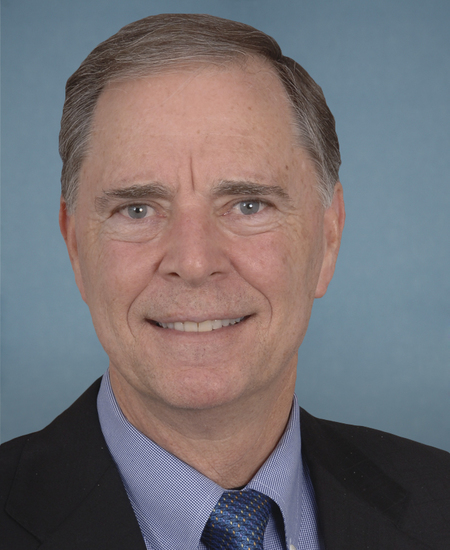
Rep. Bill Posey
Sponsored bills
Maddy summaryThis bill strengthens protections for U.S. investors in foreign countries by amending the Foreign Assistance Act. It requires foreign governments to consult with U.S. investors under investment treaties (like those in the DR-CAFTA agreement) within 30 days of a written request. Investors can now petition a U.S. commission for an advisory report on treatment of their investment, and if the commission delays, they may seek court action to suspend U.S. aid to that country. Foreign officials who harm U.S. investments face denied U.S. visas, entry, and blocked financial transactions in the U.S. until the harm is resolved. The bill directly affects U.S. investors, foreign governments, and their officials involved in investment disputes.
Maddy summaryHR 466, the Securing America’s Elections Act of 2023, requires all U.S. states to implement voter-verified paper ballots (VVPBs) for federal elections starting in 2024. This means voters must see and confirm their paper ballot before casting it, and states must preserve these ballots for manual recounts or audits using specific methods (like hand counts or offline machines). The bill provides special 2023 funding to help states cover costs for upgrading voting systems to meet this requirement, with states needing to submit cost estimates and later report actual expenses. It also mandates a study on open-source voting software, but the core change is the mandatory paper ballot system for federal elections.
Maddy summaryHR 486 prohibits the District of Columbia government from using any federal funds to allow non-citizen individuals to vote in local elections. The bill requires DC to certify in writing that it does not permit non-citizen voting when applying for or receiving federal funds. This applies to all federal funds provided to DC on or after the bill's introduction date. The law directly affects DC's ability to fund election administration with federal resources if non-citizen voting is permitted.
Maddy summaryHR 175, the Heartbeat Protection Act of 2023, prohibits physicians from performing abortions without first checking for a detectable fetal heartbeat using standard medical practice and informing the patient of the results. It allows exceptions only for abortions necessary to save a mother’s life due to physical conditions (not psychological ones), or for pregnancies resulting from rape or incest against an adult or minor, which require specific documentation like counseling records or police reports. Physicians violating the law face up to five years in prison, while patients cannot be prosecuted. The bill defines "unborn child" as beginning at fertilization and mandates detailed medical documentation for all exceptions. It explicitly excludes psychological conditions from life-threatening exceptions and requires physicians to retain records per federal health privacy rules.
Maddy summaryHCONRES 3 is a non-binding congressional resolution expressing support for pro-life facilities, groups, and churches targeted by vandalism and threats following the Supreme Court's Dobbs decision. It condemns specific incidents like graffiti, window-smashing, and arson at pregnancy centers and churches (e.g., in Frederick, MD, and Portland, OR), while recognizing the role of these organizations in supporting pregnant women. The resolution calls on the Biden Administration to use law enforcement to protect these facilities but does not create new laws or policies. As a symbolic measure, it has no legal effect on the incidents described.
Maddy summaryHR 434, the Service Restoration Act, protects military service members and academy cadets/midshipmen who refused a COVID-19 vaccine and were involuntarily separated. It prohibits using federal funds to mandate the vaccine, bans adverse actions (like separation or demotion) for refusal, and requires the military to reinstate affected individuals to their previous rank and grade with back pay. The bill also mandates that any separation for vaccine refusal be retroactively reclassified as an "honorable discharge" and removes all related records from service files. This applies specifically to those separated solely for vaccine refusal between 2021 and the bill's enactment.
Life at Conception Act This bill declares that the right to life guaranteed by the Constitution is vested in each human being at all stages of life, including the moment of fertilization, cloning, or other moment at which an individual comes into being. Nothing in this bill shall be construed to authorize the prosecution of any woman for the death of her unborn child.
Standardizing Thresholds Of Penalties for Fentanyl Act or the STOP Fentanyl Act This bill reduces the drug quantity thresholds that trigger a mandatory minimum prison term for a defendant who manufactures, distributes, imports, exports, or possesses with intent to distribute fentanyl. The bill also creates enhanced criminal penalties for certain violations involving fentanyl that was imported along the U.S.-Mexico border. Specifically, the bill reduces from 400 to 5 grams the fentanyl quantity and from 100 to 0.05 grams the fentanyl analogue quantity that trigger a mandatory minimum prison term for high-level first-time or repeat offenders. It also reduces from 40 to 0.5 grams the fentanyl quantity and from 10 to 0.005 grams the fentanyl analogue quantity that trigger a mandatory minimum prison term for low-level first-time or repeat offenders. Additionally, the bill creates enhanced mandatory minimum prison terms for importing or exporting fentanyl that was imported along the U.S.-Mexico border.
Maddy summaryHR 128, the Defund Planned Parenthood Act of 2023, blocks federal funding to Planned Parenthood Federation of America and its affiliates for one year unless they certify they will not perform or fund abortions (except in cases of rape, incest, or life-threatening conditions for the patient). This directly affects Planned Parenthood clinics and their federal funding streams. The bill redirects $235 million to community health centers under the Public Health Service Act to continue providing women’s health services like contraception, cancer screenings, and prenatal care. It requires repayment of funds if Planned Parenthood violates the certification and explicitly states the law won’t reduce overall federal funding for women’s health services.