

This joint resolution proposes a constitutional amendment prohibiting total outlays for a fiscal year from exceeding total receipts for that fiscal year unless (1) Congress authorizes the excess by a three-fifths vote of each chamber, and (2) total outlays do not exceed a specified percentage of the estimated gross domestic product of the United States. The prohibition excludes outlays for repayment of debt principal and receipts derived from borrowing. The amendment requires a three-fifths vote of each chamber of Congress to increase revenue or increase the limit on the debt of the United States. The amendment also requires the President to submit an annual budget in which total outlays do not exceed total receipts. The President's budget must also include justifications and specified details regarding funding proposed for departments and agencies. Congress may waive the requirements due to a declaration of war, a military conflict, an event that causes an imminent and serious military threat to national security, or a natural disaster.
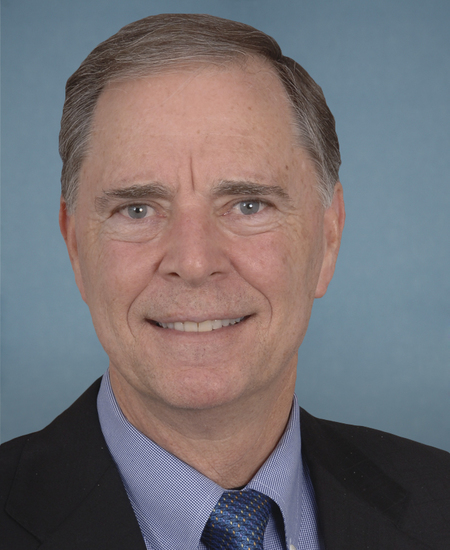
Rep. Bill Posey
Sponsored bills
Maddy summaryThe GAS Act (HR 337) prohibits any federal agency from banning the sale or use of gas-burning stoves in the United States. This applies to all agencies defined under federal law, including the Environmental Protection Agency and Consumer Product Safety Commission. The bill directly blocks agencies from enacting new regulations that would restrict gas stoves, preventing future regulatory actions. It does not affect existing stove sales or current agency authority but sets a clear restriction on future rulemaking.
Maddy summaryHR 297 requires the military Secretary to reinstate service members who were involuntarily separated solely for refusing a COVID-19 vaccine. It applies specifically to those separated only due to vaccine refusal, not other reasons. If a covered member chooses reinstatement, they must be returned to their previous rank and branch of service. The bill mandates this action without requiring the member to receive the vaccine.
Maddy summaryHR 287, the CRT Transparency Act, requires states and local school districts to publicly post all curriculum materials for every elementary and secondary school grade level on accessible websites. Specifically, it amends the Elementary and Secondary Education Act to mandate that states ensure local agencies post curricula online, and that local agencies themselves must make their grade-level curricula publicly available. This directly affects all public K-12 schools and their governing bodies by creating a new transparency requirement for teaching materials. The bill focuses solely on making curriculum content publicly accessible online, without specifying content types or subject areas. It does not alter curriculum content itself but requires existing materials to be posted online for public review.
Qualified Immunity Act of 2023 This bill provides statutory authority for qualified immunity for law enforcement officers in civil cases involving constitutional violations. Current law provides a statutory civil cause of action against state and local government actors (e.g., law enforcement officers) for violations of constitutional rights, also known as Section 1983 lawsuits. The Supreme Court has also found an implied cause of action against federal law enforcement officers in certain situations (e.g., Fourth Amendment violations), also known as Bivens lawsuits. However, under the judicial doctrine of qualified immunity, government officials performing discretionary duties are generally shielded from civil liability, unless their actions violate clearly established rights of which a reasonable person would have known. The bill provides statutory authority for these principles with respect to law enforcement officers. Specifically, under the bill, law enforcement officers are entitled to qualified immunity if (1) at the time of the alleged violation, the constitutional right at issue was not clearly established or the state of the law was not sufficiently clear for every reasonable officer to know that the conduct was unconstitutional; or (2) a court has held that the specific conduct at issue is constitutional. The bill applies to federal, state, and local law enforcement officers. It also specifies that law enforcement agencies and local governments may not be held liable if their officers are entitled to qualified immunity.
This joint resolution proposes a constitutional amendment limiting Representatives to six terms and Senators to two terms. The amendment shall not apply to any person who served as a Representative or a Senator before the 118th Congress.
Maddy summaryHJRES 8 proposes a constitutional amendment to permanently set the Supreme Court's size at nine justices. The bill would require any future changes to the Court's composition to follow this specific number, locking in the current structure. It does not alter the existing Court size (which has been nine since 1869) but aims to prevent future adjustments through legislative action. The amendment must be ratified by three-fourths of state legislatures within seven years to take effect. This is a procedural proposal focused on constitutional structure, not a direct policy affecting citizens or programs.
Maddy summaryHRES 8 is a formal resolution introduced by the U.S. House of Representatives in January 2023 to impeach Secretary of Homeland Security Alejandro Mayorkas. The resolution alleges three specific violations: (1) failing to maintain border security, citing record migrant encounters and fentanyl seizures under his leadership; (2) providing false testimony to Congress about border security; and (3) spreading false claims about Border Patrol agents whipping migrants during a 2021 incident. It claims these actions violated his constitutional duties and federal law. As an impeachment resolution, it does not enact policy but seeks to refer the case to the Senate for trial.
Maddy summaryHR 24, the Federal Reserve Transparency Act of 2023, requires a comprehensive audit of the Federal Reserve System's Board of Governors and Federal Reserve banks within 12 months of the bill's enactment. The Congressional auditor (Comptroller General) must then submit a detailed report to Congress within 90 days, including findings, conclusions, and recommendations for improving transparency. This bill directly affects the Federal Reserve System by mandating greater oversight of its operations and financial activities. The key provision repeals a prior limitation that prevented audits of certain Fed programs, aiming to clarify which activities are subject to audit under existing law.
WHO Withdrawal Act This bill requires the President to immediately withdraw the United States from the World Health Organization (WHO) and prohibits using any federal funds to provide for U.S. participation in the WHO. The bill also repeals the 1948 act authorizing the United States to join the WHO.