

Maddy summaryThe TIGER Act increases dollar thresholds for foreign military sales under the Arms Export Control Act, raising key amounts like the $14 million threshold to $23 million and the $50 million threshold to $83 million. For sales exceeding three times these new thresholds, it requires the Secretary of State to consult with defense agencies, report progress to Congress, and certify that the sale aligns with U.S. foreign policy interests. The bill also establishes a Special Defense Acquisition Fund, allowing the Department of Defense to transfer funds directly to the State Department without reprogramming requirements, provided Congress is notified 15 days in advance. These changes primarily affect the process for approving and funding major defense sales to foreign partners, streamlining oversight for larger transactions.
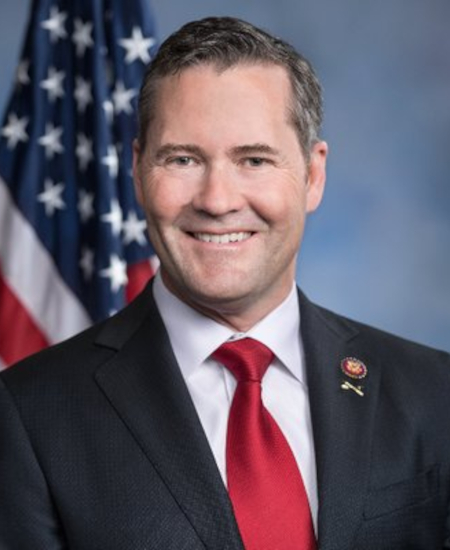
Rep. Michael Waltz
Sponsored bills
Maddy summaryThis bill repeals a law (18 U.S.C. § 1715) that previously prohibited mailing firearms without a license. It directly affects the U.S. Postal Service, firearm sellers, and individuals mailing firearms by preventing the Postal Service from creating rules that would block firearm mailings or require disclosure of sensitive records like sales receipts or firearm serial numbers. Key provisions include removing the existing ban on mailing firearms and prohibiting the Postal Service from imposing new restrictions on firearm mailings or demanding customer transaction data. The bill ensures that firearm mailings can proceed without these specific federal restrictions, while applying to ongoing legal cases under the repealed law.
Maddy summaryHR 7107, the Human Trafficking Awareness Training Act, requires the Federal Law Enforcement Training Centers (FLETC) to create a mandatory training program for state, local, tribal, territorial, and educational institution law enforcement officers. The training covers recognizing human trafficking indicators, understanding victim-centered responses, reporting protocols, relevant federal and state laws, and high-risk locations. The bill authorizes $2.3 million annually from 2024 through 2029 to fund this program and mandates coordination with the Department of Homeland Security’s Blue Campaign. It also requires integrating this training into existing FLETC programs. The law defines human trafficking per the Trafficking Victims Protection Act of 2000.
Maddy summaryHRES 974 is a non-binding House resolution supporting the designation of January 21-27, 2024, as "National School Choice Week." It encourages parents to learn about K-12 education options - including public schools, charter schools, private schools, and homeschooling - and promotes public awareness of educational choice. The resolution does not create new laws or policies but formally expresses the House's backing for this annual observance. It directly affects parents and students by highlighting available education pathways and urging communities to host events celebrating school choice. The resolution was introduced by multiple House members and referred to the Education Committee.
Maddy summaryThe Death Tax Repeal Act would eliminate the federal estate tax and generation-skipping transfer tax for estates of people who die on or after the bill's enactment date, and for generation-skipping transfers made after that date. It would also establish a new $10 million lifetime gift tax exemption (adjusted annually for inflation) and replace the existing gift tax rate schedule with a revised structure. These changes would primarily affect high-net-worth individuals and their heirs, as the estate tax and gift tax typically apply to large estates or gifts exceeding the new exemption threshold. The bill's provisions would take effect on the date of enactment, with transitional rules for the year the bill is signed into law.
Maddy summaryHR 3925 establishes a federal grant program to fund youth fishing projects in coastal and Great Lakes areas. The bill authorizes $2 million annually (2024-2028) for grants to eligible entities like nonprofits, schools, state/local governments, or Tribal organizations to cover equipment, transportation, licenses, and educational components for youth. Priority is given to projects serving underserved communities, defined as groups facing systemic barriers due to race, disability, poverty, or inequality. Recipients must report annually on grant usage and participant numbers to Congress.
Maddy summaryHRES 955 is a resolution commending Taiwan for its democratic election history and supporting Taiwan's democratic institutions. It recognizes Taiwan's transition to democracy since the late 1980s, including 7 presidential and 9 legislative elections held since then, all deemed free and fair. The resolution specifically expresses support for Taiwan's upcoming January 13, 2024, elections and condemns interference by the Chinese Communist Party. It affirms U.S. commitment to a strong partnership with Taiwan across multiple domains and supports Taiwan's self-defense and liberty. As a procedural resolution, it does not create new law but formally expresses congressional support for Taiwan's democratic development.
Maddy summaryThe REMAIN in Mexico Act of 2024 would require the U.S. government to reinstate the Migrant Protection Protocols (MPP), a policy that forces certain asylum seekers to wait in Mexico while their U.S. immigration cases are processed. It directly affects asylum seekers from Mexico and Central America who are seeking entry to the United States and would be subject to the MPP under this law. The bill mandates implementation of the MPP as described in a 2019 policy memo by former Homeland Security Secretary Nielsen. This would reverse the current administration's decision to end the program, requiring asylum seekers to remain in Mexico during their immigration proceedings.
Maddy summaryThis bill directs the U.S. government to expedite processing for Afghan nationals who aided U.S. missions in Afghanistan and face Taliban threats. It specifically targets special immigrant visa applicants and refugee referrals approved under Priority 2 Designation, including those still in Afghanistan or in third countries. The bill requires the State Department, in coordination with Homeland Security, to surge consular capacity (e.g., adding staff at embassies) to reduce processing times while maintaining security vetting. It does not change eligibility but mandates faster processing for already-approved cases. The law applies directly to Afghan nationals with U.S. government ties who remain at risk.
Maddy summaryHR 1147, the Whole Milk for Healthy Kids Act of 2023, allows schools participating in the National School Lunch Program to offer whole milk as an option during lunch. It amends the school lunch law to explicitly permit schools to serve flavored and unflavored whole milk alongside reduced-fat, low-fat, and fat-free milk choices for students. The bill also requires the Secretary of Agriculture to adjust meal regulations to account for saturated fat from whole milk, ensuring it doesn't count against meal fat limits. This change directly affects participating schools and the students who receive school lunches, expanding their milk beverage options.