

Maddy summaryThis bill directs the U.S. Secretary of State to assist the Federated States of Micronesia, Marshall Islands, and Palau in establishing or strengthening national security councils (or similar bodies) to improve coordination on security matters. It requires the U.S. to provide advice and support for activities including emergency response, law enforcement, maritime security, and countering illegal fishing, while ensuring equipment meets cybersecurity standards and avoids certain foreign technologies. The bill mandates annual reports to Congress assessing progress, challenges, and efforts to prevent foreign interference. It directly affects the three Pacific Island nations by supporting their security coordination structures under their existing U.S. compacts.
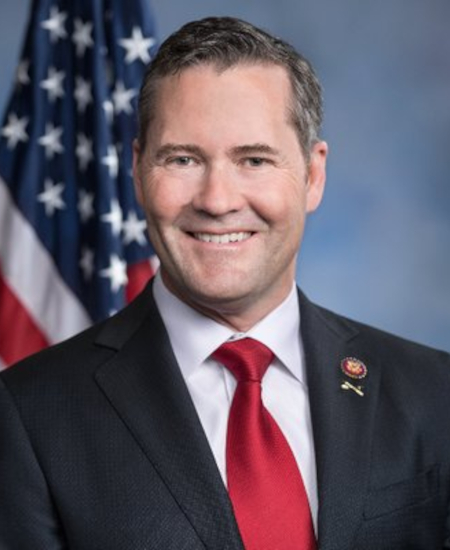
Rep. Michael Waltz
Sponsored bills
Maddy summaryHR 6734 prohibits the use of federal funds to finalize, implement, or enforce the Bureau of Alcohol, Tobacco, Firearms, and Explosives' (ATF) proposed rule (2022R-17) defining "engaged in the business as a dealer in firearms." This bill directly affects the ATF by blocking funding for this specific regulatory rule, which was proposed in August 2023. The legislation does not create new requirements but prevents federal resources from being used to advance this particular ATF regulation.
Maddy summaryHR 6694, the 7 October Hamas Attack Evaluation and Intelligence Sharing Act, requires U.S. intelligence agencies to produce a report within 30 days on Hamas's training, weapons, and foreign support for the October 7, 2023, attack on Israel. The bill also mandates two reviews: one on whether increased intelligence sharing with Israel about Hamas, Hezbollah, and Iran improves U.S. and allied security, and another on how such sharing can reduce civilian harm and aid in the Israel-Hamas conflict. Additionally, it directs the Defense Department's Inspector General to assess whether policies to minimize civilian harm are being followed in intelligence sharing with Israel. All findings must be submitted to relevant congressional committees within the specified deadlines.
Maddy summaryThis bill prohibits legislative branch offices (like congressional offices) from using federal funds to acquire or display any flag or pennant other than the U.S. flag, a state/territory/possession flag, or the POW-MIA flag. It allows displays of state flags, government department flags, and military flags under specific exceptions. The rule applies to all legislative branch offices starting in fiscal year 2024 and does not restrict the use of non-federal funds for other displays. This is a procedural rule affecting flag displays in federal legislative offices, not a substantive policy change.
Maddy summaryHR 6615 establishes a Special Inspector General within the Department of Education to monitor college admissions practices following the Supreme Court's *Students for Fair Admissions* ruling. The inspector general investigates allegations of race-based discrimination in admissions or financial aid at colleges receiving federal student aid, ensuring compliance with the 14th Amendment and Title VI of the Civil Rights Act. Institutions found violating these rules could lose eligibility for federal funding, and the inspector general must report quarterly to Congress on investigations, violations, and institutional cooperation. The position is funded with $25 million and will sunset after 12 years. This directly affects all colleges receiving federal aid under the Higher Education Act.
Maddy summaryThis bill requires the President to block transactions involving "covered Iranian funds" processed by foreign or international financial institutions. These funds refer specifically to money transferred from South Korea to Qatar under certain Iran sanctions waivers. The law imposes sanctions under existing U.S. authorities to block all U.S.-related transactions with institutions handling these funds. Sanctions can be lifted if Iran stops supporting terrorism and dismantles its weapons programs, as certified by the President. The bill directly affects global financial institutions processing these specific Iranian-linked transfers.
Maddy summaryHRES 888 is a non-binding House resolution introduced on November 21, 2023, by multiple representatives. It formally reaffirms the State of Israel's right to exist, states that denying this right constitutes antisemitism, and rejects calls for Israel's destruction. The resolution also condemns the Hamas-led terrorist attack on Israel. As a symbolic statement, it does not create new laws or affect any specific group directly.
Maddy summaryHRES 889 is a symbolic resolution passed by the U.S. House of Representatives expressing strong disapproval of Hamas's October 7, 2023, attack on Israel, which resulted in approximately 1,200 deaths and over 240 hostages taken. It calls directly on Hamas to immediately surrender, stop attacks, and release all hostages, referencing Hamas's designation as a U.S. Foreign Terrorist Organization. The resolution has no legal force or new requirements - it solely states congressional condemnation and urges Hamas to comply with international norms. It does not impose sanctions, direct military action, or alter U.S. policy toward Israel or Gaza.
Maddy summaryThis bill appropriates $14.3 billion in supplemental security funding to Israel following the October 7, 2023 attacks. The funding includes $4 billion for Iron Dome and David's Sling defense systems, $1.35 billion for the Iron Beam defense system development, and $3.5 billion for foreign military financing. The bill requires regular reporting to Congress on security assistance provided to Israel and designates all funds as "emergency requirements" under federal budget law. It also modifies existing laws to facilitate the transfer of defense articles and services to Israel, aiming to strengthen Israel's defense capabilities against rocket threats.
Maddy summaryThis bill exempts farmed sturgeon and their offspring held in U.S. captivity or controlled environments from certain provisions of the Endangered Species Act (ESA), specifically sections 9(b)(1) and 7(a)(2). It directly affects sturgeon aquaculture businesses and farms operating under existing U.S. regulations. The key provision requires owners to maintain documentation proving their sturgeon qualify for the exemption and to provide requested records to the Secretary of the Interior, without duplicating existing ESA requirements. The exemption remains in effect until the sturgeon or its progeny is intentionally released back into the wild. This change streamlines regulatory compliance for the sturgeon farming industry while maintaining ESA protections for wild populations.