

Maddy summaryThe Strategic Ports Reporting Act of 2024 requires the U.S. Department of Defense to study strategic ports worldwide, focusing on China's efforts to expand control through companies like China Ocean Shipping Company and products such as LOGINK. The study must assess how Chinese influence over these ports could harm U.S. security and economic interests, including vulnerabilities in both Chinese- and U.S.-controlled ports. Within one year of enactment, the Department must submit a detailed report to Congress, including lists of key ports, analysis of China's activities, and a strategy for securing trusted ownership of maritime infrastructure. This bill directly affects the Department of Defense and relevant congressional committees, mandating a concrete policy review without altering existing laws or funding.
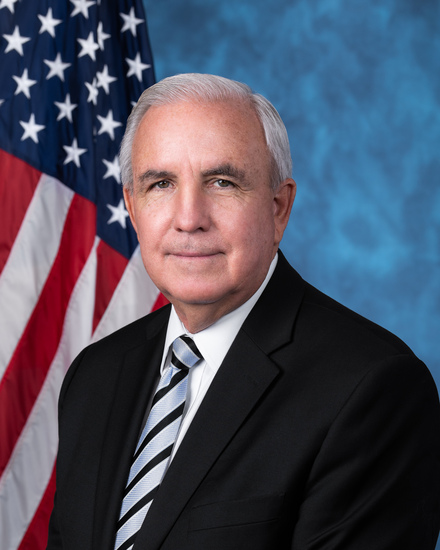
Rep. Carlos A. Gimenez
Sponsored bills
Maddy summaryThis bill requires Transportation Security Officers to complete annual, specialized training focused on assisting passengers with disabilities, separate from general security training. It expands access to expedited security screening for passengers with disabilities or medical conditions, including in dedicated lanes. Most significantly, it establishes free enrollment in the TSA PreCheck program for veterans who lost a limb, became paralyzed, or have permanent blindness requiring mobility aids (verified through VA care), with TSA and the Department of Veterans Affairs coordinating outreach and implementation.
Maddy summaryThis resolution establishes a House task force to investigate the July 13, 2024, attempted assassination of Donald J. Trump in Butler, Pennsylvania. The task force, composed of up to 11 members appointed by the Speaker (with minority leader input), will examine actions by federal, state, local, and private entities related to the incident and must issue a final report with recommendations by December 13, 2024. It has standing committee authority to hold hearings, issue subpoenas, and access relevant records, and will terminate 10 days after submitting its report. The task force directly affects the House of Representatives and the entities under investigation.
Maddy summaryHR 9102 would block student loan forgiveness or new loans for students convicted of hate crimes committed during protests that disrupt campus operations at colleges or universities. Specifically, it amends the Higher Education Act to deny eligibility for any federal student loan program or loan forgiveness if a student is convicted under federal or state law for a hate crime (as defined in 18 U.S.C. §249) related to protest activity. This directly affects students who face such convictions, removing their access to federal loan benefits. The bill targets conduct disrupting campus functions, not general hate crimes, and applies to all federal student loan programs under Title IV of the Higher Education Act.
Maddy summaryThis bill requires the Secretary of Homeland Security to provide written notice within 14 days if denying a presidential candidate's request for protective detail or increased resources, explaining the specific criteria not met. It allows candidates to submit written reconsideration requests with supporting facts, and mandates a final written decision within 14 days of that request. The bill directly affects presidential candidates seeking security details by establishing clear procedural steps for denials and reconsideration, without changing eligibility criteria. It focuses solely on process, not policy outcomes.
Maddy summaryHR 9066, the Cuba Threat Assessment Act, requires the Department of Homeland Security (DHS) to produce annual threat assessments within 180 days of enactment (and annually for five years) regarding potential threats to the U.S. from Cuba. The DHS Under Secretary for Intelligence must coordinate these assessments with privacy and civil rights offices to ensure compliance with laws protecting individual rights, submit unclassified reports publicly, and provide classified annexes if needed. The assessments must be shared with specific congressional committees (House Homeland Security and Intelligence committees, and Senate Homeland Security and Intelligence committees) and accompanied by a briefing within 30 days of submission. This bill mandates a structured reporting process but does not alter existing laws or directly affect Cuban nationals or U.S. citizens.
Maddy summaryHRES 1358 is a resolution passed by the U.S. House of Representatives calling for accountability for Cuba's violations of internationally recognized human rights and its support for activities harming U.S. interests and democratic nations. It urges the U.S. government to maintain sanctions on Cuba until a democratic transition begins, seek Cuba's expulsion from the UN Human Rights Council, and retain Cuba on the State Sponsors of Terrorism list. The resolution also requires the State Department to submit biannual reports to Congress on efforts to promote democracy in Cuba and calls for action against the trafficking of Cuban medical personnel abroad. This resolution expresses congressional policy but does not create binding law.
Maddy summaryHRES 1351 is a symbolic resolution commending Cuban citizens who protested against the Communist regime on July 11, 2021. It honors their courage in demanding fundamental rights, while condemning the regime's crackdown - including detaining over 1,400 protesters, cutting internet access, and subjecting activists like José Daniel Ferrer García to torture. The resolution calls for the immediate release of imprisoned protesters and urges the U.S. government to prioritize democracy and human rights in Cuba policy over "unilateral concessions." As a non-binding resolution, it does not create new laws or policies but expresses congressional support for Cuban pro-democracy activists.
Maddy summaryHR 5567, the CLASS Act, prohibits public elementary and secondary schools receiving federal education funds from accepting money or entering contracts with the Chinese government, Chinese Communist Party, or entities acting on their behalf. Schools must disclose any foreign funding sources within 30 days, including the foreign entity’s name, country, amount received, and any terms or conditions. This applies to all schools receiving federal financial assistance under applicable programs, as defined by existing education laws. The bill aims to restrict foreign influence in U.S. school systems by requiring transparency about foreign funding. It does not alter school curricula or address content, only funding sources and disclosure requirements.
Maddy summaryHR 8206 prohibits Big Cypress National Preserve in Florida from being designated as wilderness or added to the National Wilderness Preservation System. This means the preserve will not receive wilderness protections, which typically restrict activities like off-road vehicle use and logging. The bill directly affects future management decisions for the preserve by legally blocking federal wilderness designations. It is a specific policy change preventing new restrictions on land use within the preserve.