

Maddy summaryThis non-binding resolution condemns Nicolás Maduro's regime in Venezuela for corruption, human rights abuses, and undermining democracy. It specifically highlights actions like embezzling public funds, disqualifying opposition candidate Maria Corina Machado, and preventing free elections, while demanding the regime allow Edmundo González Urrutia to run in the July 28, 2024, election. The resolution urges the administration to condemn election fraud and impose sanctions if needed, but does not enact new policies or sanctions itself. It serves as a symbolic congressional statement of disapproval, referencing prior U.S. sanctions but not altering them.
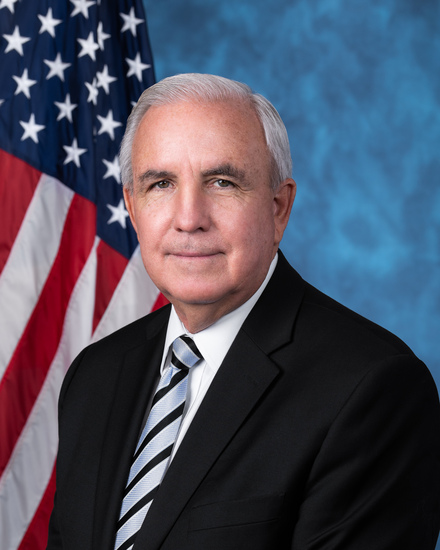
Rep. Carlos A. Gimenez
Sponsored bills
Maddy summaryThis bill rescinds unspent funds from specific federal programs. It targets leftover money from pandemic relief (like the CARES Act and American Rescue Plan) and certain infrastructure initiatives (including education stabilization funds and transportation programs like the Congestion Mitigation Program). The rescission is limited to amounts already allocated for Israel, Ukraine, and Indo-Pacific security supplements under recent appropriations. Unspent funds must be returned to the Treasury, with no new spending created.
Maddy summaryHR 537 authorizes a Congressional Gold Medal to honor 60 diplomats who saved Jewish lives during the Holocaust by issuing visas and passports against their governments' orders, risking expulsion and personal danger. The medal will be presented to the next of kin of these diplomats, alongside representatives from their home countries, and permanently displayed at the United States Holocaust Memorial Museum. The bill also permits the sale of bronze duplicates to cover production costs, with proceeds going to the U.S. Mint. This legislation recognizes the diplomats' humanitarian actions without creating new government programs or altering existing laws.
Maddy summaryHR 8693, the "No American Land for Communist China Act," prohibits U.S. citizens or entities from purchasing real estate adjacent to specific federal lands if owned by the Chinese government or businesses with 25%+ Chinese government ownership. It directly affects Chinese government entities and Chinese-owned businesses operating in the U.S., restricting their ability to buy land near protected federal areas. The bill requires the President to take necessary actions to block such purchases, covering lands managed by Interior, Defense, Agriculture (Forest Service), or designated Indian country. This is a policy restriction, not a funding measure, targeting land transactions near sensitive federal properties.
Maddy summaryHR 8608, the SAFE Act, prohibits the Transportation Security Administration (TSA) from allowing representatives of certain foreign governments to enter secure airport areas. It directly affects travelers from countries the Secretary of State has determined (within the past three years) to have repeatedly supported international terrorism, as defined by specific U.S. laws. The bill mandates TSA to block access to secure airport zones - including the sterile area, SIDA, and air cargo areas - for these individuals. This creates a new requirement for TSA to enforce access restrictions based on State Department designations, without altering existing terrorism designation criteria.
Maddy summaryThis bill establishes the Aviation Security Checkpoint Technology Fund (ASCT Fund) within the Department of Homeland Security. It directs $250 million annually from aviation security fees (for fiscal years 2025-2029) to fund TSA's procurement, deployment, and maintenance of new security checkpoint technology at airports. The TSA Administrator must provide regular reports to Congress on how these funds are used for technology deployment. The bill also repeals a previous section of aviation security law that previously governed these fees. The fund directly affects TSA operations and airport security technology upgrades.
Maddy summaryHR 5403, the CBDC Anti-Surveillance State Act, prohibits the Federal Reserve from issuing or facilitating central bank digital currency (CBDC) directly or indirectly to individuals through financial institutions. It specifically bans Federal Reserve banks from offering digital products to individuals, maintaining individual accounts, or using CBDC for monetary policy implementation. The bill also clarifies that its restrictions do not apply to existing physical cash or private, permissionless digital payment systems. This bill directly affects the Federal Reserve's ability to develop or deploy a government-run digital dollar. The law aims to prevent the Federal Reserve from creating a digital currency that could enable transaction tracking or government oversight of personal financial activity.
Maddy summaryHRES 1262 is a ceremonial resolution commemorating the 100th anniversary of the U.S. Border Patrol's establishment on May 28, 1924. It honors the agency's history, service, and sacrifices - including over 57 million apprehensions and 155 agents who died in the line of duty - without creating new laws or affecting any policies. The resolution symbolically recognizes the Border Patrol's role in border security and recommends designating a National U.S. Border Patrol Day. As a purely commemorative measure, it has no direct impact on legislation, funding, or individuals.
Maddy summaryHRES 1255 is a non-binding House resolution introduced on May 23, 2024, that calls on all Americans to observe Memorial Day 2024 as a day of remembrance for military personnel who died in service. The resolution specifically honors "the men and women of the Armed Forces who have died in the pursuit of freedom and peace" and urges the public to demonstrate appreciation for their sacrifices. It does not create new laws or policies but serves as a symbolic expression of national gratitude, emphasizing respect for those who died while defending democratic values. The resolution was co-sponsored by multiple House members and aligns with the traditional observance of Memorial Day.
Maddy summaryThis bill requires the President to provide Congress with a 15-day written notice before pausing, delaying, or suspending U.S. arms shipments to Israel, including detailed justification and impact analysis. It establishes strict congressional review periods: 15 days for initial review, plus additional 10-12 day windows if Congress introduces a disapproval resolution, effectively giving lawmakers significant power to block such pauses. The bill directly affects the President and the White House by restricting unilateral decisions on military aid to Israel, specifically targeting delays like the May 2024 pause on bomb shipments. Key provisions define "covered defense articles" as weapons under existing export laws and mandate transparency about funding, end users, and potential impacts on Israel’s military edge.