

Maddy summaryThe EMAP Act establishes the Early Migration Alert Program (EMAP) within the Department of Homeland Security. It requires U.S. Customs and Border Protection and U.S. Immigration and Customs Enforcement to provide state, local, Tribal, and territorial governments with 24-hour pre-release notifications about aliens being released into the U.S., including details on numbers, criminal histories, initial destinations, and final settlement locations. Notifications must be sent via a verified electronic email system to authorized government personnel. The program is funded at $400,000 annually for fiscal years 2024-2025 and applies to aliens apprehended or released on or after the bill's enactment date. The bill does not alter detention requirements or immigration law, focusing solely on information sharing with local authorities.
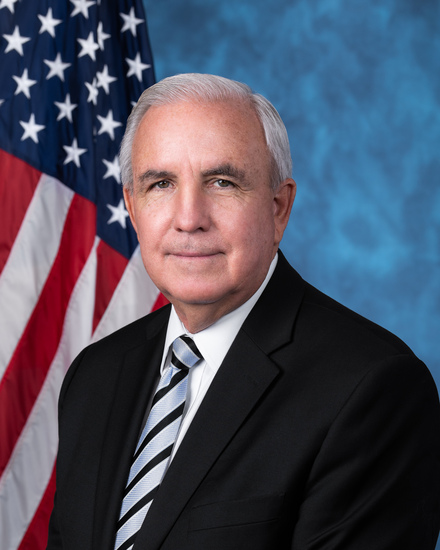
Rep. Carlos A. Gimenez
Sponsored bills
Maddy summaryThis bill directs the Joint Committee on the Library to procure a statue of Benjamin Franklin and place it in the U.S. Capitol. The committee must secure the statue within two years of the bill's enactment and install it in a public-accessible location by January 1, 2026, for viewing during Capitol Visitor Center guided tours. It is a procedural measure with no policy changes or direct impact on constituents or legislation.
Maddy summaryHR 1425, the "No WHO Pandemic Preparedness Treaty Without Senate Approval Act," requires the U.S. Senate to approve any World Health Organization (WHO) pandemic preparedness treaty through a two-thirds vote. The bill deems any convention, agreement, or international instrument on pandemic prevention drafted by the WHO’s International Negotiating Body (INB) as a treaty subject to Senate ratification, rather than allowing it to take effect as an executive agreement. This directly affects U.S. foreign policy implementation regarding WHO agreements, ensuring Congress has a formal role in approving such binding international commitments. The bill stems from congressional concerns about WHO’s pandemic response and public skepticism toward the organization, as outlined in its findings.
Maddy summaryThis resolution (HRES 1446) formally condemns Cuba's labor export program, which deploys medical personnel abroad under conditions described in the 2024 U.S. Trafficking in Persons (TIP) Report as involving forced labor and human trafficking. It directly affects Cuban medical workers deployed in 72 countries over five years, who reportedly have wages withheld, passports confiscated, and face restricted movement. The resolution urges host governments to pay medical workers directly (bypassing Cuba) and calls for U.S. visa revocations against officials from Cuba, Brazil, Honduras, Mexico, and the Pan American Health Organization involved in these programs. It cites the State Department’s finding that Cuba profits $6-8 billion annually from this system while failing to meet international labor standards.
Maddy summaryThis bill blocks U.S. Department of Homeland Security (DHS) funding to colleges and universities that maintain relationships with Confucius Institutes or "Chinese entities of concern" (defined as institutions linked to China's military or defense sectors). It requires affected schools to terminate such relationships within 12 months of the bill's enactment to regain eligibility for DHS funds. The law directly impacts higher education institutions receiving DHS funding, not all schools or federal programs. Key provisions mandate DHS to deny funding to institutions with ongoing ties to these entities, with eligibility restored only after relationship termination.
Maddy summaryThis bill requires the Transportation Security Administration (TSA) to direct the Federal Air Marshal Service (FAMS) to create a plan for deploying air marshals beyond flights to cover airport security throughout the entire airport environment (e.g., terminals, gates). The plan must address how marshals, as federal law enforcement officers, will enhance security at specific airports and be submitted to key congressional committees within 180 days of the bill's enactment. It does not change current law but mandates a new process for expanding air marshal duties to airport-wide security.
Maddy summaryHRES 1409 is a symbolic House resolution condemning Nicolás Maduro's regime for alleged election fraud in Venezuela's July 28, 2024 presidential election. It recognizes opposition candidate Edmundo González Urrutia as the president-elect based on observed vote tallies showing his decisive victory, and condemns the regime's refusal to release transparent results. The resolution calls for new sanctions against Maduro and his allies, demands respect for the election outcome, and urges diplomatic pressure to support Venezuela's democratic transition. This resolution directly addresses the Maduro regime's actions and expresses U.S. solidarity with Venezuelan voters and the opposition.
Maddy summaryHRES 1403 is a non-binding resolution recognizing Edmundo González as the winner of Venezuela's July 28, 2024, presidential election and condemning Nicolás Maduro's regime. It cites the regime's alleged election interference - including disqualifying opposition candidate María Corina Machado, halting vote count transmissions, and obstructing poll watchers - as justification for the condemnation. As a symbolic gesture, the resolution does not impose legal requirements or sanctions but formally expresses the House's support for democratic processes in Venezuela. The resolution directly addresses U.S. foreign policy stance and the international community, not specific individuals or entities within Venezuela.
Maddy summaryThe Counter SNIPER Act (HR 9282) establishes a formal process for presidential and vice-presidential candidates seeking protective details from the U.S. Secret Service. If the Secretary of Homeland Security denies a request, they must provide a written explanation within 14 days, detailing the criteria not met, and allow candidates to request reconsideration with supporting evidence. The Secretary must then issue a final written decision within 14 days of the reconsideration request. Additionally, the bill requires the Director of the U.S. Secret Service to be appointed by the President with Senate confirmation.
Maddy summaryHR 9274, the SHAWL Act, establishes two new Smithsonian museums: the National Museum of the American Latino and the American Women’s History Museum. It authorizes both museums to be located within the National Mall’s "Reserve" area, overriding prior restrictions, and requires federal agencies managing potential sites to transfer jurisdiction to the Smithsonian after notifying congressional committees. The bill mandates that both museums accurately represent diverse cultures, histories, and viewpoints within Latino and women’s communities through exhibits and programs, requiring input from a broad range of community experts. It also requires the Smithsonian to submit biennial reports to Congress detailing compliance with these representation requirements.