

Maddy summaryHRES 323 (submitted April 25, 2023) is a ceremonial House resolution commemorating the 62nd anniversary of the 1961 Bay of Pigs invasion and honoring members of the Assault Brigade 2506 (Brigada de Asalto 2506). It specifically remembers veterans who died, were imprisoned, or suffered during the operation, and calls for continued U.S. support for Cuban democracy. As a non-binding resolution, it has no legal effect but formally recognizes the historical event and its participants. The resolution focuses on historical remembrance rather than proposing new policies or affecting current legislation.
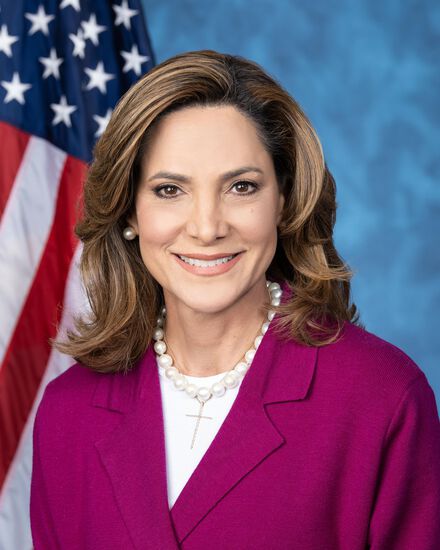
Rep. Maria Elvira Salazar
Sponsored bills
This resolution affirms that it is U.S. policy to see Ukraine prevail against the Russian invasion and restored to its internationally recognized 1991 borders. The resolution also states that the peace brought by Ukraine's victory must be secured by integrating Ukraine into NATO and other Euroatlantic institutions.
Maddy summaryHR 1788, the "Goldie’s Act," strengthens USDA enforcement of the Animal Welfare Act. It requires annual inspections of all regulated animal businesses (like dealers, research facilities, and exhibitors) and mandates immediate, humane confiscation of animals suffering due to violations, while prohibiting owners from destroying animals during this process. The bill increases civil penalties to $10,000 per violation, requires hearing panels including veterinarians, and mandates that penalties consider business size and violation severity. It also requires USDA to share violation records with local animal control within 24 hours.
This resolution recognizes the 70th anniversary of the signing of the Mutual Defense Treaty between the United States and South Korea. Affirming the importance of the U.S.-South Korean alliance as the linchpin to safeguarding peace, security, and prosperity on the Korean peninsula, the resolution welcomes President Yoon Suk Yeol to the United States. It also supports ongoing defense and security ties, calls for continued promotion of human rights, and encourages close cooperation between the United States, South Korea, and Japan.
Prevent Family Fire Act of 2023 This bill allows through 2030 a new tax credit equal to 10% of amounts received from the first retail sale of a safe firearm storage device, not to exceed $400 per device. The bill defines safe firearm storage device as a device that is designed and marketed to deny unauthorized access to, or render inoperable, a firearm or ammunition, and is secured by a combination lock, key lock, or lock based on biometric information.
Maddy summaryThis bill establishes a 10-member Commission to study how U.S. federal laws and policies affect citizens living abroad. The Commission will examine specific issues including tax reporting requirements, access to financial institutions, voting procedures, Social Security/Medicare interactions, and immigration processes for family members. It must submit an initial report within one year of enactment, detailing findings and recommendations for improving these systems. The Commission will terminate after submitting a follow-up report one year later, with no direct policy changes enacted by the bill itself.
Maddy summaryThe Puppy Protection Act of 2023 sets new standards for businesses that sell dogs (dealers), directly affecting pet stores and breeders operating under the Animal Welfare Act. It requires specific housing with space allowances based on dog size (e.g., 12-30 square feet per dog), temperature control (45-85°F), clean food twice daily, and daily exercise or socialization with humans/dogs for at least 30 minutes. The bill also mandates annual veterinary exams including dental care, strict breeding limits (e.g., age restrictions, maximum 2 litters in 18 months), and efforts to place retired breeding dogs in homes instead of selling them to other breeders. Regulations must be finalized within 18 months of enactment.
Maddy summaryThe Project Safe Childhood Act modernizes the Project Safe Childhood program to combat online child sexual exploitation and abuse. It requires the Attorney General to develop best practices for investigating and prosecuting child sexual exploitation offenses, including contact sexual offenses and those involving child sexual abuse material. Each U.S. Attorney must create a district-specific strategic plan coordinating with law enforcement and prosecutors to identify victims and serious offenders, with a focus on victim-centered approaches. The bill authorizes $29.1 million annually for additional staff, training, and a national Safer Internet Day to raise public awareness about online child exploitation threats.
Maddy summaryThe Panama Canal Zone Veterans Act of 2023 creates a presumption that veterans who served in the Panama Canal Zone between 1958 and 1999 (or until the last military member left) and developed specific illnesses are automatically eligible for VA benefits without needing to prove a direct link between their service and the condition. It lists 16 illnesses, including prostate cancer, lung cancer, diabetes, Parkinson's disease, and several other cancers, as qualifying for this presumption due to presumed exposure to herbicides like Agent Orange during service. The VA will use regulations based on medical evidence to determine which illnesses qualify under this provision. This change directly affects veterans who served in the Panama Canal Zone during the covered period and later developed one of the listed conditions.
Maddy summaryThe PLUS for Veterans Act of 2023 clarifies and updates rules for veterans' benefit claims under the Department of Veterans Affairs. It sets a $12,500 annual fee cap (adjusted for inflation) for agents or attorneys representing veterans, prohibits charging fees for medical exams, and prohibits unauthorized fees with penalties including fines or up to one year in prison. The bill directly affects veterans seeking benefits, their legal representatives, and the VA by standardizing fee agreements, requiring VA reports on agent/attorney suspensions, and ensuring veterans can access free services from VA-recognized organizations. Key provisions include banning fees for medical reports and requiring clear fee disclosures to veterans.