

Maddy summaryHR 3067, the CASES Act of 2023, requires the U.S. Secretary of State to submit annual reports detailing the financial assets of five specific Argentine officials. The bill targets Cristina Fernández de Kirchner, Máximo Kirchner, Juan Martin Mena, Oscar Parrilli, and Carlos Zannini, including their personal wealth, family assets, and business holdings. If the President determines these individuals meet sanctions criteria under existing law, U.S. sanctions must be imposed on them. The bill directly affects these five named officials by establishing a mechanism for potential U.S. financial sanctions based on their reported assets. It does not impose sanctions automatically but triggers them upon the President's affirmative determination.
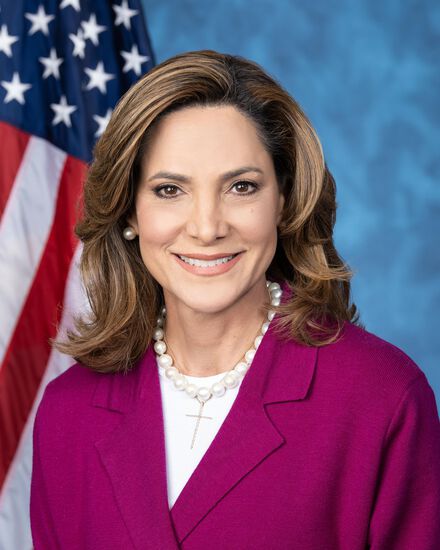
Rep. Maria Elvira Salazar
Sponsored bills
Maddy summaryThis bill directs the President to determine within 90 days whether to apply sanctions under existing law against the Iran Airports Company, a state-owned entity that facilitates Mahan Air's operations. Mahan Air, already sanctioned by the Treasury for supporting Iran's Revolutionary Guards and regional destabilization, uses Iran Airports Company's infrastructure for flights. The bill does not create new sanctions but requires a formal presidential assessment of whether the airport company should face penalties under Executive Order 13224, which targets entities aiding terrorism. It directly affects Iran Airports Company as the specific entity under review.
Maddy summaryHR 2955, the Stop Institutional Child Abuse Act, establishes a Federal Work Group to improve data collection and best practices for youth in residential programs (like therapeutic schools, treatment centers, and group homes). The Work Group, composed of federal agency representatives and diverse stakeholders, must develop national data standards, create risk assessment tools, and issue biennial reports with recommendations to enhance safety, reduce restraints, and expand community-based alternatives. It directly affects youth with mental health, substance use, or disability needs placed in these facilities, as well as agencies overseeing them. The bill also mandates a National Academies study to examine funding, oversight, and barriers to community care. These mechanisms aim to standardize data tracking and promote less restrictive, trauma-informed care for youth in residential programs.
Maddy summaryThis bill creates a federally chartered National Center for the Advancement of Aviation to develop the U.S. aviation and aerospace workforce. The Center will provide grants for education and training programs, including scholarships, internships, and curriculum development for middle schools, high schools, and colleges focused on aviation careers. It will specifically support underrepresented groups and veterans transitioning to aviation careers while coordinating with government agencies to avoid duplicating existing programs. The Center must operate as a non-profit entity, maintain tax-exempt status, and submit annual reports to Congress on its activities.
Maddy summaryHRES 332 is a symbolic House resolution expressing congressional support for Ukraine's victory in its war against Russia. It affirms that U.S. policy should aim for Ukraine to prevail and return to its internationally recognized 1991 borders, with the House declaring that Ukraine's victory must be secured through NATO integration. The resolution also calls for the Russian Federation to pay reparations, global support for Ukraine's rebuilding, accountability for Russian leaders, and justice for victims of wartime crimes. As a non-binding "sense of Congress" resolution (not a law), it does not change U.S. policy but reflects the House's stance on supporting Ukraine.
Maddy summaryThe Ukraine Human Rights Policy Act of 2023 requires the President to report to Congress within 60 days on whether a person meets criteria for sanctions related to human rights abuses in Ukraine and whether sanctions are imposed. It mandates the Secretary of State to include specific details in an annual report about human rights abuses by Russian forces in Ukraine and against forcibly relocated Ukrainians, including conditions in detention camps and the use of sexual violence as a weapon of war. The report must cover assessments of abuse methods, forced adoptions of Ukrainian children, efforts to renounce faith, and U.S. diplomatic efforts to address violations through sanctions. This bill establishes reporting requirements and congressional oversight for existing sanctions processes without creating new sanctions.
Maddy summaryThis bill would remove time limits for filing civil and criminal cases related to child sexual abuse, exploitation, and sex trafficking, directly helping survivors who have been unable to seek justice due to expired statutes of limitations. It requires states to eliminate all civil and criminal statutes of limitations for these crimes and to revive previously time-barred civil claims, with a minimum of two years or until the victim turns 55 - whichever is longer. The bill also provides federal grants to states that adopt these reforms, with funding increasing based on how many changes they implement (e.g., 40% for states achieving all three key reforms).
Maddy summaryHR 2906, the "Reject Latinx Act," prohibits U.S. federal executive agencies from using the terms "latinx" or "latin-x" (or variations) in any official public document. This applies to all documents produced on or after a 30-day effective date following the bill's enactment. The bill directly affects federal agencies responsible for creating public-facing communications, such as reports, forms, or websites. It does not restrict the terms in private or non-governmental contexts. The law mandates this language change for all new agency documents but does not require altering existing documents.
Maddy summaryHR 2370, the Access to AEDs Act, authorizes $25 million in federal funding (2024-2028) to help public elementary and secondary schools improve access to automated external defibrillators (AEDs) and CPR training. The bill directs the Secretary of Health and Human Services to award grants to school districts and partners for developing AED programs, training staff and students, purchasing and maintaining AEDs, and creating cardiac emergency response plans. It specifically targets schools to address sudden cardiac arrest (SCA), which is a leading cause of death among student athletes and youth, with 90% of SCA victims dying without immediate CPR and defibrillation. The law requires grantees to report on their activities and establishes a clearinghouse to collect data on school AED access and costs.
This joint resolution nullifies a Department of Labor final rule entitled Adverse Effect Wage Rate Methodology for the Temporary Employment of H-2A Nonimmigrants in Non-Range Occupations in the United States and published on February 28, 2023. This rule makes changes to the methodology used to set adverse effect wage rates for H-2A workers (temporary agricultural workers), including by using Bureau of Labor Statistics wage surveys in certain instances. (Generally, the minimum wage for an H-2A worker is the highest of the adverse effect wage rate, the applicable minimum wage, the prevailing wage for that occupation in that area, or any agreed-upon collective bargaining wage.)