

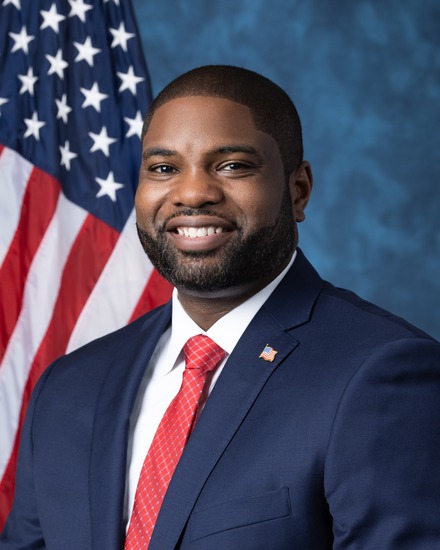
This resolution expresses the sense of the House of Representatives that mandates imposed on manufacturers requiring inclusion of unproven and unreliable microstamping technology in firearms is costly and punitive, and the prohibition of firearms without such features is an infringement on the rights of citizens under the Second Amendment.
Rep. Byron Donalds
Sponsored bills
Maddy summaryHRES 127 is a symbolic House resolution expressing the House's position that the U.S. should support safe, responsible energy drilling to strengthen domestic energy supply chains. It recommends repealing federal restrictions on drilling on public lands, clarifying drilling's role in energy production, and incentivizing workforce development in the energy sector. The resolution does not create new laws or directly affect any individuals or businesses; it merely states the House's opinion on policy priorities. It emphasizes that increased domestic drilling could enhance national security, prevent energy shortages, and reduce energy poverty - though these are stated goals, not guaranteed outcomes. As a non-binding resolution, it has no legal force.
Maddy summaryHR 1703, the SECURE Flights Act, prohibits the use of specific immigration forms (like I-94 arrival records or I-200 warrants) as valid ID at airport security checkpoints. If such a document is presented, TSA must notify U.S. immigration and law enforcement agencies, and the individual may be barred from entering secure airport areas unless traveling for deportation or presenting a valid "covered ID" (e.g., passport, Global Entry card, or driver’s license). The bill also requires TSA to collect biometric data (like fingerprints or facial scans) from travelers who cannot verify U.S. citizenship and lack a covered ID, submitting this to the Homeland Security IDENT system. It directly affects travelers using non-standard immigration documents at airports, aiming to enhance security coordination between TSA and immigration authorities.
Maddy summaryThis bill prohibits the President from revoking presidential permits for international oil or natural gas pipelines (including border-crossing sections) or related electric transmission facilities without specific authorization from Congress. It applies to permits required under several executive orders, preventing unilateral cancellation by the President. The law requires Congress to pass a new law explicitly allowing revocation, rather than the President acting alone. This directly affects pipeline projects seeking or holding federal permits for cross-border energy infrastructure.
Maddy summaryHR 1067, the American Energy Act, aims to expedite oil and gas drilling by limiting court interventions in permit and lease processes. It requires federal agencies to process drilling permit applications even if environmental lawsuits are pending, and prevents courts from vacating lease sales or delaying development unless imminent environmental harm is proven with no other legal remedy. Permits would now be valid for four years or until the underlying lease expires, whichever comes first. This primarily affects oil and gas companies seeking drilling rights, federal agencies managing leases (like the Department of the Interior), and environmental groups challenging projects in court.
Maddy summaryH.J. Res. 26 is a congressional disapproval resolution blocking the District of Columbia Council's approval of its Revised Criminal Code Act of 2022 (D.C. Act 24-789). It directly affects the District of Columbia by preventing the new criminal code from taking effect, as Congress disapproved the Council's action under the Home Rule Act. The resolution formally rejects the Council's enactment of the code, which was transmitted to Congress on January 27, 2023. This procedural action stops the District from implementing the revised criminal code without further congressional action.
Maddy summaryHR 1484, the Pipeline Sabotage and Accident Prevention Act, adds criminal penalties for intentionally damaging or disrupting pipeline infrastructure. It makes it a federal offense to knowingly cause defects in pipes, pumps, or valves (or disrupt operations) in pipelines regulated under existing law, punishable by fines, up to 10 years in prison, or both. The bill specifically protects First Amendment rights, stating its provisions don’t limit lawful protests or free speech. It directly affects individuals who intentionally target pipeline infrastructure, such as vandals or terrorists, by creating clear criminal consequences for such acts. The law focuses on preventing physical harm to critical energy infrastructure through deterrence.
Protecting American Sovereignty Act This bill prohibits the federal government from implementing any obligations upon the United States that may be contained in a draft report by a World Health Organization (WHO) working group on strengthening the WHO's preparedness and response to health emergencies. This prohibition shall also apply to any related or successor reports and recommendations regarding pandemics.
Maddy summaryThis bill requires the U.S. State Department to officially designate four specific Mexican drug cartels (Gulf Cartel, Cartel Del Noreste, Cartel de Sinaloa, and Cartel de Jalisco Nueva Generacion) as foreign terrorist organizations under existing law. It mandates a 30-day report explaining why these groups meet the legal criteria for such designation, including justification if they don't. The report must be submitted to specified congressional committees and may lead to additional cartels being designated based on the findings. The bill also clarifies that this designation won't affect asylum eligibility for individuals fleeing these groups.
Stopping Overdoses of Fentanyl Analogues Act This bill permanently adds fentanyl-related substances to schedule I of the Controlled Substances Act. (A schedule I controlled substance is a drug, substance, or chemical that has a high potential for abuse; has no currently accepted medical value; and is subject to regulatory controls and administrative, civil, and criminal penalties under the Controlled Substances Act.) Fentanyl-related substances are currently regulated under schedule I through a temporary order issued by the Drug Enforcement Administration. The temporary order expires December 31, 2024.