

Maddy summaryHR 1210, the "Stop Fentanyl Border Crossings Act," amends the Public Health Service Act to give the Secretary of Health and Human Services new authority to block border entries. It directly affects countries with substantial fentanyl smuggling, allowing the Secretary to suspend the introduction of people and property from those nations if they determine it poses a serious public health danger. The key provision permits the Secretary to prohibit border crossings for a set period when fentanyl smuggling creates an increased risk of drugs entering the U.S., based on regulations they establish. This is a procedural change to existing public health law, not a new program.
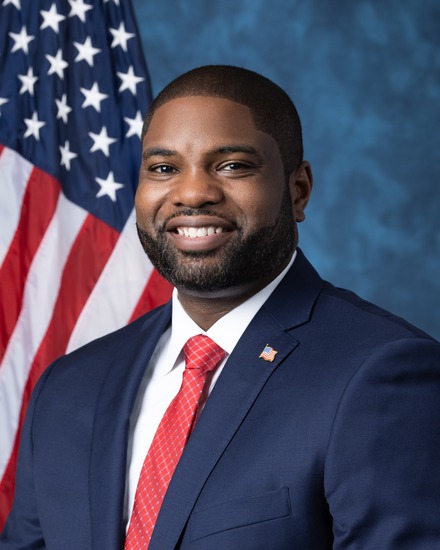
Rep. Byron Donalds
Sponsored bills
This resolution expresses the sense of the House of Representatives that Lawrence Silas is a historically significant African American who has made important contributions for the development of livestock business in Florida and defeated great challenges in his journey to becoming a notorious cattleman in a society with strong racial disparities.
Maddy summaryThe Unauthorized Spending Accountability Act of 2023 establishes a process for handling federal programs that have expired authorizations (unauthorized programs). It requires a 10% budget reduction in the first year after authorization expires, followed by 15% reductions in the second and third years. If a program remains unauthorized for three years, it must be terminated unless Congress reauthorizes it with a 3-year sunset provision. The bill creates a Spending and Accountability Commission to review direct spending programs and propose spending reductions that could prevent these budget cuts from taking effect.
Maddy summaryHR 1492, the CBO Show Your Work Act, requires the Congressional Budget Office (CBO) to publicly publish its fiscal models, data, and detailed methodologies used when estimating the costs and effects of legislation. Specifically, the bill mandates that the CBO make available all models, data preparation routines, and the specific assumptions and computations behind its cost estimates - enabling independent verification by non-CBO staff. This applies to all estimates prepared under the law, with limited exceptions for data protected by other statutes (requiring only descriptive statistics and access details for such data). The changes take effect six months after the bill becomes law. The bill directly affects the CBO’s internal processes and transparency practices, not the legislative content itself.
Maddy summaryHR 1524 (FAIR Act of 2023) prohibits federal agencies, contractors, and recipients of federal funds from intentionally discriminating against or granting preferences based on race, color, or national origin. It directly affects federal contractors, state/local entities receiving federal aid, and educational institutions using federal funds by banning preferential treatment (including quotas or set-asides) in contracts, employment, and admissions. Key provisions require federal agencies to review and update policies within six months of enactment to comply with the ban. The bill does not impact immigration laws or pending cases/contracts but allows civil lawsuits for violations with remedies like back pay and attorney fees.
Maddy summaryHR 1506, the Advisory Committees Free of ESG Act of 2023, prohibits federal agencies from creating or maintaining advisory committees based on environmental, social, or governance (ESG) factors. It bans committees focused on topics like climate change, greenhouse gas emissions, race or gender-based governance structures, or ideologies such as critical race theory. The bill requires immediate termination of any existing advisory committee violating this ban, with enforcement handled by the General Services Administration Administrator, agency Inspectors General, or through citizen lawsuits. This directly affects federal advisory committees that included ESG-related topics, mandating their dissolution under the new rules.
Preventing Violence Against Female Inmates Act of 2023 This bill establishes a framework to prohibit correctional institutions at the federal and state levels from housing inmates of one biological sex with inmates of the other biological sex.
Maddy summaryThe Hurricane Tax Relief Act provides tax relief for individuals affected by Hurricanes Ian, Nicole, and Fiona in designated disaster areas. It allows affected taxpayers to deduct larger portions of personal property losses by increasing the standard deduction by their net disaster loss amount and adjusting the threshold for casualty loss deductions (raising the $500 floor to $1,000 for most cases). The bill also directs the Treasury to pay Puerto Rico an amount equivalent to tax benefits its residents would have received under U.S. federal tax rules, contingent on Puerto Rico having an approved plan to distribute funds directly to residents. This relief applies to losses incurred in the specified hurricane disaster areas on or after the dates of each storm's declaration.
Maddy summaryThis bill expands the use of 529 college savings accounts to cover career training and credentialing costs. It allows funds to pay for tuition, fees, books, and testing expenses related to recognized postsecondary credential programs (like vocational certifications) that meet specific standards under the Workforce Innovation and Opportunity Act. The change directly affects workers seeking industry-recognized credentials - such as nursing certifications or IT certifications - instead of traditional degrees. It treats these expenses the same as traditional college costs for 529 account withdrawals, making it easier to save for career-focused training. The provision applies to expenses paid after the bill's enactment date.
Maddy summaryHR 1434, the "Stop Our Sexual Assault in the Military Act," requires active-duty members of the U.S. Armed Forces to receive monthly self-defense training focused on preventing sexual assault as part of their regular physical training. This training replaces one day of existing monthly physical training, without increasing the total required training days. The bill directly affects all active-duty military personnel by integrating this specific self-defense component into their standard monthly training schedule. It mandates this change through a new provision (Section 2018) added to Title 10 of the U.S. Code. The law focuses solely on implementing this training requirement, with no other substantive policy changes described.