

Maddy summaryHR 1362, the Saving America’s Energy Future Act, prohibits federal agencies from banning new oil and gas leasing or drilling permits on federal lands. It directly prevents the Secretaries of Agriculture (for National Forest System lands) and Interior (for other public lands) from implementing moratoriums on these activities. The bill’s key mechanism is a clear statutory ban requiring agencies to continue processing new leases and permits without delay. This policy change affects oil and gas companies seeking access to federal land resources by ensuring leasing processes remain active. The bill does not create new programs or alter environmental standards, only blocking a specific regulatory action.
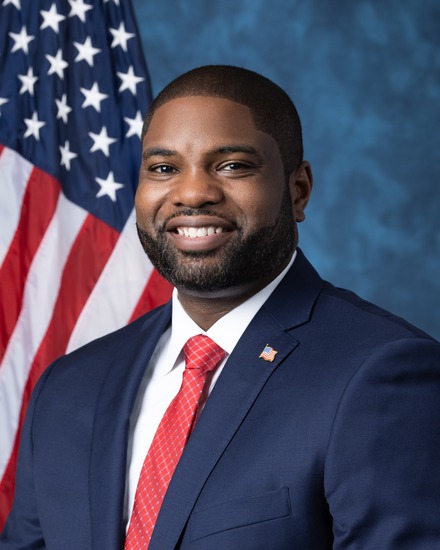
Rep. Byron Donalds
Sponsored bills
This joint resolution nullifies the final rule issued by the Consumer Financial Protection Bureau titled Small Business Lending under the Equal Credit Opportunity Act (Regulation B) and published on May 31, 2023. The rule requires financial institutions to collect and report to the bureau credit application data for small businesses. On July 31, 2023, the U.S. District Court for the Southern District of Texas ordered the bureau not to implement or enforce the rule until a related pending case is resolved.
Protect American Energy From China Act This bill prohibits federal funds from being used for implementing or administering the memorandum of understanding reached in 2011 between the Department of Energy and the Chinese Academy of Sciences on facilitating cooperation in nuclear energy science and technology.
Covenant School Heroes Congressional Gold Medal Act This bill provides for the award of Congressional Gold Medals to Officer Michael Collazo and Officer Rex Englebert of the Metropolitan Nashville Police Department in recognition of their exceptional bravery and valor in confronting an active shooter at The Covenant School in Nashville, Tennessee.
Visa Overstays Penalties Act This bill increases the civil penalties for unlawful entry into the United States and establishes criminal penalties for overstaying a visa. A non-U.S. national ( alien under federal law) apprehended while unlawfully entering the United States shall be subject to a fine of at least $500 and up to $1,000 (currently at least $50 and up to $250). If an individual overstays a visa (or otherwise fails to comply with the conditions of a visa) for 10 days or more, on first offense the individual shall be subject to fines or imprisonment for up to six months, or both. For subsequent violations, the individual shall be subject to fines or imprisonment of up to two years, or both.
Maddy summaryThis bill requires the Veterans Affairs Secretary to expand or modify an existing national cemetery (under National Cemetery Administration control) before Arlington National Cemetery reaches capacity, ensuring it provides full military honors using the same standards and eligibility criteria that applied to Arlington as of March 31, 2023. It directly affects veterans and their families seeking burial with full military honors at national cemeteries nationwide. The bill also mandates a joint report within one year to Congress on expanding cemetery capacity and assessing whether interment criteria should recognize exceptional service, including impacts on women, non-combat veterans, and other groups. The key mechanism is preserving current military honors standards at alternative cemeteries to prevent Arlington's capacity limits from disrupting existing burial practices.
Maddy summaryHR 2375, the District of Columbia Home Rule Improvement Act, extends the congressional review period for District of Columbia laws from 30 to 60 days and allows Congress to disapprove specific provisions of a law rather than requiring full disapproval of the entire law. This bill directly affects the District of Columbia’s local legislative process by modifying how Congress reviews and potentially overturns local ordinances under the existing Home Rule Act. Key mechanisms include a longer 60-day window for congressional review (excluding extended adjournments) and new procedures enabling resolutions to reject individual provisions of DC laws. The bill reaffirms Congress’s constitutional authority over DC but does not change DC’s status as a district or address statehood.
Maddy summaryHR 1818, the Aviation Workforce Development Act, expands tax-advantaged savings plans (529 plans) to cover costs for specific aviation training programs. It allows funds from these plans to pay for tuition, fees, and required materials at FAA-certified aviation maintenance technician schools (Part 147) or commercial pilot training programs (Part 61 or 141). This directly affects students pursuing careers as aircraft maintenance technicians or commercial pilots by making these training costs more affordable through existing tax-advantaged savings. The bill amends the tax code to include these programs under "qualified higher education expenses" for 529 plan distributions.
Maddy summaryHR 1782, the International Port Security Enforcement Act, requires the Secretary of Homeland Security to certify that foreign governments conducting port security assessments meet specific standards before those assessments can be accepted. The bill mandates that the foreign government must have followed proper assessment procedures, provided sufficient information, and not be a state sponsor of terrorism (as defined in law). If a foreign government is a state sponsor of terrorism, the Secretary must automatically treat its ports as lacking effective security measures and apply sanctions under existing law. This directly affects foreign governments operating ports, particularly those designated as state sponsors of terrorism, by imposing new certification requirements and automatic sanctions. The bill clarifies that these rules do not limit the Secretary's discretion to conduct independent assessments or request security measures.
Maddy summaryThis non-binding resolution states that Congress believes nuclear power is essential as a reliable, clean energy source to support a stable electric grid alongside variable sources like solar and wind. It emphasizes nuclear power's role in achieving clean energy goals, reducing carbon emissions, and advancing U.S. energy independence. The resolution does not create new laws or regulations but formally expresses congressional support for nuclear energy as a necessary component of a "green" grid. It was introduced in March 2023 by multiple lawmakers across party lines.