

Maddy summaryHJRES 53 seeks to block an Environmental Protection Agency (EPA) rule that would establish new emissions standards for heavy-duty vehicles like trucks and buses. If passed, the resolution would prevent the EPA's rule from taking effect by invoking a congressional disapproval process under Title 5 of U.S. law. The rule, published in the Federal Register on January 24, 2023, aimed to reduce air pollution from new heavy-duty engine standards. This disapproval would halt the implementation of those specific vehicle emissions requirements.
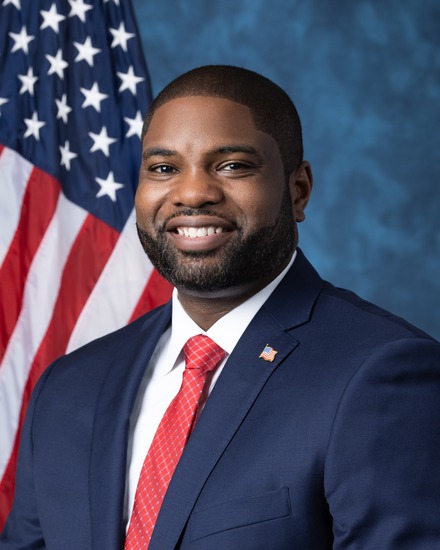
Rep. Byron Donalds
Sponsored bills
Maddy summaryThis bill requires the Government Accountability Office (GAO) to study how quickly the Federal Aviation Administration (FAA) responds to congressional requests for information, including written inquiries and meeting requests. It also mandates that the FAA Administrator provide annual briefings to the House Transportation Committee and Senate Commerce Committee on the agency's activities, objectives, and efforts to engage with Congress and the public. The bill directly affects the FAA's communication practices with Congress, aiming to increase transparency in federal aviation oversight.
Maddy summaryHR 2487 directs the EPA Administrator to classify nuclear power as a "green source of energy" within the Green Power Partnership program. This means businesses or organizations participating in the program could count nuclear power toward meeting their green energy procurement requirements. The bill also requires that federal funds for the program are only available if nuclear power is included as a qualifying green source. It specifically affects entities participating in the EPA's Green Power Partnership, not broader energy policy or regulations.
Maddy summaryHRES 291 is a symbolic resolution supporting "Financial Literacy Month" to raise public awareness about the importance of personal financial education in the U.S. It cites statistics showing widespread challenges with financial literacy, such as 18.6% of households being unbanked or underbanked and only 44% of adults having a budget. The resolution urges federal, state, local governments, schools, nonprofits, and businesses to observe Financial Literacy Month with educational programs. It does not create new laws or funding but emphasizes the need for better financial education to help individuals manage money, credit, and debt.
Maddy summaryHR 2620, the Federal Firearms Licensee Protection Act of 2023, increases penalties for crimes targeting firearms licensees. It amends Section 924 of Title 18 to impose mandatory minimum sentences of 3 years for burglaries or 5 years for robberies committed at the business premises of licensed firearms dealers, manufacturers, or importers. The bill specifically targets violations of Section 922(u), which prohibits unauthorized access to these premises, and adds "attempts to do so" to the penalties. This directly affects licensed firearms businesses by strengthening legal protections against theft or violence at their locations. The law creates clearer, harsher consequences for crimes committed during burglaries or robberies at these specific business sites.
This resolution recognizes law enforcement agencies and officers for their tireless work to protect us and make our communities safer. It also condemns calls to defund, disband, dismantle, or abolish the police.
Maddy summaryThis bill would expand a federal tax credit for clean energy projects to include advanced nuclear power plants. Companies building new "advanced nuclear" facilities - defined as next-generation reactors designed for lower emissions - would become eligible to claim the credit, which currently applies to solar, wind, and other renewable projects. The change modifies existing tax code rules (Section 48C) to explicitly add advanced nuclear facilities to the list of qualifying projects. It directly affects developers of advanced nuclear energy infrastructure seeking financial incentives under federal clean energy programs.
Maddy summaryHR 2490 creates a new reward program for whistleblowers who provide original information leading to successful enforcement actions by the Consumer Financial Protection Bureau (CFPB) that result in monetary penalties exceeding $1 million. Whistleblowers can receive 10% to 30% of the collected penalties (minimum $50,000, maximum $5 million per person) for information that directly leads to enforcement actions against financial institutions violating consumer financial laws. The bill includes strong confidentiality protections to prevent disclosure of whistleblowers' identities and requires the CFPB to consider factors like the significance of the information and the whistleblower's cooperation when determining award amounts. The CFPB must also report annually to Congress on the program's activity, including the number of awards granted and case types.
Maddy summaryThis bill amends the Consumer Financial Protection Bureau's (CFPB) mission to prioritize fair and transparent markets while explicitly adding a focus on strengthening private sector competition without government interference or subsidies. It requires the CFPB to establish an Office of Economic Analysis to review all proposed rules, assess their impact on consumer choice, credit access, and pricing, and publish these findings in the Federal Register. The bill also mandates that new rules must identify the specific problem they solve and include measurable metrics - like changes in consumer access and cost of financial products - to evaluate success. Existing rules must be periodically reviewed (after 1, 2, 5, and 10 years) to determine if they effectively addressed their intended problem.
Maddy summaryHR 1581, the America Works Act of 2023, modifies work requirement exemptions for the Supplemental Nutrition Assistance Program (SNAP). It expands direct exemptions to include individuals medically certified as unfit for work, parents or caregivers of children under 7, and pregnant women, while removing a specific enforcement clause (Section 6(o)(4)(A)(ii)). The bill adjusts existing exemption rules to clarify that certain exemptions apply retroactively to cases beginning before the bill's enactment date. These changes directly affect SNAP recipients who would otherwise face work requirements under federal law.