

Maddy summaryThis bill modifies how federal clean water funds are distributed to states, Indian tribes, and U.S. territories for fiscal years 2024-2028. It sets minimum funding levels: 2% for tribes, 1.5% for territories, and 0.1% for oversight activities, with states receiving base funding from 2023 plus population-based additional amounts. Starting in 2029, funding will shift to a new formula based on the latest "clean watersheds needs survey" to reflect current infrastructure priorities. The bill ensures states receive at least 1% of funds annually and requires the Administrator to update the formula after each new survey.
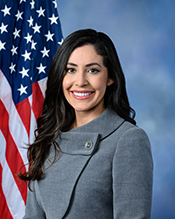
Rep. Anna Paulina Luna
Sponsored bills
Maddy summaryHR 1750 sets a new minimum standard for pasteurized orange juice, requiring finished products to contain at least 10.0% orange juice soluble solids (excluding any added sweeteners) by weight. This rule directly affects manufacturers producing and selling pasteurized orange juice in the U.S. market. The bill revises existing federal regulations to enforce this minimum juice content level, ensuring a more consistent product definition. It does not change the Secretary of Health and Human Services' existing authority to further adjust these standards.
Maddy summaryHR 3115, the Public Service Reform Act, changes employment rules for most federal career employees (non-political appointees) by establishing at-will employment, meaning they can be fired for any reason - including no reason - without needing cause. It abolishes the Merit Systems Protection Board (MSPB), replaces its role with agency-level procedures for removals (including a 14-day response window for employees), and limits appeals to the agency head or federal courts for specific claims like whistleblower retaliation. The bill also redirects certain appeals to the Equal Employment Opportunity Commission (EEOC) for discrimination cases and modifies whistleblower protections to allow direct court appeals for retaliation claims. These changes directly affect over 1 million career federal workers across executive agencies.
This resolution urges transatlantic unity on a robust deterrence policy to maintain peace and stability across the Taiwan Strait. The resolution also (1) encourages NATO allies to work with their partners in the Indo-Pacific to address shared global security challenges; and (2) commends the people of Taiwan for their commitment to democracy, civil liberties, and human rights.
Maddy summaryThe You Own the Data Act (YODA) gives U.S. users control over their personal data collected by large online platforms and data brokers. It requires covered entities (like major social media companies or data brokers with over 100 million users) to obtain explicit written consent before sharing user contacts or data, and to provide users with free access to view, correct, delete, or port their data within 90 days of a request. The bill also mandates data minimization - limiting collection to what’s necessary for services - and bans tracking cookies without consent, while requiring clear privacy notices under 1,000 words. Enforcement is handled by the FTC, state attorneys general, and allows private lawsuits for violations, with penalties up to $750 per violation for users.
No Taxpayer Funding for United Nations Green Climate Fund Act This bill requires the Department of State to withhold the same proportion of funds from the mandatory U.S. contribution to the United Nations as the proportion of the U.N. budget made available to the U.N. Green Climate Fund. Such withheld funds must be rescinded and may not be considered arrears to be repaid to the United Nations. The bill also prohibits the State Department from making voluntary contributions to the U.N. Green Climate Fund.
Maddy summaryHR 2991, the TEACH Act of 2023, modifies federal education law to tie funding to school firearm policies and create grants for defensive training. It prohibits the Department of Education from funding schools that restrict firearm possession beyond existing federal limits (Section 2(b)), and directs the Secretary to award competitive grants using ESEA funds for "defensive training programs" focused on firearm use for school safety (Section 3(a)). These programs include training on carrying, using, and storing firearms on school property to protect students from intruders (Section 3(e)(1)). The bill directly affects schools receiving federal education funds by requiring them to allow firearm possession for training or face funding restrictions, and prioritizes grant applications from entities supporting Second Amendment rights.
Maddy summaryHCONRES 30 is a congressional resolution directing the President to withdraw all U.S. military personnel from Somalia within one year, except for forces protecting the U.S. Embassy. It applies directly to U.S. Armed Forces stationed in Somalia under current operations. The bill requires the President to complete the withdrawal by the date 365 days after the resolution passes, as mandated by the War Powers Resolution. This is a procedural directive focused on ending military presence, not creating new laws or funding.
Maddy summaryHR 2928, the Responsible Borrower Protection Act of 2023, blocks the Federal Housing Finance Agency (FHFA) and mortgage enterprises (Fannie Mae and Freddie Mac) from implementing specific changes to mortgage credit fees announced in January 2023. The bill directly affects mortgage borrowers and lenders by reversing a pricing framework update that would have altered fees for single-family mortgages. It prohibits the FHFA from enforcing the January 2023 pricing changes detailed in FHFA's announcement and related lender letters. The bill clarifies that enterprises may still use risk-based pricing for mortgage fees, but the specific fee adjustments from the 2023 framework are canceled. This is a direct policy change to mortgage fee structures, not a broader reform.
Maddy summaryHR 734, the Protection of Women and Girls in Sports Act of 2023, amends Title IX to prohibit federally funded schools and athletic programs from allowing individuals assigned male at birth to participate in women's or girls' sports teams. The bill defines "sex" for this purpose as "reproductive biology and genetics at birth," making it a violation of federal law to permit such participation in designated women's or girls' programs. It allows males to train with women's teams only if no female is deprived of a roster spot, competition opportunity, scholarship, or other benefit tied to the team. This law directly affects public and private schools receiving federal financial assistance that operate athletic programs.