

Maddy summaryHR 5018, the Naomi Schwartz and Susan Rose Safe Parking Act of 2025, adds "safe parking" as an eligible activity under the federal Emergency Solutions Grant Program. It directly affects homeless individuals living in vehicles, including motor homes, by making funding available for programs that provide them with safe overnight parking and supportive services to transition to stable housing. The bill defines "safe parking" as activities offering a secure place to park vehicles overnight while connecting residents to re-housing support. This change allows communities to use federal grants to establish and operate such parking programs, which were previously ineligible under the program's rules.
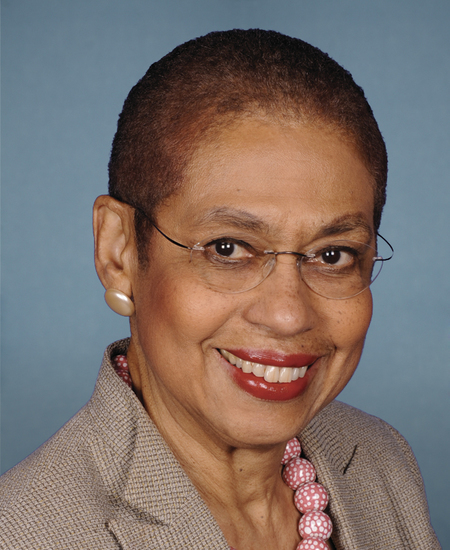
Rep. Eleanor Holmes Norton
Sponsored bills
Maddy summaryHR 5009, the Fine Arts Protection Act of 2025, requires the Comptroller General to conduct a comprehensive review of the General Services Administration’s (GSA) Fine Arts Program within one year of the bill’s enactment. The review will survey every artwork in the GSA’s public collection - including New Deal-era pieces - estimate its economic value, assess management practices, staffing, funding, and compare GSA’s approach to other art collections. The Comptroller General must then submit a report to Congress within two years, detailing findings and recommending whether the GSA should continue managing the collection. This bill directly affects the GSA’s Fine Arts Program and provides Congress with data to inform future decisions about the collection’s preservation.
Maddy summaryHR 4994, the Safe Air on Airplanes Act, requires the Federal Aviation Administration to update regulations to phase out bleed air systems in aircraft. It prohibits new aircraft designs from using these systems, mandates filters to remove oil fumes in new aircraft by 2031 (7 years after enactment), and sets a 30-year phase-out schedule for existing aircraft designs (25% without bleed air by 2031, 50% by 2041, 100% by 2051). The bill directly affects aircraft manufacturers and airlines, as it changes requirements for cabin air systems that pull engine air for ventilation. These changes focus on modifying manufacturing standards and air quality systems in turbine and turbo-prop aircraft.
Maddy summaryThis bill permanently establishes the Coordinator for Afghan Relocation Efforts (CARE) within the State Department, expanding their role to prioritize family reunification for U.S. military personnel and veterans with Afghan allies. It mandates the Coordinator to collect detailed data on Afghan applicants (including special immigrant visa seekers, refugees, and parolees), vetting timelines, and pending family reunification cases into a centralized database. The Coordinator must report this data to Congress every 90 days to ensure transparency and inform policy decisions. The law directly affects Afghan allies and their families seeking U.S. relocation, particularly those connected to U.S. military service.
Maddy summaryThis bill requires the National Oceanic and Atmospheric Administration (NOAA) to restore full staffing levels within 30 days of enactment, including reinstating employees terminated between January 20, 2025, and the bill's passage. It mandates the immediate reinstatement of specific NOAA programs, including the discontinued "Billion-Dollar Weather and Climate Disasters" product and two environmental databases tracking ocean currents and marine buoys. The bill allocates $6.756 billion in funding for NOAA's operations through fiscal year 2026 to support these staffing and program restorations. It directly affects NOAA employees, state/local emergency response efforts, and the public relying on NOAA's weather forecasting and disaster data for safety planning.
Maddy summaryThe SUN Act (HR 4998) requires the President to submit a detailed report to Congress within 15 days whenever National Guard members are deployed domestically for non-disaster purposes under specific laws. The report must include the legal basis for the deployment, evidence of reduced violence, input from local law enforcement, total costs, and a certification that the deployment won’t interfere with disaster response capabilities. It applies to all domestic uses of the National Guard except for responses to natural disasters under the Stafford Act. The bill aims to enhance congressional oversight of military deployments on U.S. soil.
Maddy summaryThis bill amends the Social Security Act to include the District of Columbia as an eligible jurisdiction for the Rural Health Transformation Program, which previously only covered the 50 states. It directly affects District of Columbia healthcare providers and patients who were previously excluded from this federal program. The key provision inserts "and the District of Columbia" into the eligibility language of Section 2105(h)(2)(D) of the Social Security Act. This change ensures D.C. qualifies for the same program benefits as rural areas in states. The amendment applies retroactively as if enacted on a specified date.
Maddy summaryHJRES 113 designates August 20 as Slavery Remembrance Day to commemorate the arrival of the first 20 enslaved Africans in Virginia in 1619 and honor the enduring legacy of slavery. The resolution requests the President issue a proclamation encouraging the public to observe this day through ceremonies and activities that acknowledge slavery's horrors and its lasting impacts. It includes historical context about the transatlantic slave trade, the Middle Passage, and figures like Harriet Tubman, while posthumously recognizing Reconstruction-era Black Congress members. As a symbolic commemorative resolution, it does not create new laws or directly affect any group, but serves to raise awareness about slavery's history and consequences.
Maddy summaryThis bill (HJRES 115) terminates a presidential emergency declaration made on August 11, 2025, which claimed a "crime emergency" in Washington, D.C. It directly affects the District of Columbia by ending federal restrictions that prevented D.C. from using $1 billion in locally-raised funds for public safety, law enforcement, fire services, and schools. The resolution cites that the emergency declaration was legally flawed - section 740 of the DC Home Rule Act does not permit federalizing the Metropolitan Police Department - and notes that D.C. violent crime has reached a 30-year low. The bill formally ends the emergency under the DC Home Rule Act, restoring D.C.'s authority over its own budget and public safety resources.
Maddy summaryHRES 658 is a symbolic resolution recognizing the nonprofit sector’s contributions to communities and supporting the designation of August 17, 2025, as "National Nonprofit Day." It highlights nonprofits as the nation’s third-largest employer (12 million workers) and key community partners, without creating new laws or funding. The resolution formally honors nonprofits’ role in services like education, health, and shelter but does not alter policies or obligations. This is a non-binding gesture of appreciation, not a legislative change.