

Maddy summaryHR 4979, the Tick Identification Pilot Program Act of 2025, allows the CDC to award grants to state health departments to create programs where residents can submit photos of ticks they encounter online. The programs must provide users with a tick species ID, disease risk estimate, and prevention advice within 72 hours, while tracking location, date, and environmental details of each encounter. States with high Lyme disease rates and strong implementation plans receive priority for funding. The initiative directly affects the public (especially in tick-prone areas) and state health agencies, focusing on improving early detection and public education through a centralized data system. The CDC will report annual data on program participation and outcomes to Congress from 2026-2029.
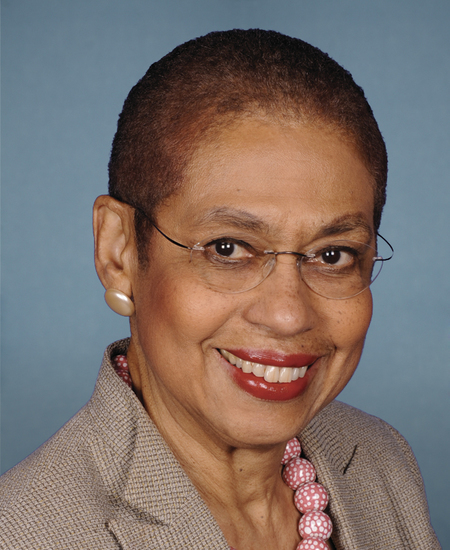
Rep. Eleanor Holmes Norton
Sponsored bills
Maddy summaryThe Community Parks Revitalization Act establishes a federal program to improve parks and recreation facilities in urban areas through grants and secured loans. It provides competitive grants to eligible local governments for rehabilitation and construction of parks (including safety improvements), innovation programs (like youth services and veteran support), and recovery planning. The program requires local matching funds (3/7 of grant amount) and prioritizes projects that increase access for low-income residents, veterans, and people with disabilities, while incorporating sustainable design features like stormwater management and green infrastructure. The bill also authorizes secured loans and loan guarantees for larger park infrastructure projects with dedicated revenue streams, aiming to improve community health outcomes and economic development through better recreational spaces.
Maddy summaryThis bill creates a special postage stamp that allows the public to voluntarily contribute to Lyme disease research. All money from stamp sales will go directly to the National Institute of Allergy and Infectious Diseases (NIAID) at the NIH, with proceeds specifically designated for Lyme disease and tick-borne illness research. The funds cannot be used to offset other NIH research funding, and the stamp would be available for at least six years after the law takes effect. It directly affects the public (through voluntary purchases) and NIAID (as the recipient of dedicated research funding).
Maddy summaryHR 4976, the Shielding Students from Wildfire Smoke Act, requires the Environmental Protection Agency to commission the National Academies of Sciences to review existing policies protecting children from wildfire smoke in K-12 schools, childcare centers, and related activities like sports or camps. The review will assess current standards, identify research and policy gaps, and provide recommendations to Congress for better protection, especially in under-resourced settings. This bill does not create new regulations but mandates a formal evaluation of current approaches to safeguard children during smoke events. It directly affects children in educational and childcare environments across the U.S., particularly in communities frequently impacted by wildfires.
Maddy summaryThis bill amends the Higher Education Act to include Fulbright Teacher Exchange Program and Fulbright English Teaching Assistant Program participation as qualifying public service employment for student loan forgiveness. It directly affects teachers who serve in these Fulbright programs, allowing them to count their service toward existing loan cancellation benefits under the public service repayment plan. The key provision adds a specific definition to the law, treating Fulbright teaching roles as equivalent to other public service jobs for loan forgiveness eligibility. This change expands access to an existing program without altering the core loan forgiveness mechanism. The bill does not create new benefits but makes Fulbright teaching service eligible under current rules.
Maddy summaryThis bill extends the expiration date for a provision allowing certain vehicles to use High Occupancy Vehicle (HOV) lanes without meeting standard occupancy requirements. Specifically, it amends federal law to change the deadline from September 30, 2025, to September 30, 2031. The change directly affects drivers and vehicle operators who currently qualify for this exemption under existing rules. It is a procedural reauthorization, not a policy change, maintaining the current HOV lane exemption rules for an additional six years.
Maddy summaryThe GRAS Act (HR 4958) revises food safety regulations by removing the "Generally Recognized As Safe" (GRAS) exemption from the definition of food additives under federal law. It requires food manufacturers to submit detailed safety notices to the FDA for new GRAS uses, including scientific data on carcinogenicity, reproductive toxicity, and cumulative effects, with the FDA reviewing these within 180 days. The bill mandates public comment periods for submitted notices and requires the FDA to reassess the safety of at least 10 GRAS substances every three years, including those marketed before the law's enactment. This directly affects food companies, distributors, and the FDA, adding new submission requirements, review timelines, and associated fees for GRAS-related activities.
Maddy summaryThis bill amends the Food and Nutrition Act to clarify that Social Security benefits (income under Title II of the Social Security Act) are not counted when determining eligibility for SNAP (Supplemental Nutrition Assistance Program) benefits. It directly affects seniors receiving Social Security who rely on SNAP for food assistance, ensuring their Social Security payments do not reduce their SNAP benefits. The key change adds Social Security income to the list of non-countable resources under SNAP rules. The amendment takes effect 90 days after the bill is enacted.
Maddy summaryHR 4956, the Commission of Fine Arts District of Columbia Residency Act, requires that a majority of members on the Commission of Fine Arts be residents of the District of Columbia. The Commission advises the federal government on the design of buildings and monuments in Washington, D.C., currently without a residency requirement for appointees. This bill amends the law so that when the President appoints members, the majority must reside in the District of Columbia. The change takes effect one year after the bill is enacted.
Maddy summaryHR 4966 prohibits grocery stores from selling items at "grossly excessive prices," defined as 120% or more above the average market price over the previous six months (with exceptions for unavoidable cost increases like supply chain issues). It bans using facial recognition or personal data to set different prices for individual customers (e.g., adjusting prices based on shopping history) and requires clear signage if facial recognition is used. Stores over 10,000 square feet must replace electronic shelf labels with physical price tags. The Federal Trade Commission enforces these rules, allowing consumers to seek $3,000 per violation or actual damages, with penalties for willful violations.