

Maddy summaryHR 5354, the Small Farm Conservation Act, creates a dedicated subprogram within the Environmental Quality Incentives Program (EQIP) to provide targeted conservation support for small-scale farms. It allocates $100 million annually (2024-2028) specifically for farms under 50 acres or meeting median state farm size limits, with 35% of funds for tailored technical assistance (including hiring specialized staff) and 65% for direct financial payments. Key provisions include a minimum $2,500 payment per producer, a 50% payment increase for soil health systems, and a streamlined, continuous enrollment process to reduce administrative barriers. The bill prioritizes historically underserved farmers - such as veterans, beginning farmers, and those in high-poverty areas - while requiring annual reporting on program outcomes.
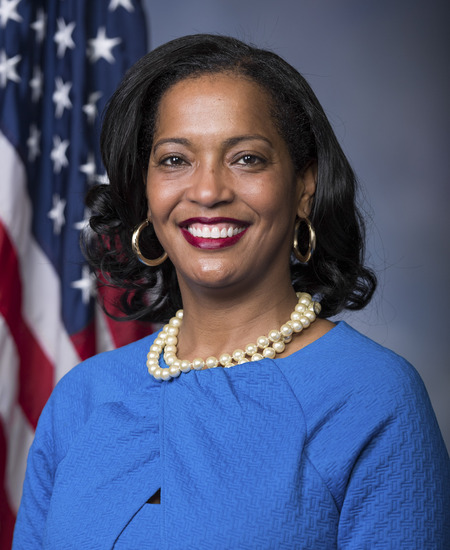
Rep. Jahana Hayes
Sponsored bills
Maddy summaryHR 4455, the Community Facilities Program for Rural Clean School Bus Infrastructure Act, amends the Consolidated Farm and Rural Development Act to allow rural communities using its essential community facilities program funds to cover clean school bus infrastructure. Specifically, it permits recipients of these loans or grants to use funds for purchasing charging infrastructure, labor costs for installation/maintenance, and planning activities supporting clean school bus adoption. The bill defines "clean school bus" using the Energy Policy Act of 2005 and authorizes necessary funding for these purposes. It directly affects rural communities receiving essential community facilities program funds, enabling them to modernize school bus infrastructure with clean energy solutions.
Maddy summaryHR 5569, the Child Care Nutrition Enhancement Act of 2023, increases funding for child care nutrition programs. It adds a 10-cent per meal reimbursement for providers participating in the Child and Adult Care Food Program (CACFP), applying to all meals and supplements served. This change directly affects child care centers, family day care homes, and group day care homes that receive CACFP funding. The additional reimbursement is calculated alongside existing payment rates and applies to all meals served after the bill's enactment. The bill modifies specific sections of the Richard B. Russell National School Lunch Act to implement this funding increase.
Maddy summaryThe Part-Time Worker Bill of Rights Act would expand benefits for part-time workers by reducing the eligibility requirement for family and medical leave from 12 months to 90 days, applying to federal, state, and congressional employees. It prohibits employers from discriminating against part-time workers based on hours worked, requiring equal treatment in compensation, benefits, and promotion opportunities. The bill mandates employers to obtain written statements from employees about desired work hours and prioritize scheduling existing employees before hiring new staff or using contractors. It applies to employers with more than 15 employees across various sectors and establishes enforcement through the Department of Labor with civil penalties for violations. The bill would take effect one year after enactment, with regulations to be issued within 180 days of passage.
Maddy summaryThis bill establishes a new Office within the Department of Justice to address racial disparities in missing and murdered Black women and girls cases. The Office will collect data on case resolution times, coordinate with law enforcement, and create a public dashboard tracking these cases. It also creates grants for community organizations to provide culturally appropriate services, prevention programs, and training for law enforcement targeting violence against Black women and girls. The bill directly affects Black women and girls who are victims of violence and their communities, focusing on improving data collection and support systems rather than changing criminal laws.
Maddy summaryHR 5492, the Veteran Families Health Services Act of 2023, provides fertility treatment, counseling, and adoption assistance to military members and veterans with infertility conditions. The bill requires the Department of Defense to offer fertility preservation services like cryopreservation before deployment or hazardous assignments, and to cover fertility treatments including in vitro fertilization for current service members. For veterans, it adds fertility treatment and counseling to VA medical services, allows adoption assistance up to the cost of three adoptions, and mandates coordination between military and VA health systems. These provisions apply regardless of sex, gender identity, sexual orientation, or marital status, and are designed to support military families affected by service-related infertility.
Maddy summaryThe Better CARE for Animals Act of 2023 amends the Animal Welfare Act to strengthen enforcement of animal welfare standards. It gives the Attorney General authority to bring civil cases for violations, including seeking penalties up to $10,000 per day per violation and injunctions to remove or relocate animals. The bill also requires the Secretary of Agriculture and Attorney General to coordinate through a new Memorandum of Understanding, focusing on repeat violators. These changes directly affect dealers, exhibitors, and enforcement agencies by expanding civil enforcement tools and clarifying jurisdiction over rule violations.
Maddy summaryThis bill extends existing programs that provide payments to counties and states with federal land, primarily to support local schools and communities. It updates key deadlines, extending secure payments through 2026, special project authorities through 2029, and county fund expenditure authority through 2028. A new pilot program allows regional foresters to appoint resource advisory committee members directly, with this authority ending October 1, 2028. These changes directly affect rural counties and states managing federal lands, maintaining current funding mechanisms without altering eligibility or payment amounts.
Maddy summaryHR 4845, the Food Secure Strikers Act of 2023, amends the Food and Nutrition Act to remove a restriction that previously disqualified workers from the Supplemental Nutrition Assistance Program (SNAP) if they were on strike. The bill changes eligibility rules so that striking workers are no longer automatically ineligible for SNAP benefits solely because they are participating in a labor strike. This change directly affects workers involved in strikes who rely on SNAP for food assistance, ensuring they can access benefits during labor disputes. The key provision removes specific language from Section 6(d) of the Food and Nutrition Act that had barred strike participants from SNAP enrollment.
Maddy summaryThe John R. Lewis Voting Rights Advancement Act of 2023 would strengthen the Voting Rights Act of 1965 by updating the criteria for which states and localities must obtain federal preclearance before changing voting practices. It would establish new standards for proving vote dilution and vote denial by requiring courts to consider historical discrimination, racial polarization in voting, and whether voting practices disproportionately burden minority voters. The bill would also require states and localities to provide public notice of voting changes and share demographic data about polling locations. These changes would primarily affect jurisdictions with a history of voting rights violations, aiming to prevent discriminatory voting practices before they take effect.