

Maddy summaryThe New England Coastal Protection Act of 2024 prohibits the federal government from leasing any area of the outer Continental Shelf off the coasts of Maine, New Hampshire, Massachusetts, Rhode Island, and Connecticut for oil and gas exploration, development, or production. It amends the Outer Continental Shelf Lands Act to explicitly block such leases, overriding any existing or future laws that might permit them. This policy change directly affects the oil and gas industry by eliminating potential new drilling opportunities in these coastal waters and restricts the federal government’s authority to issue offshore energy leases in the region. The bill creates a permanent ban on new oil and gas leasing in this specific coastal zone.
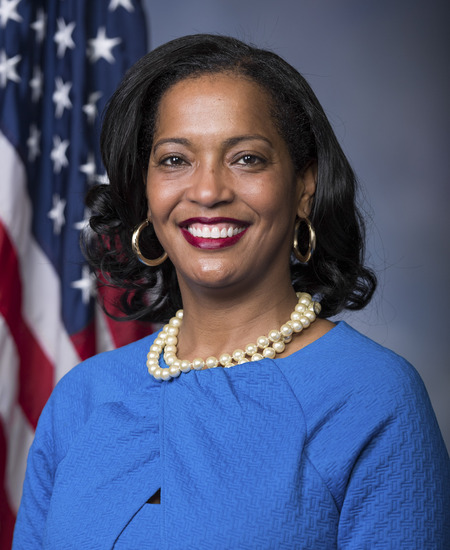
Rep. Jahana Hayes
Sponsored bills
Maddy summary# Summary of Proposed Workplace Discrimination and Harassment Prevention Bill This comprehensive legislative proposal aims to strengthen protections against workplace discrimination and harassment through multiple interconnected provisions: 1. **Expanded Protections**: Broadens coverage to include sexual orientation, gender identity, and other protected categories in workplace discrimination laws. 2. **Nondisclosure Agreement Restrictions**: Prohibits employers from requiring nondisclosure or nondisparagement clauses that would prevent workers from reporting harassment or discrimination, with limited exceptions for settlement agreements meeting specific requirements. 3. **Arbitration Prohibition**: Bans mandatory pre-dispute arbitration agreements for work-related disputes and imposes strict requirements for post-dispute agreements. 4. **Federal Contractor Requirements**: Mandates that federal contractors disclose labor and civil rights violations from the previous three years and requires corrective actions for violations. 5. **Grant Programs**: - National grants to prevent and address workplace discrimination through education, outreach, and complaint assistance - Grants for legal assistance to low-income workers facing employment discrimination - State-level advocacy systems with funding allotments to support worker rights protection 6. **Enforcement Mechanisms**: Establishes clear enforcement procedures, with the Equal Employment Opportunity Commission (EEOC) having authority to enforce these provisions with powers similar to those under existing civil rights laws. The bill also includes definitions, implementation details, and provisions for state and federal coordination to create a comprehensive system for preventing and addressing workplace discrimination and harassment across all sectors of employment.
Maddy summaryThis bill amends the Higher Education Act to require colleges and universities receiving federal funds to implement evidence-based programs preventing alcohol and substance misuse among students and staff, replacing outdated terms like "drug abuse" with "substance misuse." It creates a new $15 million annual grant program (for fiscal years 2025-2030) to fund recovery services, peer support, integrated health care, overdose prevention, and crisis training. Grants can support campus-based services like counseling, re-entry assistance for students on academic probation due to substance use, and coordination with community health providers. The bill also mandates interagency coordination between education and health agencies to develop best practices and requires institutions to certify compliance with prevention program requirements.
Maddy summaryHR 9229, the MAIL Act, requires the U.S. Postal Service to provide free post office boxes to unhoused or housing unstable individuals without fees. Eligibility is based on proof of income below the poverty line or participation in specific federal assistance programs, including housing vouchers (like Section 8), Medicaid, or the Supplemental Nutrition Assistance Program (SNAP). The bill defines "unhoused or housing unstable" using existing federal standards for homelessness or risk of homelessness. It mandates the Postal Service to issue regulations within one year of enactment and report on implementation to Congress. This policy change directly affects low-income individuals facing housing insecurity by removing a financial barrier to secure mail access.
Maddy summaryHR 9196, the Pregnancy Empowerment Act of 2024, prohibits states from delaying or denying divorce petitions solely because a person is pregnant. This directly affects pregnant individuals - particularly women of color and those experiencing intimate partner violence - who face barriers to finalizing divorces during pregnancy, trapping them in abusive relationships. The bill mandates that states cannot consider pregnancy status when processing divorce filings, addressing findings that such delays increase risks of violence and reproductive coercion. It aims to remove legal obstacles that prevent pregnant people from accessing divorce, a critical step for safety and autonomy.
Maddy summaryThe HEALTHY BRAINS Act of 2024 establishes a new NIH research program to study how environmental factors - like pollution, chemicals in air/water, and heavy metals - may contribute to neurodegenerative diseases (e.g., Alzheimer’s, Parkinson’s). It creates "Collaborative Centers for Neurodegenerative Disease Environmental Research" (CCNDERs) at universities and medical institutions, requiring them to conduct interdisciplinary research, develop nationwide data systems, and share findings with the public. The bill authorizes $50 million annually (2026-2030) for this program and mandates biennial reports to Congress on research progress. It directly affects NIH-funded research institutions and aims to advance prevention strategies, not patients or specific communities.
Maddy summaryThe SIMPLE Act creates automatic enrollment in income-driven repayment plans for federal student loan borrowers who are delinquent on payments or rehabilitating defaulted loans. The Department of Education would use IRS tax return information (with borrower approval) to determine income and family size, then automatically enroll eligible borrowers in the lowest-cost repayment plan available. Borrowers would receive detailed notifications about their repayment options, including monthly payment amounts based on their income, and could opt out of automatic enrollment or update their information. The bill applies to borrowers of "covered loans" as defined in the Higher Education Act, and would take effect for the 2026-2027 award year.
Maddy summaryThe Improving Mentorship in STEM Higher Education Act creates a National Science Foundation program to fund projects enhancing mentorship for STEM faculty, graduate students, and postdoctoral researchers at colleges and universities. Eligible entities - including minority-serving institutions, historically Black colleges, Tribal Colleges, rural-serving universities, and emerging research institutions - can apply for competitive grants to develop mentoring skills, promote evidence-based practices, and provide cultural competency training. The program is funded with $5 million annually (2025-2029) and requires a five-year report assessing effectiveness and proposing permanent implementation if successful.
Maddy summaryH.J. Res. 193 proposes a constitutional amendment to eliminate legal immunity for federal officials, including the President, from criminal prosecution for actions taken while performing official duties. It also prohibits the President from granting a pardon to themselves. The amendment would apply to all federal officers (such as the President, Vice President, and members of Congress) except for Congress members acting in their legislative role as defined in the Constitution. If ratified by 38 states, this change would become part of the U.S. Constitution, requiring no further congressional action.
Maddy summaryHRES 1381 is a symbolic resolution that commemorates the United States Olympic and Paralympic Teams' historical achievements, including over 5,300 total medals across past Games. It expresses congressional support for U.S. athletes competing in the 2024 Summer Olympics and Paralympics in Paris, France, and commends the Government of France for hosting the events. The resolution also commits to ensuring a safe environment for the 2028 Los Angeles Olympic and Paralympic Games. As a non-binding expression of support, it does not create new laws or allocate funds.