

Maddy summaryHRES 1448 is a non-binding House resolution stating that the House believes every person has the right to emergency health care, including abortion care, during medical emergencies. It specifically addresses concerns that abortion restrictions force medical providers to choose between treating patients in life-threatening situations or risking criminal charges. The resolution highlights that such restrictions disproportionately harm Black, Indigenous, people of color, immigrants, low-income individuals, and LGBTQI+ patients. It does not change existing laws but expresses congressional support for ensuring access to emergency care without legal barriers. The resolution was introduced by multiple House members and referred to the Energy and Commerce Committee.
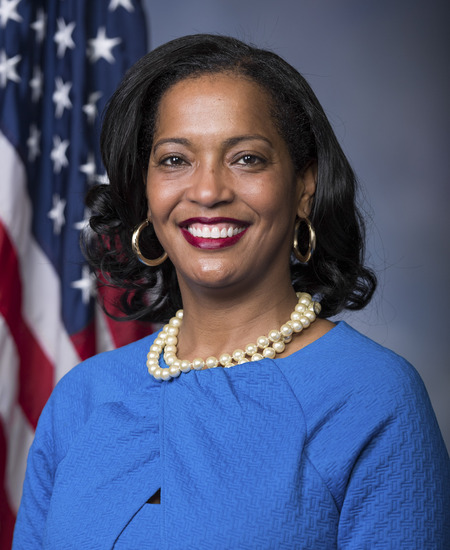
Rep. Jahana Hayes
Sponsored bills
Maddy summaryHRES 1432 designates September 10, 2024, as "National Firearm Suicide Prevention Day" to raise public awareness about firearm suicides and promote safe storage practices. The resolution encourages healthcare professionals to discuss safe firearm storage with patients and supports the day's goals of reducing firearm suicides through education. It directly affects the general public and healthcare providers by highlighting evidence that safe storage lowers suicide risk, referencing statistics like 54.6% of U.S. suicides in 2022 involving firearms. The bill is symbolic, with no new legal requirements, and aligns with existing awareness efforts like Firearm Suicide Prevention Day.
Maddy summaryHRES 1436 is a symbolic resolution (not a law) introduced in the U.S. House of Representatives. It recognizes suicide as a preventable public health crisis by citing statistics from the CDC, VA, and SAMHSA showing rising suicide rates across age groups, including veterans and adolescents. The resolution formally supports designating September as "National Suicide Prevention Month" and September 10, 2024, as "World Suicide Prevention Day." It does not create new policies, allocate funding, or directly affect any individuals - its purpose is solely to express congressional support for suicide prevention awareness and efforts.
Maddy summaryThis bill (HR 9517) ensures that military service members and Department of Defense civilians who had student loans in deferment during active duty service have those months counted toward Public Service Loan Forgiveness (PSLF). It amends the Higher Education Act to automatically include months of deferment under active duty as qualifying payments for PSLF, without requiring additional action from borrowers. The bill also requires the Departments of Defense and Education to jointly identify eligible individuals through data matching and certify their service periods for PSLF eligibility. This directly affects active-duty service members and civilian personnel who served over 30 consecutive days on or after October 1, 2007.
Maddy summaryThe School Hunger Elimination Act of 2024 automatically certifies children for free or reduced-price school meals if they are already receiving Medicaid benefits (with household income at or below 133% of the federal poverty line for free meals) or Supplemental Security Income (SSI). It requires states to establish data-sharing agreements with Medicaid agencies by the 2025 school year, eliminating the need for families to submit separate applications for meal eligibility. This change directly affects children in low-income households already enrolled in Medicaid or SSI, streamlining access to school meals without additional paperwork.
Maddy summaryThis bill prioritizes funding for rural healthcare facilities through the USDA's Community Facilities Program. For fiscal years 2025-2031, the Secretary of Agriculture must give priority to rural hospitals and healthcare providers seeking loans or grants to develop essential facilities. Funds can be used for medical supplies, telehealth expansion, staffing support, or renovating closed facilities. Additionally, 10% of guaranteed loan funds under the program must be reserved annually to support these rural healthcare projects.
Maddy summaryHR 8611, the Save Our Small Farms Act of 2024, amends crop insurance and assistance programs to better support small-scale and diversified farms. The bill creates a voluntary transition program from noninsured crop disaster assistance to whole farm revenue insurance with tiered premium discounts (25% for the first year, 50% for subsequent years) and streamlines application processes for urban, small-scale, and direct-to-consumer farming operations. It allows use of IRS Schedule F for revenue history, establishes remote appraisal options for crop loss assessments, and creates a new single index insurance policy to protect against weather-related income losses. These changes directly affect limited resource, beginning, veteran, and socially disadvantaged farmers, as well as producers of hand-harvested or rapidly-deteriorating crops.
Maddy summaryHR 8096, the Future of Water Act of 2024, amends the Commodity Exchange Act and related law to prohibit the trading of water, water rights, or water-related financial products (like indices or data) as commodities for future delivery. This change directly affects commodity markets, futures traders, and entities seeking to create financial instruments based on water resources. The bill adds specific language to existing statutes to explicitly exclude water and water rights from being traded as future commodities, preventing their inclusion in futures contracts or related financial products. It does not alter water management, rights, or usage rules, only restricting their financial speculation in commodity markets.
Maddy summaryThe Protecting Communities from Plastics Act of 2024 establishes new environmental standards for plastic production facilities, including a temporary moratorium on new permits for covered facilities during a "temporary pause period." It requires environmental justice assessments for permits affecting fenceline communities (low-income communities and communities of color near plastic facilities) and sets specific targets to reduce single-use plastics by 25% and increase reusable/refillable packaging by 30% by 2034. The bill mandates comprehensive reporting on plastic production and distribution, including a national inventory of plastic manufacturing, and requires continuous air and water quality monitoring near plastic facilities. This legislation directly affects plastic producers, manufacturers, and communities located near plastic production facilities, particularly those disproportionately impacted by plastic pollution.
Maddy summaryHRES 1419 is a symbolic resolution recognizing Overdose Awareness Day and committing the House to strengthen efforts against the opioid crisis. It does not create new law but formally: (1) recognizes Overdose Awareness Day, (2) pledges to advance bipartisan policies reducing stigma around substance use disorders, and (3) commits to collaborating with states, communities, and organizations to support prevention, treatment, harm reduction, and recovery services. The resolution highlights the crisis' severity - including 932,000 overdose deaths since 1999 and a $1 trillion annual economic burden - but focuses on shared goals rather than specific policy changes. It directly affects congressional action and public messaging, not individual citizens or programs.