

Maddy summaryThis bill establishes a Diversity and Inclusion Administrator at the Department of Labor to increase African American participation in apprenticeship programs. It requires all new and renewing registered apprenticeship programs to submit plans for boosting African American enrollment, and authorizes competitive grants for programs targeting underrepresented groups in industries like construction, tech, and healthcare. Grant recipients must report on metrics including participant demographics, program completion rates, and job placement in related fields. The law directly affects African American youth and other underrepresented groups by mandating systemic changes to apprenticeship programs nationwide.
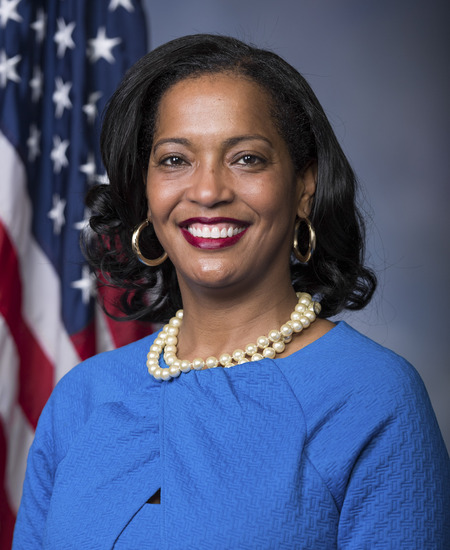
Rep. Jahana Hayes
Sponsored bills
Maddy summary# Summary of Voter Empowerment Act Legislation This comprehensive legislation, titled the "Voter Empowerment Act," aims to significantly reform election administration across the United States to increase voter access, improve election security, and ensure equitable treatment of all voters. Key provisions include: 1. **Voter Access Enhancements**: - Requires states to provide voter-verified paper ballots for all voters - Mandates secure drop boxes for absentee ballots with specific accessibility requirements - Prohibits restrictions on curbside voting - Requires states to notify voters of polling place changes at least 7 days before elections - Allows use of sworn written statements or student ID cards to meet voter ID requirements 2. **Special Populations Accommodations**: - Requires accommodations for voters residing on Indian lands, including designated ballot pickup locations - Mandates bilingual voting materials for covered jurisdictions - Provides special provisions for military and overseas voters - Requires institutions of higher education to serve as voter registration agencies 3. **Election Administration Improvements**: - Requires states to establish contingency plans for natural disasters and public health emergencies - Establishes minimum standards for polling place operations to prevent unreasonable waiting times - Mandates states to provide sufficient poll workers and voting systems - Requires states to participate in post-election surveys 4. **Enforcement Mechanisms**: - Creates private rights of action for individuals to challenge violations - Authorizes the Attorney General to bring civil actions for enforcement - Establishes clear timelines for addressing violations - Prohibits campaign activities by chief state election officials 5. **Implementation Timeline**: - Most provisions apply to the 2026 election cycle or later - Some provisions apply immediately upon enactment The legislation is designed to modernize election administration while ensuring accessibility and security, with specific provisions addressing the needs of historically marginalized voting populations and creating new enforcement mechanisms to hold states accountable for compliance.
Maddy summaryThis bill amends the Justice for United States Victims of State Sponsored Terrorism Act to establish a fifth round of payments for eligible victims of state-sponsored terrorism, requiring all authorized payments to be distributed by December 31, 2024. It directs specific funds into the Victims of State Sponsored Terrorism Fund, including $898 million from the Binance case settlement and 50% of annual unobligated balances from DOJ and Treasury forfeiture funds starting December 1, 2024. The bill mandates annual payments beginning January 1, 2025, for eligible claimants and requires the Special Master to submit annual reports on fund activity to Congress, including detailed deposit and disbursement records. It directly affects victims of state-sponsored terrorism, the Special Master administering the fund, and federal agencies managing forfeiture funds.
Maddy summaryHR 6319 (the 911 SAVES Act of 2023) requires the Office of Management and Budget to reclassify public safety telecommunicators as "Protective Service Occupations" within 30 days of enactment. This change corrects their current misclassification in the federal Standard Occupational Classification (SOC) system, which is used for statistical data on jobs. The bill directly affects how these professionals - critical in emergency calls involving missing children, active threats, and officer safety - are officially categorized in government workforce data. It does not create new benefits or funding but aims to better recognize their lifesaving role through accurate federal job classification.
Maddy summaryThe Homes Act of 2024 would establish a new Housing Development Authority within the Department of Housing and Urban Development to develop permanently affordable housing. The Authority would acquire properties and convey them to eligible entities (including community land trusts, tenant organizations, and public housing agencies) under strict requirements for permanent affordability, climate resilience, and community control. The bill would set rents at 25% of household income, limit annual rent increases to 3% or the Consumer Price Index, and require "just-cause" evictions with tenant protections. It would also create a tenant right to purchase their rental properties through a "first look" process and prioritize housing for underserved communities and families experiencing homelessness.
Maddy summaryThis bill directs the U.S. government to immediately restore funding to the United Nations Relief and Works Agency for Palestine Refugees (UNRWA), reversing a temporary funding pause. It repeals two appropriations acts that halted payments and requires the Secretary of State to resume UNRWA funding under existing authorities. The legislation specifically aims to support UNRWA’s critical humanitarian work - providing shelter, education, healthcare, and aid to Palestinian refugees across Gaza, the West Bank, Syria, Lebanon, and Jordan - during an acute famine risk in Gaza. It also mandates quarterly reports to Congress on UNRWA’s implementation of reforms from an independent review, ensuring accountability for its humanitarian mission.
Maddy summaryThis bill expands online privacy protections under the Children's Online Privacy Protection Act to cover teens aged 12-17, in addition to children under 13. It requires website and app operators to obtain verifiable consent from parents for children and from teens themselves before collecting personal information. The bill restricts operators from using collected data for individual-specific advertising to children or teens and mandates clear notices about data practices. Operators must provide users with the right to access, delete, and correct personal information they've collected. These requirements apply to websites, online services, and mobile applications that collect information from children or teens or have actual knowledge a user is a child or teen.
Maddy summaryThe Kids Online Safety Act (HR 7891) would require major online platforms (with high revenue or user numbers) to implement safety features for children and teens, including default protective settings, parental controls, and age verification. It would mandate platforms to report annually on risks to minors and their safety measures, and prohibit advertising harmful products (like tobacco, alcohol, or gambling) to minors. The bill directly affects social media platforms, online video games, and video streaming services that are used by minors, with the goal of preventing mental health harms, compulsive usage, and cyberbullying.
Maddy summaryThe Flight Refund Fairness Act would require airlines to provide refunds for cancelled or significantly delayed flights. It adds a provision exempting small business ticket agents (such as small travel agencies) from this refund requirement. This means small travel agencies selling airline tickets would not have to follow the same refund rules as airlines or larger agencies. The bill's key mechanism is creating a small business exemption to reduce regulatory burden in the travel sector.
Maddy summaryThe American Housing and Economic Mobility Act of 2024 provides down payment assistance to first-time homebuyers, expands Fair Housing Act protections to include gender identity, sexual orientation, marital status, source of income, and veteran status, and makes significant reforms to the Community Reinvestment Act to improve access to credit in underserved communities. The bill also provides housing loan benefits for direct descendants of veterans who served between 1944 and 1968, increases accessibility requirements for housing constructed with federal funds, and includes estate tax changes for high-value estates. It aims to address housing affordability, reduce discrimination in housing, and improve access to credit in underserved communities.