

Maddy summaryHR 1002, the "Saving the Civil Service Act," restricts how federal government positions can be moved between competitive hiring (where most federal jobs are filled through merit-based exams) and non-competitive "excepted service" positions. The bill prevents agencies from moving positions out of the competitive service unless they fit specific schedules in place as of September 2020, requires Office of Personnel Management (OPM) approval for certain transfers, and mandates employee consent for any position transfer between service types. It also limits the number of employees that can be moved from competitive to excepted service during a presidential term - capping it at 1% of an agency's workforce or five employees, whichever is greater. The bill directly affects federal employees and agencies by making it harder to shift positions out of the competitive hiring system without strict oversight.
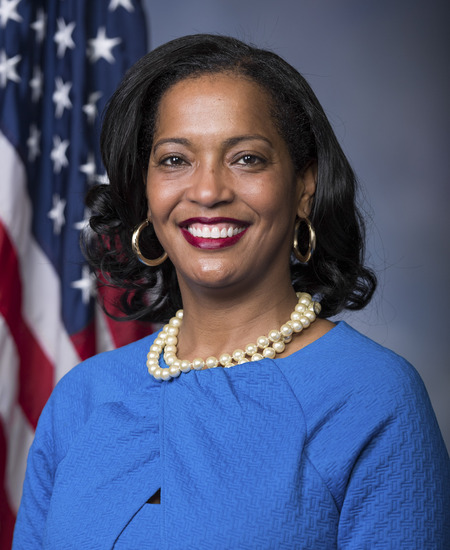
Rep. Jahana Hayes
Sponsored bills
Veterans Infertility Treatment Act of 2023 This bill requires the Department of Veterans Affairs (VA) to furnish infertility treatments, standard fertility preservation services, or both to a covered veteran or partner of a covered veteran. A covered veteran is a veteran who is enrolled in the VA health care system and has infertility or is at risk of having infertility, as determined by a licensed physician. The VA may furnish up to three completed in vitro fertilization cycles that result in live birth, or 10 attempted cycles, whichever occurs first. Additionally, the VA may furnish in vitro fertilization treatment using donated gametes or embryos. The VA must receive consent to furnish an in vitro fertilization cycle from the covered veteran, the partner of a covered veteran, and the third-party donor (if applicable). For purposes of paying travel expenses for treatment or services to the partner of a covered veteran, the VA must deem the partner to be a veteran receiving treatment or care. The VA must prescribe regulations related to the provision of infertility treatments and standard fertility preservation services as required by this bill. Prior to the enactment of such regulations, the VA must ensure that (1) counseling and treatment furnished under existing authority is available to a veteran and the veteran's partner, regardless of whether they are married; and (2) treatment under existing authority may be furnished using donated gametes or embryos.
Maddy summaryThis bill amends the Food and Nutrition Act to allow Puerto Rico to transition from its current block grant nutrition assistance program to the federal Supplemental Nutrition Assistance Program (SNAP), aligning it with how states like Hawaii and Guam operate. Puerto Rico must submit a transition plan to the U.S. Department of Agriculture within 60 days, which the agency must review and approve within 180 days. The bill extends Puerto Rico’s existing block grant funding for up to five years or until the transition is complete, whichever comes first, and requires annual progress reports to Congress. This change directly affects Puerto Rico residents currently receiving nutrition assistance under the block grant, potentially providing them with benefits consistent with the SNAP program.
Maddy summaryThe Pregnant Women in Custody Act establishes new standards for care of pregnant women in correctional facilities across federal, state, tribal, and local systems. It prohibits using restrictive housing for pregnant women from confirmed pregnancy through 12 weeks after delivery (with limited exceptions), requires facilities to provide comprehensive healthcare services including prenatal and postpartum care, and mandates data collection about the health needs of incarcerated pregnant women. The bill also requires staff training on proper treatment, establishes protocols for unexpected childbirth, and mandates transfer of women with high-risk pregnancies to facilities with appropriate medical care. These provisions aim to improve health outcomes for both mothers and infants by addressing gaps in care for incarcerated pregnant women.
Maddy summaryHR 987 authorizes the U.S. Mint to produce commemorative coins honoring Golda Meir, Israel's first female Prime Minister, and the 75th anniversary of U.S.-Israel relations. It specifies three coin types: $5 gold coins (max 50,000), $1 silver coins (max 400,000), and half-dollar clad coins (max 750,000), with detailed weight and composition requirements. All coins will include Golda Meir's image, her name, and commemorative inscriptions, and will be sold during 2026. A surcharge ($35 for $5 coins, $10 for $1 coins, $5 for half-dollars) will be paid to the American Friends of Kiryat Sanz Laniado Hospital Inc. to support its hospital operations.
Maddy summaryHR 782 prohibits state officials from interfering with abortion services provided across state lines. It specifically blocks states from restricting: (1) out-of-state patients traveling for legal abortions, (2) providers offering such services, (3) assistance for travel or care, or (4) the interstate shipment of FDA-approved abortion drugs. The bill allows the federal Attorney General or affected individuals to sue violators for injunctions, damages, and attorney fees. It directly affects patients seeking care in other states, healthcare providers, transportation services, and pharmacies handling FDA-approved abortion medications. The law focuses on preventing state laws from blocking access to legally permitted abortion services.
Maddy summaryHR 767 modifies the FDA's safety program for mifepristone (a medication used in medication abortion) to improve access. It requires the FDA to remove in-person dispensing rules, allow prescriptions via telehealth, and permit certified pharmacies to mail the medication directly to patients. This bill directly affects patients seeking medication abortion and healthcare providers who prescribe or dispense mifepristone. The changes apply specifically to mifepristone's safety program under federal law, ensuring broader access through existing pharmacy channels.
Maddy summaryHR 652, the Zero Food Waste Act, establishes a $650 million EPA grant program to reduce food waste by 50% by 2030 (compared to 2010 levels). It directly affects states, local governments, tribes, and nonprofits that apply for grants to fund food waste reduction activities, such as studying waste generation, collecting data, implementing diversion programs (like charging higher fees for landfill disposal), or supporting anaerobic digestion projects. Grants require grantees to collect data, publish reports, and prioritize projects in communities disproportionately affected by waste-related environmental or health impacts. The bill mandates annual EPA reports to Congress on progress toward the 50% reduction target.
Maddy summaryHRES 119 is a symbolic resolution expressing the U.S. House of Representatives' support for designating March 2023 as "Music in Our Schools Month." It highlights music's cultural importance, historical role in education, and documented benefits for student engagement and development. The resolution specifically notes inequitable access to music programs in underserved schools (including those in urban/rural areas, high-poverty districts, and majority-Black, Hispanic, or Native American communities). As a non-binding resolution, it does not create new policies, funding, or mandates - it solely serves to publicly recognize the value of music education.
Maddy summaryThe Child Care for Every Community Act establishes a federal program to provide universal, high-quality child care and early learning services for all young children not yet required to attend school. It provides 90% federal funding for most programs (100% for migrant/seasonal farmworkers and Native American children) with a sliding fee scale based on family income (maximum 7% of income). The bill requires states, tribes, and localities to develop comprehensive plans ensuring services are accessible, culturally appropriate, and meet national quality standards. It specifically focuses on serving low-income children, children with disabilities, dual language learners, homeless children, and children in foster care. The program emphasizes coordination with schools and other community services to support children's development and school readiness.