

Maddy summaryHR 4800, the GATES Act, modifies a provision in the Food Security Act of 1985 to create a new exception for agricultural income. It allows farmers, ranchers, and forestry businesses to receive certain payments or benefits without being subject to income limits if 75% or more of their average adjusted gross income comes from these activities. To qualify, these entities must provide documentation to the Secretary (typically the USDA) proving their income source. This change directly affects agricultural producers receiving federal payments by expanding eligibility for those primarily engaged in farming, ranching, or forestry.
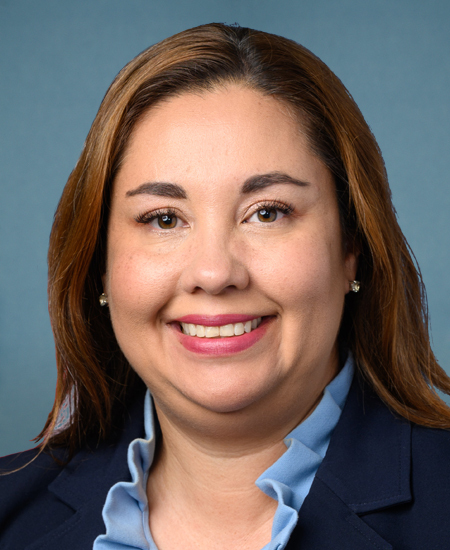
Rep. Yadira Caraveo
Sponsored bills
Investing in Rural America Act This bill allows Farm Credit System (FCS) institutions to provide financing and technical assistance for essential community facility projects as part of the Department of Agriculture's Community Facilities Direct Loan & Grant Program. (This program provides funding to develop essential community facilities in rural areas.) The FCS financing and technical assistance may be provided in order to make capital available to develop, build, maintain, improve, or provide other support for essential community facilities in rural communities (e.g., certain facilities that provide healthcare, community support, public safety, educational, or utility services). Under the bill, the financing provided by an FCS institution may not exceed 15% of the institution’s total assets unless the FCS institution offers at least one non-FCS lending institution an interest in the financing under reasonable terms and conditions acceptable to the borrower. The FCS institution must also report the offer to the Farm Credit Administration (FCA). The FCA must submit an annual report to Congress on the activities undertaken by FCS institutions under this bill, including through the partnerships between FCS institutions and other lending institutions. The FCA must post the report on the agency's website.
Maddy summaryHR 4745, the Delivering for Rural Seniors Act of 2023, creates a pilot program to expand home delivery of food packages under the Commodity Supplemental Food Program (CSFP) for low-income seniors in rural areas. The bill authorizes $10 million annually (2024-2026) for competitive grants to state agencies, which must prioritize rural service providers to cover costs like transportation, staffing, and outreach for home delivery. It requires grantees to report on delivery metrics, costs, and effectiveness annually. The program directly affects rural CSFP participants facing transportation barriers to accessing food assistance.
Rural Hospital Technical Assistance Program Act This bill provides statutory authority for the Rural Hospital Technical Assistance Program within the Department of Agriculture (USDA). Under the bill, USDA must establish and maintain (directly or by grant, contract, or cooperative agreement) a program to help eligible hospital facilities in rural areas with a population of 50,000 inhabitants or less. The program must provide tailored technical assistance and training to hospital facilities to identify development needs for maintaining essential health care services and support action plans for financial, operational, and quality improvement projects to meet these needs. Development needs include (1) constructing, expanding, and modernizing health care facilities; (2) increasing telehealth capabilities; and (3) acquiring or upgrading health care information systems (e.g., electronic health records). The program must also provide technical assistance and training to help hospital facilities to better manage their financial and business strategies and identify, and apply for assistance from, USDA loan and grant programs. In selecting eligible hospital facilities to participate in the program, USDA must give priority to borrowers and grantees of certain USDA rural assistance programs. USDA must also submit an annual report to Congress on the progress and results of the program.
Rural Wellness Act This bill prioritizes behavioral and mental health treatment services under certain rural development grant and loan programs. The bill also reauthorizes through FY2028 the set-asides and prioritizations for substance use disorder treatment services under the Department of Agriculture's (1) Community Facilities Direct Loan and Grant Program, (2) Rural Health and Safety Education Competitive Grants Program, and (3) Distance Learning and Telemedicine Grant Program. Under the community facilities program, the bill prioritizes direct loans and grants for the development of behavioral and mental health services facilities, including facilities that provide treatment services. Further, loans and grants provided under the program may be used to develop facilities and systems to provide telehealth services for behavioral and mental health treatment. Under the Rural Health and Safety Education Competitive Grants Program, the bill prioritizes grants for behavioral and mental health education and treatment. Under the Distance Learning and Telemedicine Grants Program, the bill includes a 17% set-aside for telemedicine projects that provide substance use disorder treatment services (currently a 20% set-aside).
Maddy summaryThis bill amends the ThinkDIFFERENTLY National AgrAbility Project (previously an assistive technology program for farmers with disabilities) under the 1990 Food, Agriculture, Conservation, and Trade Act. It adds a new provision to provide education and support for youth and young adults with disabilities interested in farming careers. The bill also increases the annual funding cap for the program from $150,000 to $260,000 per grant and authorizes $8 million annually for fiscal years 2024 through 2033. These changes directly affect farmers with disabilities and youth with disabilities seeking agricultural careers by expanding program support and funding.
Maddy summaryThe School Food Modernization Act (HR 4483) provides funding to help schools upgrade food service infrastructure and equipment. It offers loan guarantees (up to 80% of loan amounts) and grants ($35 million annually) for local schools, tribal organizations, and consortia to improve kitchens, storage facilities, and durable equipment (like stoves or refrigerators valued over $500). The bill also allocates $10 million yearly for competitive grants to train school food staff on meeting nutrition standards, administered by third-party organizations like colleges or nonprofits. These provisions directly support schools serving meals under federal programs, aiming to enhance food safety, efficiency, and nutritional quality.
Maddy summaryThe ReConnecting Rural America Act of 2023 provides federal funding through grants, loans, and combinations of both to build broadband infrastructure in rural areas. It requires projects to provide at least 100 Mbps downstream and 100 Mbps upstream service, with priority given to areas where at least 90% of households lack such service. The bill authorizes $650 million annually from 2024-2028 for this program, targeting rural communities that currently lack adequate broadband access, while requiring cost-sharing of up to 25% and technical assistance for applicants. Eligible entities include state/local governments, tribes, cooperatives, and corporations, but not individuals or general partnerships. The program will expire on September 30, 2028.
Advancing Automation Research and Development in Agriculture Act This bill directs the Department of Agriculture (USDA) to establish within USDA a stand-alone competitive research and extension grant program to increase the competitiveness of specialty crops in the United States through the advancement and acceleration of mechanization and automation. Specialty crops are fruits and vegetables, tree nuts, dried fruits, and horticulture and nursery crops (including floriculture). The bill provides specified funds for FY2024 and each succeeding year to carry out the program. The grant program includes projects that create or improve cost-effective technologies to reduce a specialty crop grower's manual labor requirements and increase the efficiency of crop production, resource management, harvesting, processing, post-harvest technologies, and packaging; increase adoption of mechanization and automation technologies; and accelerate automation and mechanization through prototype development, in-field trial testing, ongoing industry engagement, and rapid commercialization. Entities eligible for the grant program are federal agencies, national laboratories, colleges and universities, research institutions and organizations, private organizations and corporations, state agricultural experiment stations, individuals, and organizations representing specialty crop growers.
This bill requires various changes to the passport application process and addresses related issues. The bill requires all U.S. regular passports to contain a written notice advising travelers (1) to check travel.state.gov for updated travel warnings, (2) to register with the Department of State prior to overseas travel, (3) that many countries deny entry to travelers whose passport expires within six months, and (4) to renew their passports within at least one year of the expiration date. Further, the bill makes permanent existing State Department authority to assess a surcharge on the passport application fee to cover the costs of increased demand prompted by certain legal requirements. This authority currently expires on September 30, 2026. For three years starting from this bill's enactment, the State Department may use direct hire authority to expedite the hiring of individuals into Passport and Visa Examining positions (Series 0967). Finally, the bill requires the Department of State to report to Congress about passport processing wait times, agency plans for a public outreach campaign, and related information.