

Maddy summaryThis bill requires Medicare to provide clear outreach and education so Medicare beneficiaries (enrolled in Part A, Part B, or Medicare Advantage plans) can authorize family caregivers to access their health information via 1-800-MEDICARE. It mandates the inclusion of a specific authorization form (CMS-10106) in Medicare notices and on Medicare.gov, along with training for call center staff. The Secretary must also share best practices to prevent fraud related to caregiver access and make materials available in non-English languages. It directly affects beneficiaries, their family caregivers, healthcare providers, and Medicare call center operators.
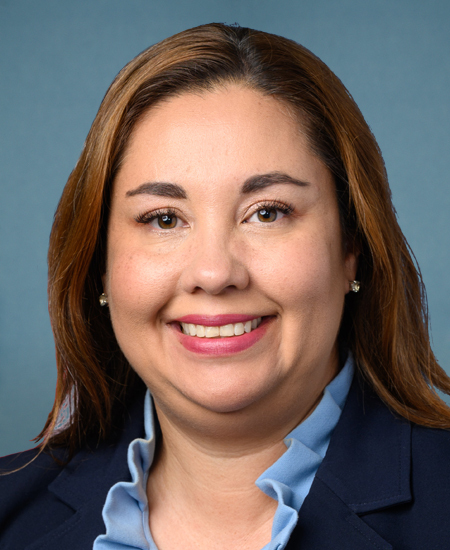
Rep. Yadira Caraveo
Sponsored bills
Maddy summaryThis bill expands eligibility for certain tax-advantaged health accounts to cover medical expenses for parents. It amends the tax code to allow individuals to use funds from Health Savings Accounts (HSAs), Flexible Spending Accounts (FSAs), and Health Reimbursement Arrangements (HRAs) for qualified medical care of their parents or their spouse's parents - previously limited to immediate family members. The changes apply to expenses incurred after December 31, 2023, directly benefiting adult caregivers (like children supporting elderly parents) who use these accounts for parental healthcare costs. The bill makes no new funding commitments but adjusts existing account rules to reduce out-of-pocket costs for caregivers.
Maddy summaryHR 7142 (Alternatives to PAIN Act) requires Medicare Part D plans to cover non-opioid pain management drugs with no deductible and at the lowest copay level starting in 2025. It defines "qualifying non-opioid drugs" as FDA-approved medications that don’t act on opioid receptors (like certain NSAIDs or nerve pain treatments), excluding opioids and schedule I-III drugs. The bill prohibits Medicare plans from forcing patients to try opioids first (step therapy) or requiring prior approval for these non-opioid options. It directly affects Medicare beneficiaries needing pain management, especially those seeking alternatives to opioids for post-surgical or acute pain. The policy change aims to improve access to non-addictive pain treatments while preserving doctors' authority to prescribe medically appropriate care.
Maddy summaryThe EASE Act of 2024 requires the Centers for Medicare & Medicaid Services (CMS) to test a new model improving access to specialty health care for Medicare and Medicaid beneficiaries in rural or underserved areas. It mandates CMS to partner with selected provider networks - comprising at least 50 community health clinics, nonprofits with proven community health work, and commitment to research - to deliver specialty care via telehealth and remote technology, coordinated with patients’ primary care providers. This model directly affects Medicare Part A/B beneficiaries and Medicaid enrollees living in designated underserved regions. The bill establishes specific criteria for network selection and defines "eligible individuals" based on coverage type and geographic location.
Maddy summaryThe Invest in Child Safety Act of 2024 establishes a new Office within the Department of Justice to coordinate federal efforts against child sexual exploitation, headed by a Director appointed by the Attorney General. It creates a $5 billion fund for fiscal year 2024 (available through 2033) to support specific programs, including $100 million for U.S. attorneys prosecuting child sexual exploitation cases, $20 million for the International Center for Missing and Exploited Children, and $15 million for the National Center for Missing and Exploited Children. The bill requires annual reporting on activities and statistics related to child sexual exploitation, including investigations, arrests, and prosecutions, and modernizes the CyberTipline reporting system to better identify and locate victims. This legislation directly affects federal agencies, including the Department of Justice, FBI, and Department of Health and Human Services, as well as international law enforcement partners.
Maddy summaryThe "You Earned It, You Keep It Act" (HR 7084) establishes a $250,000 annual income threshold for Social Security taxes. Income above this threshold will no longer be subject to Social Security taxes but will still count toward Social Security benefits. This affects high earners who would have paid Social Security taxes on income above the current wage base. The bill also includes special rules for workers with multiple employers and applies to calendar years after 2024.
Maddy summaryThe Nutrition CARE Act of 2024 expands Medicare Part B coverage to include medical nutrition therapy services for beneficiaries diagnosed with eating disorders. It directly affects Medicare beneficiaries with eating disorders - particularly an estimated 420,500-560,700 Black, Indigenous, and People of Color seniors - by requiring coverage for 13 hours of initial care (including assessment) and 4 hours annually for ongoing management. The bill amends Medicare law to specify that these services must be provided by registered dietitians or nutrition professionals following referrals from physicians or psychologists. Coverage applies to all eating disorders as defined by the DSM-5, addressing a gap where Medicare previously excluded this critical treatment component. This policy change aims to improve access to evidence-based care for a condition linked to high mortality and significant healthcare costs.
Maddy summaryThis bill, HR 6860, protects patients with end-stage kidney disease (ESRD) who require dialysis by preventing health insurance plans from discriminating against them. It amends Medicare rules to prohibit plans from treating dialysis coverage differently than other medical services based on a patient’s ESRD diagnosis, need for dialysis, or any other factor. The bill clarifies that plans can still choose which dialysis providers to include in their networks but cannot deny or limit coverage for dialysis services solely because of the patient’s condition. It ensures Medicare remains the secondary payer for these services as intended, without forcing plans to cover specific providers.
Maddy summaryHR 6790 establishes National Institutes of Health centers to advance research, early detection, and public awareness of rare kidney diseases, with a focus on rural and underserved communities. It mandates a federal study on genetic testing barriers, treatment patterns, and public awareness for rare kidney diseases affecting disproportionately impacted populations, including barriers to insurance coverage and access to specialists. The bill also funds nephrology training programs to increase specialists serving these communities and requires experiments to delay or prevent the need for dialysis and transplants. Total funding of $7 million is authorized for fiscal years 2024-2028 to support these research, education, and early intervention efforts.
Maddy summaryThis bill updates Medicare's physician fee schedule to better align with current healthcare costs and support providers. It extends a key deadline for geographic payment adjustments from 2024 to 2025, increases the rate for payment adjustments from 1.25% to 3%, and extends incentive payments for doctors in alternative payment models (APMs) through 2026. For 2026, it imposes payment reductions (34% for 4-6 years in APMs, 67% for 7+ years) but allows exceptions if providers increased their financial risk compared to 2025. The bill also raises Medicare's budget neutrality threshold to $53 million in 2025 and requires regular updates to cost data (like staff wages and equipment prices) every five years. These changes directly affect Medicare-participating physicians, especially those in APMs, by altering payment calculations and incentives.