

Maddy summaryThe ARCH Act extends funding for two critical rural hospital payment programs through 2029 (instead of 2024). It directly affects rural hospitals classified as Medicare-dependent hospitals (MDHs) or low-volume hospitals (LVHs), ensuring continued financial support. Key provisions include extending payment methodologies, allowing hospitals to decline reclassification, and requiring a GAO report analyzing rural hospital classification overlaps and recommending improvements. The GAO must report within 180 days on classification criteria, overlaps, and potential changes to improve rural hospital sustainability and patient access.
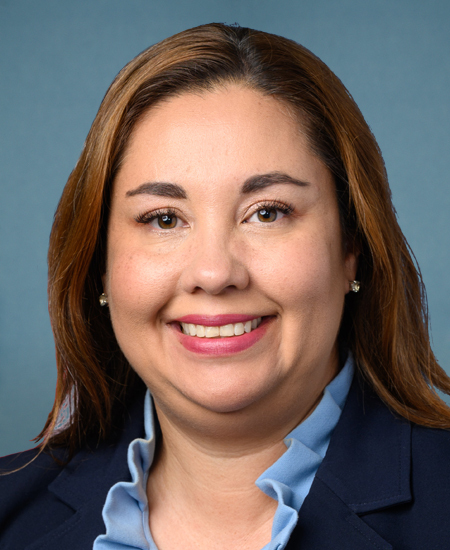
Rep. Yadira Caraveo
Sponsored bills
Maddy summaryThe ARCC Act provides $100 million in federal funding to help apprentices and pre-apprentices in job training programs cover childcare costs. It authorizes competitive grants to 10 states, which must distribute monthly stipends of at least $500 per dependent child directly to eligible childcare providers on behalf of participants in these programs. The bill prioritizes individuals from historically underrepresented groups (based on race, ethnicity, or gender) and ensures stipends are tax-free while not affecting eligibility for other federal benefits. States must report on participation, program completion rates, and demographic data, with the Secretary later summarizing program impacts for Congress.
Maddy summaryHR 6280, the Smart Border Protection Act, provides $570 million in new funding for U.S. Customs and Border Protection (CBP) operations at ports of entry. It allocates $300 million for hiring personnel (including agents and specialists), $200 million for screening technology to detect threats like fentanyl in cargo, and $70 million for infrastructure improvements such as expanded vehicle lanes and building upgrades. All funds must be spent within one year of enactment and are in addition to existing appropriations. The bill directly supports CBP’s capacity to manage border security operations at designated ports.
Maddy summaryHR 5840, the Transportation Security Screening Modernization Act of 2024, simplifies the process for transportation workers to obtain multiple TSA security credentials. It requires the TSA to allow individuals to apply for and renew programs like the TWIC (Transportation Worker Identification Credential) and HAZMAT Endorsement through a single enrollment at any TSA center, with a combined fee lower than separate applications. The bill mandates coordinated expiration dates for all credentials and ensures state-issued commercial driver's licenses reflect the correct HAZMAT endorsement validity. These changes aim to reduce duplication and costs for workers needing multiple security clearances. The TSA must implement these changes within two years and publish details online.
Maddy summaryHR 5819, the COMPLETE Care Act, incentivizes Medicare primary care providers to integrate behavioral health services by increasing payments for specific services (like mental health and substance use disorder support) during 2025-2027. Providers using designated HCPCS codes for integrated care would receive 125-175% of standard payment rates, with the percentage declining annually. The bill also requires these providers to report on integration quality measures and mandates technical assistance for practices adopting integrated models, funded through new appropriations for 2024-2027. It directly affects Medicare-participating primary care practices serving beneficiaries needing mental health or substance use services.
Maddy summaryThe End Diaper Need Act of 2023 creates a federal program that will provide free diapers and incontinence supplies to low-income families with infants, toddlers, medically complex children (3+ years old with chronic health conditions), and low-income adults with disabilities. It allocates $200 million annually from 2024-2027 to fund this assistance through states and community organizations, making medically necessary diapers eligible for reimbursement through health savings accounts and other health benefit programs. The legislation requires integration with existing services like Medicaid, WIC, and TANF, and includes annual reporting requirements and an evaluation of the program's effectiveness within two years.
Maddy summaryThis bill makes permanent Medicare coverage for telehealth services provided by Federally Qualified Health Centers (FQHCs) and Rural Health Clinics (RHCs), including audio-only visits. It directly affects Medicare beneficiaries who use these services and the FQHCs/RHCs delivering them by removing location restrictions - allowing telehealth visits to occur regardless of the patient's geographic location. Key provisions include permanently covering audio-only telehealth (previously temporary), treating telehealth visits as equivalent to in-person visits for payment, and ensuring costs for telehealth are included in FQHC/RHC payment calculations. These changes simplify access to telehealth for rural and underserved communities while maintaining consistent Medicare reimbursement for providers.
Maddy summaryThe CARE for Moms Act aims to reduce maternal mortality in the United States by improving healthcare access and quality for pregnant and postpartum women, with specific attention to racial disparities. Key provisions include requiring 12-month continuous Medicaid coverage for postpartum individuals (up from 60 days), expanding oral health coverage during pregnancy, and funding State-Based Perinatal Quality Collaboratives through $35 million annual grants. The bill specifically targets the higher maternal mortality rates faced by Black women, who are about 3 times more likely to die from pregnancy-related causes than White women. It also includes provisions for doula services, rural mobile health units, and improved data collection on maternal health outcomes.
Maddy summaryThe In Good Standing Adoption Agencies Act of 2023 requires states to annually submit to the federal government a list of child placement agencies that are licensed, in good standing with the state, and federally tax-exempt (under Section 501(c)(3)). The federal government will compile and maintain a public list of these agencies and report to Congress on any licensed agency not included, along with any state disciplinary actions taken against them. States that fail to submit the required list for a fiscal year will lose eligibility for federal adoption and legal guardianship incentive payments. This bill directly affects state child welfare agencies and the adoption agencies they regulate, with no change to existing agency licensing standards.
Maddy summaryHR 5510, the HOPE and Mental Wellbeing Act of 2023, requires Medicare and Medicaid to cover the first three primary care visits each year at 100% without cost-sharing for beneficiaries. This applies to both Medicare Part B (including Medicare Advantage plans) and Medicaid starting in 2024, directly affecting seniors and low-income individuals seeking mental health or general primary care. The bill defines "primary care visit" to include outpatient behavioral health services, nonspecialty medical care, and care coordination for prevention, diagnosis, or treatment of physical or mental health conditions. This policy change removes financial barriers for initial mental health or primary care appointments under these government health programs.