

Maddy summaryHR 7056, the Access to Family Building Act, establishes federal rights for individuals to access assisted reproductive technology (ART) like IVF without unreasonable restrictions, directly affecting patients seeking fertility treatments and health care providers offering ART services. The bill prohibits states from imposing limitations on ART that are more burdensome than those for comparable medical procedures, fail to advance safety, or unduly restrict access, while allowing health and safety regulations that are necessary and least restrictive. It creates federal enforcement mechanisms, including lawsuits by the Attorney General or affected individuals to challenge violating state laws, and preempts conflicting state regulations. The bill explicitly preserves state authority over health/safety regulations and does not alter existing state insurance coverage laws for ART.
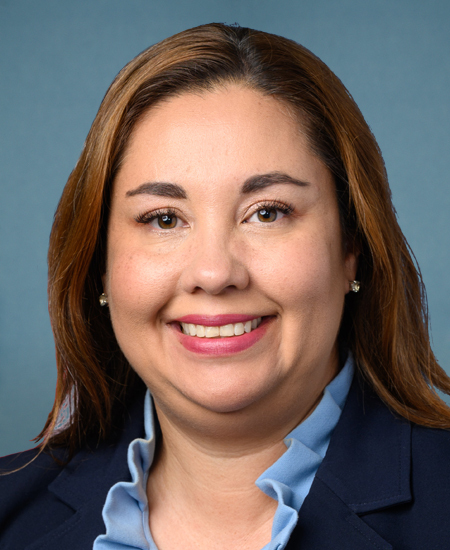
Rep. Yadira Caraveo
Sponsored bills
This bill establishes the Commission on National Agricultural Statistics Service (NASS) Modernization to study and provide recommendations on modernizing and streamlining data collection at NASS. (NASS conducts the Census of Agriculture and provides official statistics on agricultural production and other farm sector indicators.) The 11-member commission must include 4 specified members from the Department of Agriculture, 1 member from the Bureau of Labor Statistics, and 6 members appointed by the House and Senate Agriculture Committees. At the request of the commission chair, federal agencies must provide the commission information related to the study. The commission must submit a report to the President and Congress on the results of the study within three years of the bill's enactment. The report must include (1) an inventory of surveys conducted by NASS and their frequency; and (2) recommendations for administrative, regulatory, and legislative changes.
Maddy summaryThis bill creates a new program to provide financial assistance to struggling rural health care facilities, including hospitals, clinics, and long-term care centers in designated rural areas. Facilities may use existing USDA funds to refinance loans, upgrade telehealth technology or equipment, or cover operating costs and reserves - provided the aid preserves local health services and improves the facility's financial health. It includes a waiver allowing facilities in persistent poverty areas (20%+ poverty for 30+ years) or distressed communities to bypass standard eligibility requirements. The program applies to rural areas defined as having ≤50,000 residents not adjacent to larger cities.
Maddy summaryThe Transit Emergency Relief Act (HR 7012) amends federal transportation law to provide more flexible funding for public transit agencies facing emergencies. It allows funds designated for emergency relief (under 49 U.S.C. § 5324) to remain available until spent, be used for prior or current fiscal years, and not reduce existing funding. The bill also increases annual funding caps for transit programs and adds $50 million per year (2024-2027) specifically for this emergency relief program. Public transportation agencies receiving federal grants are directly affected, as the changes simplify access to funds during crises while requiring compliance with labor standards (49 U.S.C. § 5333). This creates more predictable support for transit systems recovering from unexpected disruptions.
Maddy summaryHR 7009, the Securing Airport Facilities for Enhanced Parking Act (SAFE Parking Act), allows airport operators to use federal airport improvement funds for security costs in revenue-producing parking lots. The bill specifically permits funding for CCTV systems, physical barriers, alarm systems, and law enforcement partnership tools to address security threats in these areas. It applies only until December 31, 2025, and requires a report to Congress by that date detailing how funds were used and suggesting future program updates. This bill directly affects airports managing paid parking facilities seeking federal support for security upgrades under existing airport improvement programs.
Maddy summaryHR 5877 creates the USDA Express Guaranteed Farm Ownership Loan Program, allowing participating lenders to process farm ownership loan guarantees within 36 hours. It sets a $1 million annual loan limit per farm, with guarantees covering 75% of loans up to $750,000 and 50% for loans between $750,000-$1 million. Borrowers must use funds exclusively for agricultural production, and lenders must verify borrower creditworthiness before submission. The bill also establishes a similar express program for farm operating loans.
Maddy summaryHR 3650, the Opportunities in Organic Act of 2023, amends the Farm Security and Rural Investment Act of 2002 to create a new "Opportunities in Organic" program. It provides federal reimbursement for organic certification costs (up to $1,500 per producer, with higher amounts possible for socially disadvantaged farmers or in high-cost regions) and establishes new funding for nonprofits to support farmers transitioning to organic practices. The bill directly affects socially disadvantaged farmers, small/mid-sized farms, and eligible nonprofit organizations by covering transition costs like soil testing, equipment, land access barriers, and technical assistance. Key provisions include $50 million annually for fiscal years 2024-2025, increasing to $100 million by 2027, with specific requirements for reporting on program outcomes and participant demographics.
Maddy summaryHR 6963, the Pediatric Cancer Drug Supply Act of 2024, creates a federal pilot program to prevent shortages of essential pediatric cancer drugs. The Secretary of Health and Human Services will enter agreements with manufacturers to maintain a 6-month reserve supply of each covered drug - defined as drugs on a list developed by the Secretary that treat pediatric cancer and meet specific criteria - held in the U.S. by manufacturers. Manufacturers must store extra inventory beyond normal levels, ensure drugs have over a year of shelf life, and allow the government to audit compliance. During shortages, the Secretary can order these reserves distributed to patients, with recipients paying the government's purchase price to replenish the supply. The program is funded with $500 million for fiscal year 2024.
Maddy summaryHR 6973 reauthorizes the COPS on the Beat grant program for fiscal years 2025-2034, with new provisions to support diverse hiring and better compensation for officers in rural communities. The bill provides increased federal funding (up to 90% in the first year, decreasing to 75% over four years) for jurisdictions with median household incomes below 80% of the national average. It sets a $75,000 cap on hiring costs per officer and limits compensation to 80% of the national median household income for qualifying rural areas. The legislation also requires the GAO to report on law enforcement workforce diversity and pay relative to local costs of living in 2029 and 2034. This bill directly affects local law enforcement agencies seeking federal grants to hire and retain officers, particularly in rural communities with lower median incomes.
Maddy summaryThis bill requires the U.S. Department of Agriculture (USDA) to create and post online information about energy-efficient pumping systems, detailing cost savings, energy reductions, water conservation, and carbon benefits for agricultural use. It also mandates a user-friendly online tool for farmers to input data about their current systems and estimate potential savings from upgrades. Additionally, the bill directs the USDA to establish training for energy auditors on pumping system efficiency and amend the Conservation Stewardship Program to include energy-efficient pumping systems as a qualifying activity. These provisions directly support farmers, ranchers, and aquaculture operations in making informed decisions about irrigation and water management infrastructure improvements.