Youth Lead Act This bill reauthorizes through FY2028 National Institute of Food and Agriculture grants to the Girl Scouts of the USA, the Boy Scouts of America, the National 4–H Council, and the National FFA Organization. These grants must be used to establish pilot projects to expand the programs carried out by the organizations in rural areas and small towns.
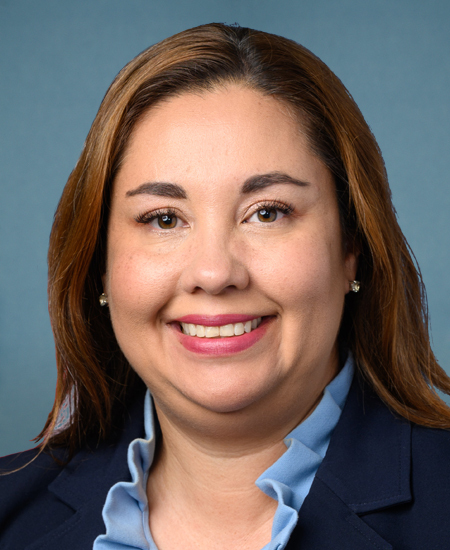
Rep. Yadira Caraveo
Sponsored bills
Maddy summaryThis bill increases loan limits for farmers under the Farm Service Agency. It raises the maximum farm ownership loan amount from $600,000 to $850,000 (and guaranteed loans from $1.75 million to $3.5 million), and operating loans from $400,000 to $750,000 (guaranteed from $1.75 million to $3 million). It also doubles the microloan cap from $50,000 to $100,000. Additionally, the bill creates a new process allowing distressed guaranteed loans to be refinanced into direct loans if borrowers can't resolve issues with lenders and the farm operation can become financially viable. These changes directly affect farmers and ranchers seeking credit through the Farm Service Agency.
Maddy summaryThis bill creates a new USDA program to directly connect fresh produce producers with community food programs serving low-income individuals. It requires the Secretary of Agriculture to contract with eligible entities (like farms, distributors, and nonprofits) to buy U.S.-grown fresh produce - ensuring at least seven varieties per delivery, locally sourced when possible, and aligned with dietary guidelines - and distribute it to qualifying organizations (such as food banks, schools, and tribal programs) facing food insecurity. The program prioritizes contracts with beginning farmers, socially disadvantaged farmers, veteran farmers, and small/mid-sized family farms, while mandating 30% upfront payment and requiring annual reports on distribution metrics and program effectiveness to Congress. It aims to strengthen local food supply chains, reduce farm waste, and improve access to fresh produce for vulnerable communities.

Maddy summaryThe Affordable Connectivity Program Extension Act of 2024 allocates $7 billion in funding for the Affordable Connectivity Program (ACP) during fiscal year 2024. The ACP provides subsidies to low-income households to help cover the cost of internet service and connected devices like laptops or tablets. This funding ensures the program can continue supporting eligible households throughout the year, with the money remaining available until fully spent. The bill extends existing program funding without changing eligibility criteria or service requirements.
Maddy summaryHR 6950, the Working Dog Health and Welfare Act of 2024, requires federal agencies and their contractors managing working dog programs to implement specific health and welfare recommendations from a 2022 Government Accountability Office report within 180 days of the law's enactment. It directly affects all federal agencies (including Congress and courts as defined), their contractors, and the Department of State when providing working dogs to foreign partners. Key mechanisms include mandatory implementation of the GAO's recommendations, a 60-day reporting requirement to Congress on steps taken, and ensuring new programs established after enactment follow these standards. The bill focuses on concrete policy changes to standardize care for working dogs used in federal operations, without altering existing program structures or outcomes.
Maddy summaryThis bill requires the U.S. Attorney General to review all Department of Justice programs supporting victims of domestic violence, sexual assault, dating violence, or stalking - including those under the Violence Against Women Act and Victims of Crime Act - within one year of enactment. The review must assess these programs and produce a report with specific recommendations to improve victim protection (especially in rural areas), create pathways out of abusive environments, and strengthen long-term support. The report must be published and shared with state agencies and eligible organizations to increase public awareness of available assistance. The bill directly affects DOJ grant programs and aims to enhance support systems for victims, without specifying new funding or altering existing laws.
Maddy summaryThe TRANQ Research Act of 2023 requires the National Institute of Standards and Technology (NIST) to coordinate research on illicit drugs containing xylazine, novel synthetic opioids, and other concerning substances. The bill mandates NIST to develop faster detection methods, create data tools for identifying these substances, and consult with agencies like the DEA, CDC, and National Institute on Drug Abuse to establish safe handling practices. NIST must also form partnerships with universities, federal labs, and the private sector to improve detection capabilities. Within one year, NIST must report to Congress on its implementation, and the Comptroller General must conduct a study on federal capabilities to respond to new psychoactive substances, reporting within two years.
Maddy summaryHR 1147, the Whole Milk for Healthy Kids Act of 2023, allows schools participating in the National School Lunch Program to offer whole milk as an option during lunch. It amends the school lunch law to explicitly permit schools to serve flavored and unflavored whole milk alongside reduced-fat, low-fat, and fat-free milk choices for students. The bill also requires the Secretary of Agriculture to adjust meal regulations to account for saturated fat from whole milk, ensuring it doesn't count against meal fat limits. This change directly affects participating schools and the students who receive school lunches, expanding their milk beverage options.
Maddy summaryThe Menopause Research and Equity Act of 2023 requires the National Institutes of Health (NIH) to evaluate existing and ongoing research on menopause, perimenopause, and mid-life women’s health, identifying gaps in knowledge and funding over the past five years. The NIH must then develop a strategic plan with health professionals (including specialists like gynecologists and endocrinologists) to address these gaps and guide future research on treatments for menopause symptoms. The bill also mandates new NIH research on causes, symptoms, and treatments for menopause-related health issues, including a study on hormonal treatments. All activities must be funded using existing NIH resources, with no new appropriations authorized. This aims to improve scientific understanding of women’s mid-life health needs.
Maddy summaryHR 6746, the Iron Deficiency Education and Awareness Act, creates a national public health campaign to increase screening and awareness of iron deficiency among women and children under two. The bill directs the Secretary of Health and Human Services to fund a $7 million annual campaign (2024-2028) using evidence-based media, culturally tailored resources, and partnerships with health providers and community organizations. It specifically targets high-risk groups including menstruating women, pregnant/breastfeeding individuals, women with gastrointestinal conditions, Black and Hispanic women, and parents of children under two. The campaign will disseminate information on symptoms, screening recommendations, and prevention strategies through social media, health facilities, schools, and community outreach.