

Maddy summaryThis bill establishes "Operation Stonegarden," a new grant program funding border security efforts by law enforcement agencies in states bordering Canada, Mexico, or the coast. It allocates $110 million annually (2024-2028) for equipment, personnel, and activities supporting U.S. Customs and Border Protection operations. The bill also reauthorizes $400 million yearly for the High Intensity Drug Trafficking Areas Program and increases COPS Grant Program funding to $665 million annually, requiring a report on improving access for rural and smaller agencies. These provisions directly affect border law enforcement agencies and community policing programs.
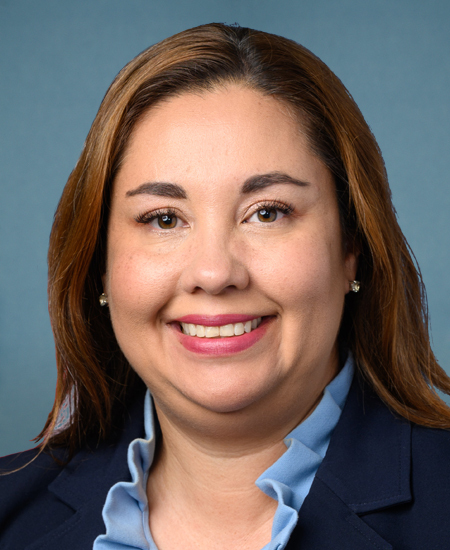
Rep. Yadira Caraveo
Sponsored bills
Maddy summaryHR 7470, the Secure U.S. Leadership in Space Act of 2024, changes tax rules to treat spaceports similarly to airports for financing purposes. It allows spaceports to issue tax-exempt bonds (like airports do) for construction and operations, directly benefiting spaceport developers and operators. Key provisions include defining "spaceport" broadly to cover manufacturing, launch/reentry services, and flight control facilities, while adding exceptions for federal use and excluding spaceport bonds from state bond limits. The bill clarifies that spaceports do not need public access to qualify for these tax benefits. This policy change aims to support private investment in U.S. space infrastructure through existing tax financing mechanisms.
Maddy summaryHR 533, the "Promoting a Resolution to the Tibet-China Dispute Act," establishes U.S. policy recognizing Tibetans' right to self-determination under international law and rejects China's historical claims about Tibet. It directs the State Department to counter Chinese disinformation about Tibet’s history and status, including claims that Tibet has been part of China "since ancient times," and amends the 2002 Tibetan Policy Act to require specific disinformation countermeasures. The bill defines "Tibet" to include the Tibet Autonomous Region and Tibetan areas in Qinghai, Sichuan, Gansu, and Yunnan provinces. These provisions aim to guide U.S. diplomatic efforts toward resolving the Tibet-China dispute through dialogue and factual representation.
This joint resolution nullifies the final rule issued by the Animal and Plant Health Inspection Service (APHIS) titled Importation of Fresh Beef From Paraguay and published on November 14, 2023. The final rule allows for the importation of fresh (chilled or frozen) beef from Paraguay into the United States under certain conditions. The United States prohibits or restricts the importation of certain animals and animal products to prevent the introduction of various animal diseases, including foot-and-mouth disease (FMD). In response to a request from Paraguay to allow the importation of fresh beef from Paraguay into the United States, APHIS conducted a risk analysis. APHIS concluded that fresh beef could be safely imported from Paraguay, provided that certain conditions are met. These conditions include that (1) FMD has not been diagnosed in the exporting region within the previous 12 months; (2) the meat originated from premises where FMD has not been present during the lifetime of any bovines slaughtered for U.S. meat export; and (3) APHIS may periodically conduct on-site evaluations and subsequent inspections of the slaughter facilities, records, and operations.
Maddy summaryHR 7307, the Health Care Workforce Innovation Act of 2024, establishes a new federal grant program to expand training for allied health professionals - such as medical assistants, community health workers, pharmacy technicians, and dental hygienists - in underserved communities and rural areas. Eligible applicants include Federally-qualified health centers and rural health clinics, which can use grants (up to $2.5 million per award for at least 3 years) to develop community-driven training partnerships with schools, vocational programs, and healthcare facilities. Funds support specific activities like apprenticeships, culturally competent training, and building career pathways for individuals from disadvantaged backgrounds, while prohibiting construction costs or replacing existing workforce funding. The program authorizes $100 million annually from 2025-2029 to address healthcare workforce shortages in areas lacking access to care.
Maddy summaryThe CBP HiRe Act of 2024 creates special hiring and retention tools for U.S. Customs and Border Protection (CBP) employees working in rural or remote border areas. It allows direct hiring without standard civil service rules for critical positions, plus recruitment/relocation bonuses (up to 100% of salary) and retention bonuses (up to 50% of salary) for employees in these areas. CBP hiring officials must prove staffing challenges are directly tied to an area’s remote location before using these authorities, and must report annually on their effectiveness to Congress. The law expires after five years and requires annual reviews to ensure these flexibilities address actual hiring and retention needs.
Maddy summaryThis bill allows law enforcement officers, firefighters, and emergency medical personnel (covered employees) to sue their public safety employers if they face termination or other punishment for expressing personal opinions about work-related issues. It specifically protects speech on topics like public safety service delivery, pay/benefits, working conditions (including equipment), workplace policies, and even political/religious views. However, the protection does not cover on-duty speech, speech advocating violence or discrimination, disclosure of confidential information, or threats to withhold essential services. The law creates a new legal remedy but explicitly states it does not override existing federal or state civil rights laws.
Maddy summaryHRES 966 is a symbolic resolution condemning alleged sexual violence committed by Hamas during its October 7, 2023, attack on Israel. It specifically references eyewitness accounts, forensic evidence, and Hamas fighters' admissions of ordering gang rape, sexual mutilation, and assault against Israeli civilians. The resolution calls for international condemnation of such acts as weapons of war, urges nations to criminalize sexual violence, and supports investigations into Hamas' actions. As a non-binding resolution, it does not create new laws or directly affect any individuals but formally expresses the House's position on the issue.
Maddy summaryThe VICTIM Act of 2024 establishes a federal grant program to help state, tribal, and local law enforcement agencies improve clearance rates for homicides and firearm-related violent crimes. Agencies can apply for funding to hire and train investigators, develop evidence-based policies (like trauma-informed interviews and community engagement), acquire forensic technology, and provide victim support services. Grant recipients must submit annual reports on activities, clearance rates, and fund use, with audits to prevent misuse of funds. The bill authorizes $60 million annually from 2024 to 2029, including 5% reserved for tribal law enforcement agencies.
Maddy summaryThis bill restricts how credit reporting companies share homebuyers' credit reports during mortgage applications. It prevents companies from sending these reports to third parties (like marketers) just because a lender requested them for a mortgage. Only specific entities can receive the reports: the mortgage lender who originated the loan, the company servicing the loan, or the bank holding the homebuyer's account. This directly protects homebuyers' privacy by limiting unauthorized sharing of their financial data.