

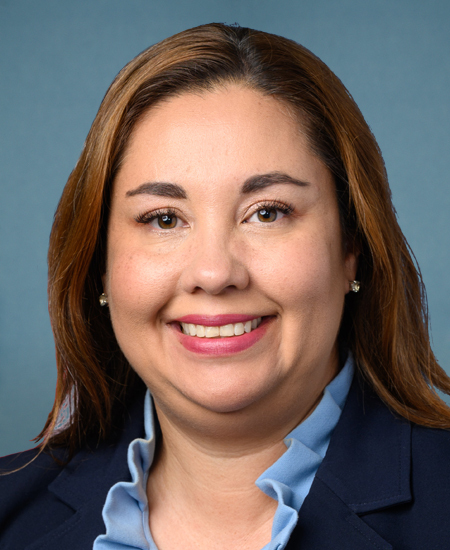
Photo of Yadira Caraveo
D United States House · District 8 · Colorado

Rep. Yadira Caraveo

Compare
Total votes
1,210
all sessions
Attendance
97%
35 missed
Near the chamber average
With party
89%
of cast votes
Lower than 83% of chamber peers
Bipartisan score
6%
crosses aisle rarely
Higher than 79% of chamber peers
Sponsored
659
bills & resolutions
Higher than 90% of chamber peers
Committees
0
assignments
659 bills and resolutions

Sponsored bills

Total
659
Primary
41
Co-sponsor
618
This page
659
matching current filters
Co-sponsor HRES 1036
In committee · United States House · Co-sponsor
Expressing support for the designation of February 29, 2024, as "Rare Disease Day".

Maddy summaryThis House resolution (HRES 1036) expresses the U.S. House of Representatives' support for designating February 29, 2024, as "Rare Disease Day." It acknowledges the global observance of Rare Disease Day - first recognized in the U.S. in 2009 - and highlights the challenges faced by the over 25 million Americans living with rare diseases (affecting fewer than 200,000 people in the U.S. each). The resolution recognizes the importance of improving awareness, encouraging early diagnosis, and supporting efforts to develop treatments for rare diseases. It is a symbolic gesture with no new policies or funding, aligning with the annual global observance of Rare Disease Day.

In committee Mar 8, 2024 1 co-sponsor
Co-sponsor HR 7542
In committee · United States House · Co-sponsor
Stop CMV Act of 2024

Maddy summaryThe Stop CMV Act of 2024 requires hospitals and healthcare entities caring for infants under 21 days old to administer congenital Cytomegalovirus (CMV) screening tests. It mandates states to establish screening standards within two years of enactment, with federal oversight by the Advisory Committee on Heritable Disorders if states fail to act. The bill allocates federal grants to states for implementing screening, improving data systems, and funding research on CMV diagnostics, prevention, and treatments through the National Institutes of Health. These provisions directly affect newborns, hospitals, and state health agencies by standardizing early CMV detection and supporting related public health efforts.

In committee Mar 8, 2024 1 co-sponsor
Co-sponsor HR 7577
In committee · United States House · Co-sponsor
CHEERS Act

Maddy summaryHR 7577, the CHEERS Act, creates a new tax deduction for restaurants, bars, and entertainment venues by expanding eligibility under the energy efficiency tax code (Section 179D). It defines "qualified energy-efficient draft property" as stainless steel or aluminum containers and tap equipment used for alcohol distribution in these businesses, treating them as eligible for the existing energy efficiency tax deduction. This change applies to equipment placed in service after the bill's enactment date, directly benefiting hospitality businesses that own or lease such equipment. The provision modifies existing tax code language without creating new tax rates or altering other regulations.

In committee Mar 7, 2024 1 co-sponsor
Co-sponsor HR 7578
In committee · United States House · Co-sponsor
Promote Secure Connectivity to Taiwan Act

Maddy summaryHR 7578, the Promote Secure Connectivity to Taiwan Act, requires the Assistant Secretary of Commerce for Communications and Information to submit a report within one year of enactment assessing technologies to improve security and resilience of Taiwan's communications networks. The report must cover available security technologies, submarine cable lifespans, security of US-Taiwan communications links, and potential engagement with "trusted" entities (defined as those not deemed security risks under existing law). The bill mandates no mandatory data collection from entities and specifies the report must be unclassified, though it may include a classified annex. This is a procedural assessment bill with no direct policy changes or funding.

In committee Mar 7, 2024 1 co-sponsor
Co-sponsor HR 3838
Passed · United States House · Co-sponsor
Preventing Maternal Deaths Reauthorization Act of 2023

Maddy summaryThis bill reauthorizes the Preventing Maternal Deaths program through 2028, extending existing provisions under the Public Health Service Act. It requires maternal mortality review committees to include obstetricians and gynecologists and improves death certificate accuracy by directing coordination with death certifiers. The Centers for Disease Control and Prevention must annually share evidence-based best practices for preventing maternal mortality with hospitals, state health groups, and perinatal quality collaboratives. The changes directly affect state maternal mortality review committees, healthcare providers, and hospitals receiving CDC guidance. The bill does not create new funding but extends the current program's authorization period from 2019-2023 to 2024-2028.

Passed Mar 6, 2024 1 co-sponsor
Co-sponsor HRES 1050
In committee · United States House · Co-sponsor
Supporting the designation of March 2024 as National Colorectal Cancer Awareness Month.

Maddy summaryThis resolution (HRES 1050) designates March 2024 as National Colorectal Cancer Awareness Month. It symbolically supports existing public awareness efforts around colorectal cancer prevention, screening, and early detection, without creating new requirements or funding. The resolution encourages the public to observe the month with educational activities, aligning with ongoing annual campaigns. It directly affects public awareness efforts but has no binding policy impact.

In committee Mar 1, 2024 1 co-sponsor
Primary HR 6292
In committee · United States House · Lead sponsor
Future FARMER Act

Future Funding for Agricultural Research, Mentorship, and Education Reauthorization Act or the Future FARMER Act This bill reauthorizes through FY2028 National Institute of Food and Agriculture grants and fellowships for food and agriculture science education. This includes programs such as the (1) Higher Education Challenge Grants Program, (2) Agriculture in the Classroom Program, and (3) National Awards Program for Excellence in College and University Teaching in the Food and Agricultural Sciences.

In committee Mar 1, 2024 0 co-sponsors
Co-sponsor HR 6203
In committee · United States House · Co-sponsor
Farmers Feeding America Act of 2023

Maddy summaryHR 6203 extends funding for the Emergency Food Assistance Program (EFAP) through fiscal year 2028, increasing annual commodity funding to $500 million per year for 2024-2028. It raises storage and distribution funding from $100 million to $200 million annually and creates new delivery options for geographically isolated states (Hawaii, Alaska, Puerto Rico, Northern Mariana Islands, U.S. Virgin Islands, and Guam), including allowing them to order through the Department of Defense Fresh Fruit and Vegetable Program. The bill also permits these states to use up to 20% of allocated funds to directly purchase locally grown food. Finally, it allows the Secretary to consider factors like product variety and transportation distance when awarding contracts for fresh produce packages, while maintaining nutritional goals.

In committee Mar 1, 2024 1 co-sponsor
Co-sponsor HR 6142
In committee · United States House · Co-sponsor
LAST ACRE Act of 2023

Maddy summaryThe LAST ACRE Act of 2023 creates a program to provide high-speed broadband internet access to agricultural land lacking adequate connectivity. It authorizes $10 million annually for grants and loans to qualified providers to build infrastructure on unserved or underserved eligible land (including farms, rangeland, and crop land) that meets minimum speed requirements of 100 Mbps downstream and 20 Mbps upstream. The program prioritizes remote areas and limited resource farmers, requiring providers to meet cybersecurity standards and submit competitive bids. It also mandates the collection of data on broadband usage by agricultural producers to better understand connectivity needs.

In committee Mar 1, 2024 1 co-sponsor
Primary HR 7486
In committee · United States House · Lead sponsor
HELP for Interior Cities Act

Maddy summaryHR 7486, the HELP for Interior Cities Act, directs $1.4 billion in federal funding to address disparities in support for migrant services between interior cities (away from borders) and border cities. It requires FEMA to assess funding gaps, compile a list of interior cities receiving less support than comparable border cities, and prioritize them for funding under the Shelter and Services Program. The bill mandates that at least 20% of funds must directly support hospitals, clinics, and community health centers. This policy change specifically affects nonfederal entities providing migrant shelter and health services in interior cities that have historically received less federal funding than border cities with similar populations.

In committee Feb 29, 2024 0 co-sponsors
Showing 211 to 220 of 659 bills
Previous 1 … 21 22 23 … 66 Next