

Maddy summaryHR 7824, the Preventing Child Trafficking Act of 2024, requires the Justice Department’s Office for Victims of Crime and the Administration for Children and Families to implement specific anti-trafficking recommendations from a December 2023 GAO report within 180 days of the bill’s enactment. The law mandates that these agencies coordinate to address gaps in public awareness and survivor support for child trafficking victims. It also requires the Office for Victims of Crime to submit a detailed implementation report to Congress 60 days after completing the program changes. The bill directly affects federal agencies responsible for child trafficking prevention and survivor services, without creating new funding or altering existing legal standards.
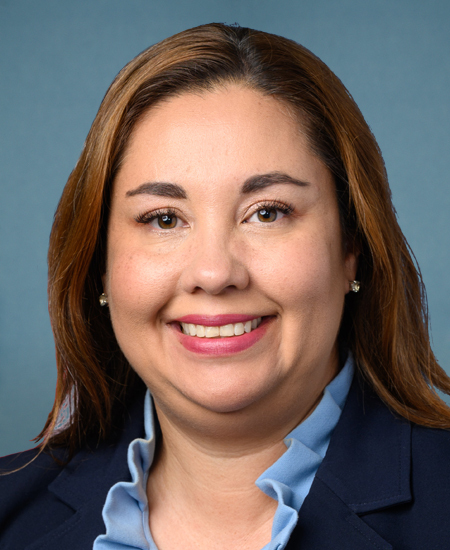
Rep. Yadira Caraveo
Sponsored bills
Maddy summaryThe Postsecondary Student Success Act of 2024 establishes a competitive grant program to help colleges and universities improve graduation rates for high-need students, including those from low-income backgrounds, first-generation college students, caregivers, students with disabilities, and military-connected individuals. Eligible institutions must propose evidence-based reforms (categorized by research strength) and detail how grant funds will support student retention through services like mentoring, academic support, career preparation, and transfer pathway improvements. The bill reserves 2% of funds for Tribal Colleges and Universities and requires 20% of funds to prioritize the highest-research-backed reforms (tier 3), while mandating specific uses like emergency financial aid and career coaching. It also mandates evaluations to measure reform effectiveness and requires a congressional report within 18 months of enactment.
Maddy summaryHR 7714, the Colorectal Cancer Early Detection Act, authorizes $200 million annually (2025-2029) for competitive CDC grants to states to improve colorectal cancer awareness and early detection specifically for individuals under age 45. The bill directs states to target high-risk young people (including those with family history, inflammatory bowel disease, genetic syndromes, or symptoms like rectal bleeding) and underserved communities (American Indian/Alaska Native, African American, rural populations, and those with type 2 diabetes). Grantees must implement activities like risk-factor education, clinician training on early detection, patient navigation support, and developing decision tools for early screening before age 45. The program requires states to report on grant usage and outcomes after five years.
Maddy summaryThe AADAPT Act reauthorizes and expands the Project ECHO grant program to specifically address Alzheimer's disease and dementia care. It provides $1 million annually (2026-2031) for grants to eligible health care entities - such as rural clinics, tribal organizations, or community health centers - to develop online training programs for primary care providers working in underserved areas (including rural, frontier, or medically underserved communities). These programs aim to improve provider retention, increase early diagnosis of dementia, and enhance quality care. The bill requires grantees to report on outcomes and ensures funding supplements, rather than replaces, existing resources.
Maddy summaryThis bill amends an existing commission under the 2018 Agriculture Act to study farm transitions by 2028. It requires the Secretary to establish the commission within 60 days of enactment and expands its study to cover heirs' property, barriers for women and historically underserved farmers, and foreign ownership trends in agricultural land. The bill modifies deadlines and study scope but does not create new programs or directly affect farmers.
Maddy summaryThis bill amends budget scoring rules to require the Congressional Budget Office to account for long-term savings from preventive health programs when evaluating legislation. It directs the CBO to assess if a bill reduces future government costs through evidence-based preventive health services (like screenings or vaccinations) and include those savings in budget projections. The change affects how Congress scores the fiscal impact of health-related bills, requiring them to consider savings over 20 years (not just the current budget cycle). It does not create new programs but changes the budget analysis process for preventive health measures.
Maddy summaryThis resolution (HRES 1086) is a symbolic gesture expressing the House's support for designating March 19, 2024, as "National Agriculture Day." It does not create new laws or policies, but instead formally recognizes agriculture as a vital industry in the U.S. economy. The resolution celebrates agriculture's broad economic impact without imposing any requirements or changes on farmers, consumers, or government programs. It is a commemorative statement, not a substantive legislative action.
Maddy summaryThis bill requires NASA and NOAA to establish civilian space cooperation with Taiwan within 90 days, focusing on satellite programs, weather/climate initiatives, and commercial space technology. It directly affects U.S. agencies (NASA, NOAA) and Taiwan’s Space Agency through structured collaboration. Key mechanisms include identifying mutual-benefit projects while complying with U.S. laws like the Taiwan Relations Act and protecting U.S. intellectual property. Agencies must report annually to Congress for five years on progress, challenges, and specific activities conducted. The bill does not alter U.S. policy toward Taiwan but mandates new coordination channels for space-related work.
Maddy summaryThis concurrent resolution (HCONRES 97) recognizes the gender wage gap, noting that women working full-time earn 84 cents for every dollar earned by men. It highlights racial disparities (e.g., Latinas earn 57 cents, Black women 69 cents) and the economic impact of the gap, including $965 billion in annual lost wages for women. As a symbolic resolution, it does not create new laws or policies but formally acknowledges the issue and reaffirms Congress’s commitment to addressing wage inequality.
Maddy summaryHR 7629, the Protect Our Letter Carriers Act of 2024, allocates $1.4 billion annually (2025-2029) to the U.S. Postal Service for high-security collection boxes and replacing physical universal mailbox keys with electronic versions, directly affecting USPS operations and letter carriers. It requires the Attorney General to appoint specialized prosecutors in each district to coordinate investigations and prosecutions of postal-related crimes, such as assaults on carriers or mail theft. The bill also mandates the U.S. Sentencing Commission to adjust guidelines so that assaults or robberies against postal employees are treated with the same severity as assaults against law enforcement officers. These provisions aim to enhance safety through infrastructure upgrades, improved prosecution, and stricter sentencing for crimes targeting postal workers.