

Maddy summaryThis bill directs the Health and Human Services Secretary to fund research on early detection and treatment of uterine fibroids, with a focus on reducing health disparities. It authorizes grants to states for screening programs (including advanced imaging), patient navigation services, and public education campaigns - prioritizing areas with socially vulnerable populations at higher risk. States receiving funds must implement evidence-based strategies to improve access to early intervention. The bill also requires regular reports to Congress on grant outcomes and research findings related to fibroid treatment disparities and related conditions like Asherman’s Syndrome.
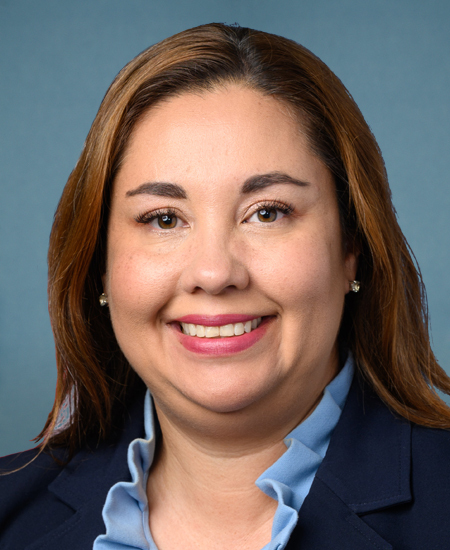
Rep. Yadira Caraveo
Sponsored bills
Maddy summaryThis bill updates the National Construction Safety Team Act by replacing "building" with "structure" throughout the law and adjusting related terminology. It ensures investigations cover a broader range of infrastructure, including bridges, dams, and other structures, not just traditional buildings. Key provisions clarify that investigations may defer to other federal agencies when appropriate and update references to "engineering standards, practices, and building codes." The bill does not change funding levels, maintaining the $5 million annual appropriation for the National Institute of Standards and Technology through 2027. It focuses on modernizing the law's language to reflect current infrastructure safety needs without introducing new requirements.
Maddy summaryThe Weather Act Reauthorization Act of 2023 reauthorizes and updates the Weather Research and Forecasting Innovation Act of 2017, focusing on improving weather forecasting capabilities across multiple domains. It authorizes annual funding for research and development in tornado, hurricane, and atmospheric river forecasting, with specific provisions for enhancing data collection from commercial sources and improving public communication of weather warnings. The bill establishes programs to improve data assimilation practices, support agricultural and water management applications, and enhance the National Oceanic and Atmospheric Administration's computing resources for weather modeling. This legislation directly affects the National Oceanic and Atmospheric Administration, its partners in the weather enterprise, and the public who rely on weather forecasts and warnings for safety and planning.
Maddy summaryThe Captive Primate Safety Act prohibits the import, export, sale, transport, breeding, or possession of certain nonhuman primates - including chimpanzees, gorillas, monkeys, and their hybrids - in interstate or foreign commerce. It directly affects private owners, breeders, and commercial traders of these animals, with limited exceptions for pre-enactment animals (requiring registration with the U.S. Fish and Wildlife Service and restrictions on breeding/sale) and registered research facilities. The law amends the Lacey Act to add these primates to prohibited species lists, effective upon enactment, with regulations to be issued within 180 days. Enforcement remains active even if regulations are delayed, ensuring immediate prohibitions on commercial trade and possession.
Maddy summaryThis bill amends the Trafficking Victims Protection Act of 2000 to require the U.S. government to evaluate whether foreign countries actively investigate, prevent, and prosecute financial crimes that help human traffickers operate. It directly affects how foreign governments are assessed in the annual U.S. anti-trafficking report, potentially influencing their ranking (e.g., Tier 1, Tier 2). The key provision adds a new criterion to this report, specifically examining countries' enforcement of financial crime measures tied to trafficking. This change aims to strengthen international accountability for financial aspects of human trafficking without altering existing U.S. laws or programs.
Maddy summaryThis bill establishes a NOAA program to improve wildfire forecasting, detection, and communication by developing new tools and technologies. It requires NOAA to collaborate with federal, state, and local agencies to better predict wildfire behavior, monitor fire conditions, and communicate risks to emergency officials. The program will focus on improving fire weather forecasting, smoke dispersion modeling, early wildfire detection, and developing new sensing technologies. The bill also creates an interagency committee to coordinate wildfire forecasting efforts and authorizes $5 million for unmanned aircraft systems and $15 million for a fire weather testbed.
Maddy summaryHR 8042, the Community Paramedicine Act of 2024, creates a federal grant program to fund community paramedicine programs that use specially trained paramedics to address health needs outside emergency settings. The program provides up to $25 million annually (2025-2029) for grants to eligible entities like local governments, emergency medical services agencies, and Tribal communities, with 15% reserved for Tribal programs. Funds can cover hiring staff, purchasing equipment, training, and public outreach to improve access to care for underserved populations while reducing unnecessary use of emergency resources. Grantees must report on program outcomes, and the Secretary must submit a report to Congress detailing cost-savings and best practices for rural and underserved communities.
Maddy summaryHR 4389, the Migratory Birds of the Americas Conservation Enhancements Act of 2023, amends the Neotropical Migratory Bird Conservation Act to increase federal funding for conservation projects from 25% to 33.3% of eligible costs. It extends the authorization period for funding through 2028 and requires the Secretary to submit a report to Congress on collaboration efforts with partners. This bill directly affects conservation organizations, state governments, and local groups that receive federal funds to protect migratory birds traveling between the U.S. and the Neotropics (Central and South America, Caribbean). The changes provide more stable financial support and accountability for existing bird conservation programs.
Maddy summaryThis bill establishes a federal program to help low-income households pay water and wastewater bills. It targets households receiving certain federal benefits (like SNAP, SSI, or LIHEAP) or with income below 150% of the poverty level, defined by state-specific thresholds. The program provides grants to states and tribes based on poverty rates or high housing cost burdens, with $1.1 billion authorized, to cover arrearages and service rates for eligible households. Funds cannot replace existing assistance but may supplement other programs, and the program will transfer to the EPA after a specified date.
Maddy summaryHR 8061, the Crime Victims Fund Stabilization Act of 2024, ensures stable funding for the Crime Victims Fund by directing certain False Claims Act collections into it from 2024 through 2029. Specifically, it adds a provision requiring that amounts collected under the False Claims Act (excluding whistleblower rewards and government reimbursement for damages) be deposited into the fund during this period. This directly affects crime victims who rely on the fund for services like counseling and emergency aid, as it prevents potential shortfalls in funding. The bill makes a concrete policy change by redirecting specific federal civil penalties into the fund, rather than altering the fund's existing purposes or eligibility rules.