

Maddy summaryHR 9278 extends the deadline for small businesses to file beneficial ownership information with FinCEN. It amends U.S. Code Section 5336 to give small business concerns (as defined in the Small Business Act) until December 31, 2025, to submit required ownership details. This change applies directly to small businesses already subject to the reporting rules under the Corporate Transparency Act. The bill provides a one-year extension from the original deadline, allowing these businesses additional time to comply with the filing requirement.
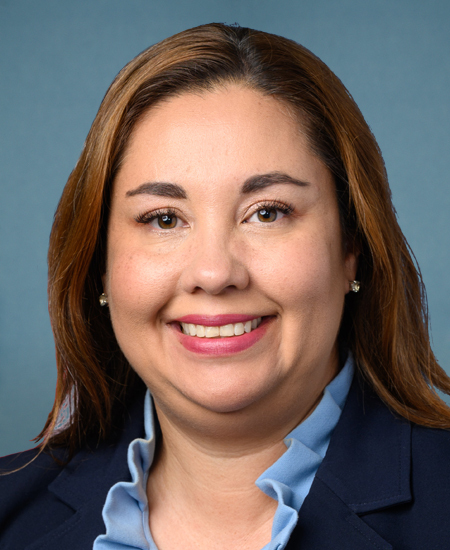
Rep. Yadira Caraveo
Sponsored bills
Maddy summaryHR 9274, the SHAWL Act, establishes two new Smithsonian museums: the National Museum of the American Latino and the American Women’s History Museum. It authorizes both museums to be located within the National Mall’s "Reserve" area, overriding prior restrictions, and requires federal agencies managing potential sites to transfer jurisdiction to the Smithsonian after notifying congressional committees. The bill mandates that both museums accurately represent diverse cultures, histories, and viewpoints within Latino and women’s communities through exhibits and programs, requiring input from a broad range of community experts. It also requires the Smithsonian to submit biennial reports to Congress detailing compliance with these representation requirements.
Maddy summaryThis bill provides financial aid for higher education to public safety officers and their children. Eligible officers (with at least 8 years of service who commit to 4 more years) or their children under age 27 can receive payments based on VA benefit formulas. Aid covers up to 45 months of full-time study, prioritizes applicants with financial need through a sliding scale, and allows officers to transfer eligibility to children. The program aims to support recruitment and retention in law enforcement by easing education costs.
Maddy summaryThe National Quantum Initiative Reauthorization Act (HR 6213) reauthorizes and expands federal efforts to advance quantum information science, engineering, and technology in the United States. It establishes new programs including National Quantum Centers, Quantum Testbeds, and a Quantum Reskilling and Workforce Coordination Hub to develop domestic talent and infrastructure. The bill creates an International Quantum Cooperation Strategy to build partnerships with allies while restricting collaboration with "foreign countries of concern" as defined in the legislation. It provides funding for research, workforce development, and commercialization of quantum technologies across government agencies, universities, and industry. The act aims to strengthen U.S. leadership in quantum technology through coordinated federal investment and international collaboration.
Maddy summaryHR 9119, the Alzheimer's Law Enforcement Education Act of 2024, requires the Department of Justice to create an online training course for law enforcement officers on interacting with people with Alzheimer's disease or dementia. The course covers recognizing symptoms, effective communication techniques, avoiding physical restraints, and identifying abuse or neglect. It mandates that state departments count this training toward required certification hours for law enforcement, correctional, and probation officers. The bill directly affects these officers by requiring new training standards for handling encounters with individuals experiencing dementia. The training must be developed within one year of the bill's enactment.
Maddy summaryHRES 1375 is a non-binding resolution recognizing extreme weather as a critical threat to children's health and well-being, emphasizing that children face unique vulnerabilities due to their developing bodies, higher exposure to pollutants, and heightened risks during events like heatwaves, wildfires, and poor air quality. It expresses Congress's view that solutions must be developed and deployed rapidly and equitably, with specific attention to children's physical and mental health needs. The resolution suggests concrete measures such as improved air filtration in schools, accessible public alerts for extreme heat, expanded cooling centers, and better infrastructure for child-friendly emergency spaces, though it does not create new laws or mandates.
Maddy summaryHR 9104, the Access to Birth Control Act, requires pharmacies that normally stock contraception to provide birth control or related medications without delay if in stock, or immediately offer alternatives like referrals to other pharmacies or expedited orders if unavailable. It prohibits pharmacists from intimidating customers, misrepresenting availability, breaching confidentiality, or refusing to fill valid prescriptions for birth control. Pharmacies violating these rules face civil penalties up to $1,000 per day or private lawsuits. The law specifically applies to pharmacies that routinely carry contraception and excludes cases where a valid prescription is missing or payment cannot be made. It aims to address documented refusals to dispense birth control, particularly following the Dobbs decision.
Maddy summaryThis bill requires the Department of Veterans Affairs (VA) to implement annual sensitivity training for all VA employees handling military sexual trauma (MST) claims, including staff processing claims, communicating about evidence, and making decisions. It also mandates that the VA automatically obtain a veteran's service records when processing MST claims and directs the VA to report on improving training for contracted health care professionals who examine veterans filing such claims. The changes aim to ensure VA staff and contracted medical personnel are properly trained to avoid retraumatizing veterans during the claims process. The VA must submit a report to Congress within 90 days detailing current training and future plans for these requirements.
Maddy summaryHR 8571, the Protecting America’s Working Dogs Act of 2024, creates a federal grant program to cover medical costs for retired working dogs. It provides grants of up to $575,000 annually to eligible nonprofits that primarily care for qualified working dogs, including retired military and law enforcement dogs, and service dogs for veterans or retired law enforcement officers. The grants fund covered medical expenses like vet visits, procedures, and medications, directly easing financial burdens on handlers who take in these dogs after retirement. Nonprofits must meet strict criteria, including spending at least 70% of funds on medical assistance for these dogs.
Maddy summaryHR 4152, the Space Resources Institute Act, requires NASA and the Commerce Department to jointly submit a report within 180 days of enactment on establishing a Space Resources Institute. The report must evaluate options for the institute’s structure (virtual vs. physical), potential partnerships with universities and the mining industry, and strategies to develop space resources like minerals or energy in outer space. It focuses on advancing U.S. space capabilities by reducing technological risks and supporting future missions. The bill does not create the institute but mandates this study to inform future congressional decisions.