

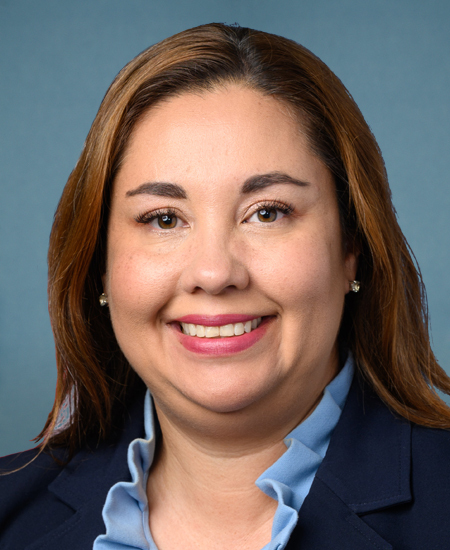
Photo of Yadira Caraveo
D United States House · District 8 · Colorado

Rep. Yadira Caraveo

Compare
Total votes
1,210
all sessions
Attendance
97%
35 missed
Near the chamber average
With party
89%
of cast votes
Lower than 83% of chamber peers
Bipartisan score
6%
crosses aisle rarely
Higher than 79% of chamber peers
Sponsored
659
bills & resolutions
Higher than 90% of chamber peers
Committees
0
assignments
659 bills and resolutions

Sponsored bills

Total
659
Primary
41
Co-sponsor
618
This page
659
matching current filters
Co-sponsor HR 7285
In committee · United States House · Co-sponsor
To amend the Food and Nutrition Act of 2008 to increase the Federal cost share for the supplemental nutrition assistance program administration to improve staffing and retention.

Maddy summaryThis bill would require the federal government to cover 100% of state agencies' costs for SNAP program staff salaries, hiring, and training. It sets minimum wage standards for SNAP workers at the same rate as federal employees, with annual updates tied to federal pay increases. States must submit detailed wage plans for federal approval. The policy aims to improve staffing stability and retention for SNAP operations.

In committee Aug 30, 2024 1 co-sponsor
Co-sponsor HR 3507
In committee · United States House · Co-sponsor
Yes In My Backyard Act

Maddy summaryHR 3507, the "Yes In My Backyard Act," requires local governments receiving certain federal Community Development Block Grants (CDBG) to report on their progress toward adopting specific housing-friendly land use policies. It directly affects cities and counties that administer CDBG funds by mandating they submit plans tracking 22+ policy changes, such as allowing duplexes in single-family zones, reducing parking requirements, or streamlining permits. The bill does not require local governments to adopt these policies but requires them to document their current status and plans for implementation. This reporting mechanism aims to identify barriers to affordable housing without binding local governments to specific actions. The requirement applies to CDBG recipients starting one year after the bill's enactment.

In committee Aug 30, 2024 1 co-sponsor
Co-sponsor HRES 1015
In committee · United States House · Co-sponsor
Expressing support for the designation of February 17 through February 24, 2024, as "National FFA Week", recognizing the important role of the National FFA Organization in developing the next generation of globally conscious leaders who will change the world, and celebrating the 10th anniversary of the "Give the Gift of Blue" program, which has donated more than 17,000 of the iconic FFA jackets to FFA members in need.

This resolution supports the designation of National FFA Week. It also (1) recognizes the important role of the National FFA Organization (Future Farmers of America) in developing the next generation of globally conscious leaders who will change the world; and (2) celebrates the 10th anniversary of the Give the Gift of Blue program, which has donated more than 17,000 FFA blue jackets to FFA members in need.

In committee Aug 29, 2024 1 co-sponsor
Co-sponsor HR 7015
In committee · United States House · Co-sponsor
CAREERS Act

Maddy summaryHR 7015, the CAREERS Act, expands federal funding for workforce training programs to better serve rural communities. It modifies eligibility to include career and technical education schools and requires training programs to align with specific rural industry sectors like broadband, healthcare, agriculture, manufacturing, and water services. The bill mandates grantees to report on employment outcomes for participants and addresses rural workforce challenges such as worker displacement and youth migration. This directly affects rural workforce development boards, training providers, and workers in designated rural industries seeking job skills and career pathways.

In committee Aug 29, 2024 1 co-sponsor
Primary HR 9398
In committee · United States House · Lead sponsor
Passport Processing Efficiency Act

Maddy summaryHR 9398, the Passport Processing Efficiency Act, prioritizes processing for U.S. passport applicants who submit applications in person at passport agencies or by mail over those using third-party couriers. It requires the State Department to annually report on how many processing slots are allocated to couriers at each agency, changes to those allocations, and citations issued against couriers for violating procedures. The bill also mandates a public website section for applicants to submit complaints about couriers and for the State Department to publish aggregated complaint summaries and remediation steps. This directly affects passport applicants using third-party services and aims to increase transparency in passport agency operations.

In committee Aug 23, 2024 0 co-sponsors
Co-sponsor HR 8652
In committee · United States House · Co-sponsor
Veterans Border Patrol Training Act

Maddy summaryHR 8652, the Veterans Border Patrol Training Act, creates a 5-year pilot program to train and hire transitioning U.S. military service members and veterans as U.S. Customs and Border Protection Border Patrol agents. The program, established within 180 days of enactment, uses the existing Department of Defense SkillBridge Program (under 10 U.S.C. § 1143) to transition service members into Border Patrol roles, requiring collaboration between Homeland Security, Defense, and Veterans Affairs. The bill mandates annual reports to Congress tracking participation statistics, including breakdowns by military status (active duty, reserve, officers, enlisted, veterans, spouses, dependents). It does not change existing hiring rules but provides a dedicated pathway for military-connected individuals to enter Border Patrol service. The program automatically terminates after five years.

In committee Aug 22, 2024 1 co-sponsor
Co-sponsor HR 9390
In committee · United States House · Co-sponsor
Sober Act of 2024

Maddy summaryHR 9390, the Sober Act of 2024, creates a federal grant program to fund state, local, and tribal 24/7 sobriety programs. These programs require individuals with substance use disorders (often linked to alcohol-related offenses) to abstain from alcohol/drugs, undergo regular testing (twice daily or via continuous monitoring), and face immediate sanctions for violations like jail time or community service. The bill authorizes $10 million annually from 2025-2029 to cover up to 80% of program costs, with recipients required to report on participation, testing outcomes, and program expenses. It aims to expand access to structured sobriety support as a complement to existing measures like ignition interlock devices for DUI offenders.

In committee Aug 21, 2024 1 co-sponsor
Co-sponsor HR 9347
In committee · United States House · Co-sponsor
STOP TRANQ Act

Maddy summaryThe STOP TRANQ Act requires the U.S. government to include xylazine - a veterinary sedative increasingly mixed with illicit drugs - in the annual International Narcotics Control Strategy Report. This amendment adds xylazine to the list of substances tracked alongside illicit fentanyl, improving data collection on its role in drug trafficking and public health threats. The bill focuses on standardizing international reporting to better assess global drug trends, without altering enforcement or funding. It directly affects the Department of State and the Office of National Drug Control Policy, which produce the report.

In committee Aug 13, 2024 1 co-sponsor
Primary HR 9304
In committee · United States House · Lead sponsor
Stomach Cancer Prevention and Early Detection Act

Maddy summaryHR 9304, the Stomach Cancer Prevention and Early Detection Act, requires the National Cancer Institute (NCI) to conduct a comprehensive review of stomach cancer incidence, risk factors, screening effectiveness, and current awareness efforts in the U.S. The review will specifically examine high-risk populations, the role of H. pylori infection, endoscopic screening methods, and public and provider education. Within 18 months of enactment, the NCI must submit a report to Congress with recommendations for defining high-risk groups, improving detection methods for precancerous conditions, establishing screening guidelines, and enhancing research and prevention efforts. This bill directly affects public health systems, healthcare providers, and individuals at higher risk for stomach cancer by aiming to inform future prevention strategies and screening protocols.

In committee Aug 6, 2024 0 co-sponsors
Co-sponsor HR 9317
In committee · United States House · Co-sponsor
Counter Terrorgram Act of 2024

Maddy summaryThe Counter Terrorgram Act of 2024 requires the Department of Homeland Security (DHS) and the Director of National Intelligence to produce annual assessments of terrorism threats posed by terrorist organizations using foreign messaging apps like Telegram, TikTok, and WeChat. The first assessment must be submitted within 180 days of enactment, followed by five annual reports analyzing past radicalization efforts, financial support through app features, and recommendations for addressing threats. These reports must be coordinated with privacy and civil liberties offices to ensure legal compliance and will be posted publicly online, with classified details limited to intelligence sources. DHS must also share threat information with state and local fusion centers and incorporate their input into national security efforts.

In committee Aug 6, 2024 1 co-sponsor
Showing 121 to 130 of 659 bills
Previous 1 … 12 13 14 … 66 Next