

Maddy summaryHR 9807, the Strengthening Access to Contraceptive Care Act, provides $100 million annually (2025-2029) in federal grants to health centers in areas with limited contraceptive access, known as "contraceptive deserts." The bill directly supports clinics, hospitals, and community organizations in underserved communities - particularly impacting Black, Hispanic, and low-income individuals who face barriers to contraception - by funding expanded services. Grants cover essential activities like patient education on all contraceptive methods, purchasing supplies (including emergency contraception), telehealth services, hiring staff, and creating culturally appropriate materials. This aims to increase provider capacity to offer comprehensive, person-centered contraceptive care without coercion, addressing documented gaps where over 19 million people lack access to full contraceptive options.
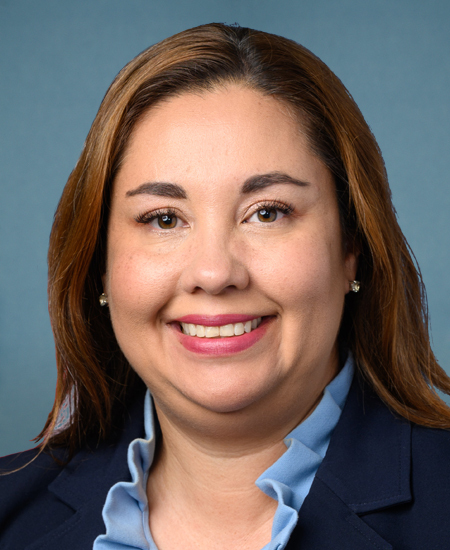
Rep. Yadira Caraveo
Sponsored bills
Maddy summaryHR 9752, the Tren de Aragua Southwest Border Security Threat Assessment Act, requires the Secretary of Homeland Security to submit two reports within 180 days of enactment. The first report (threat assessment) must detail Tren de Aragua's criminal threats, origins, methods, funding, and presence along the southwest border (U.S.-Mexico border), while the second report (strategic plan) must outline DHS's strategy to counter these threats through interagency coordination and disruption efforts. The bill directly affects DHS, intelligence agencies, and border law enforcement by mandating specific analysis and planning to address this transnational criminal group. It does not change existing laws but establishes a process for evaluating and responding to security vulnerabilities.
Maddy summaryHR 8119, the PEARL Act, establishes a 3-year pilot program at U.S. Customs and Border Protection (CBP) to adopt therapy dogs from local animal shelters for emotional support of CBP personnel. The bill requires the Secretary of Homeland Security to create the program within 60 days of enactment, train shelter dogs as therapy dogs, and reimburse CBP for related costs. It also authorizes $1,000,000 for CBP's existing Support Canine Program. The bill directly affects CBP officers and staff by introducing a new emotional wellness resource through therapy dog interactions.
Maddy summaryThe Next Generation Pipelines Research and Development Act creates a new demonstration initiative to fund research on advanced pipeline technologies. It authorizes $45 million for fiscal year 2024 (increasing to $50 million annually through 2028) for competitive grants to eligible entities including universities, research organizations, and private companies. The program will focus on developing technologies for leak detection, novel pipeline materials, sensor systems, computational modeling, and cybersecurity to improve pipeline safety and efficiency. The initiative requires coordination with the Department of Transportation and National Institute of Standards and Technology, and will be administered through a National Pipeline Modernization Center.
Maddy summaryHR 1719, the Honoring Our Fallen Heroes Act of 2023, establishes a presumption that certain cancers diagnosed in public safety officers (like police and firefighters) are work-related if linked to their duties. It defines 22 specific cancers (including lung, mesothelioma, and WTC-related cancers) as "exposure-related," allowing officers or their families to receive benefits without proving direct work connection, provided they were diagnosed within 15 years of leaving active service. The bill also creates a process for adding new cancers to the list based on scientific evidence, requiring the Bureau to review petitions and make decisions within 180 days. This applies to deaths or disabilities occurring on or after January 1, 2023, directly affecting officers who developed covered cancers during service.
Maddy summaryThe DISPOSE Act authorizes the U.S. government to partner with Colombia, Mexico, and Peru to safely destroy chemicals used in illegal drug production. It requires the State Department, in coordination with Justice and Defense, to create a detailed implementation plan within 90 days - including timelines, budgets, and measurable goals - and provide annual progress reports to Congress on chemical destruction efforts. The initiative aims to prevent these chemicals from re-entering drug manufacturing, free storage space for future seizures, and reduce environmental harm from hazardous waste.
Maddy summaryThis bill clarifies Medicare rules to allow doctors to provide certain critical medications directly in their offices without extra administrative hurdles. It specifically amends a Medicare provision (Section 1877(b)(2) of the Social Security Act) to remove a requirement that drugs furnished in-office must follow specific administrative rules, effective May 11, 2023. The bill also directs the removal of conflicting Medicare guidance published in 2021 and 2023, which had previously restricted this practice. This change directly affects Medicare beneficiaries (seniors) and doctors' offices that supply covered medications during patient visits. It streamlines access to necessary drugs by eliminating an unnecessary barrier to in-office medication administration under Medicare.
Maddy summaryHR 3433, the "Give Kids a Chance Act of 2024," requires pharmaceutical companies developing certain cancer drugs to conduct pediatric studies if the drugs target molecular pathways relevant to childhood cancers. It directly affects drug manufacturers submitting new applications for cancer treatments, particularly those combining previously approved adult cancer drugs or containing a single new active ingredient. The bill amends FDA regulations to mandate these pediatric investigations only when specific conditions are met, such as when a drug's molecular target is relevant to pediatric cancer growth. The FDA must issue implementing guidance within 12 months, and reports to Congress will track implementation and effectiveness starting 2 years after enactment.
Maddy summaryHRES 1480 is a symbolic resolution recognizing Hispanic Restaurant Week (September 22-October 3, 2024) and honoring Hispanic restaurant owners and employees. It acknowledges their economic contributions to the U.S. restaurant industry, citing data that 25.9% of restaurant workers are Hispanic and Hispanic-owned restaurants represent the second-highest number of Hispanic-owned businesses. The resolution does not create new policies or funding but formally celebrates their role during Hispanic Heritage Month. It was introduced by 14 House members and referred to the Energy and Commerce Committee.
Maddy summaryHR 9742 extends the expiration dates for multiple existing Department of Veterans Affairs (VA) programs and authorities from 2024 to 2025. It specifically updates deadlines for health care services (like copayment collection, nursing home care, rural health access, and animal therapy programs), memorial headstone eligibility, homeless veteran assistance programs, and administrative authorities (such as transportation services and IG subpoena powers). These extensions ensure continuity of current VA services for veterans without creating new benefits or changing program eligibility. The bill directly affects veterans receiving VA healthcare, burial benefits, housing assistance, and homeless support services.