

Maddy summaryHRES 1594 is a symbolic House resolution supporting the designation of "National Rural Health Day," observed annually on the third Thursday of November. It recognizes rural health care providers and the communities they serve, highlighting challenges like hospital closures, workforce shortages, and access barriers in rural areas. The resolution expresses the House's commitment to improving rural health care accessibility and affordability but does not create new laws or allocate funding. It is a non-binding gesture aligning with an existing observance since 2011, organized by the National Rural Health Association.
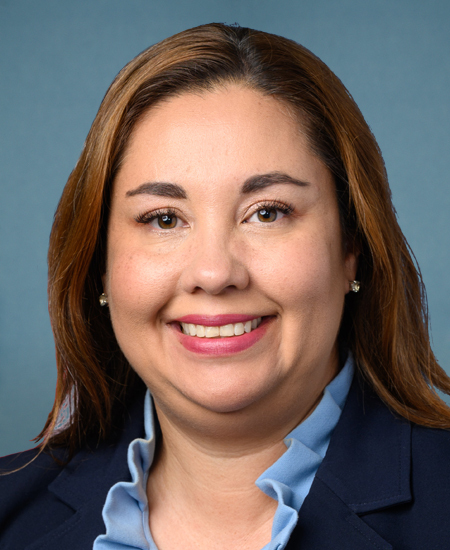
Rep. Yadira Caraveo
Sponsored bills
Maddy summaryThis bill provides $75 million in federal funding (2025-2029) to expand innovative housing construction. It directs the Secretary of Housing and Urban Development to award grants to states, which will then provide subgrants to small construction companies (under 500 employees) using industrialized methods like modular, panelized, or 3D-printed housing. Key provisions include incentives of up to $6,000 per unit (higher for affordable/energy-efficient units) and a $50,000 fixed incentive if projects include at least 10% affordable housing. The bill directly affects small housing developers and aims to reduce construction costs and time while increasing affordable housing options.
Maddy summaryHR 6441, the Ranching Without Red Tape Act of 2023, simplifies minor improvements for ranchers on federal grazing lands managed by the U.S. Forest Service (USFS) and Bureau of Land Management (BLM). It requires the agencies to issue regulations within one year allowing permittees to make small fixes - like repairing fences, wells, or water pipelines - without lengthy approvals. Specifically, ranchers must notify the local manager 30 days in advance; if no response is given within that period, the work can proceed. The bill also mandates that agencies respond to improvement requests within 30 days and expedite approved projects using existing administrative tools. This directly affects ranchers holding grazing permits on USFS and BLM lands.
Maddy summaryHR 10029, the National Human Trafficking Database Act, requires covered state law enforcement agencies (like state bureaus of investigation) to collect and report anonymized human trafficking data to the Office for Victims of Crime. The bill mandates annual reporting of county-level data on trafficking prosecutions, survivor services, and anti-trafficking organizations, with the data published online by the Department of Justice starting in 2026. It includes strict confidentiality protections for survivors and allocates $51 million annually (2025-2028) for implementation. The database will provide public, aggregated data to inform anti-trafficking efforts without enabling funding decisions based on the collected information.
Maddy summaryHRES 1537 is a non-binding House resolution condemning Hamas' October 7, 2023, attacks on Israel, which killed over 1,200 people and took 251 hostages, including 7 Americans still held captive. It calls on Hamas to immediately surrender, cease attacks, and release all hostages unconditionally, while reaffirming Israel's right to self-defense. The resolution also urges international organizations to condemn Hamas' actions and address the global surge in antisemitism following the attacks. As a symbolic statement, it does not create new laws or alter policy but expresses congressional position. The bill specifically references the ongoing captivity of seven U.S. citizens: Edan Alexander, Itay Chen, Sagui Dekel-Chen, Gadi Haggai, Judith Weinstein Haggai, Omer Neutra, and Keith Siegel.
Maddy summaryHRES 1530 is a non-binding House resolution recognizing former President Jimmy Carter's 100th birthday. It honors his life, public service, and key achievements, including his presidency (noting the Panama Canal treaties, Camp David Accords, and founding the Departments of Education and Energy), post-presidency work with the Carter Center, and decades of humanitarian efforts. The resolution does not create new laws or affect any policies; it is purely commemorative. It formally acknowledges his contributions to Georgia, the U.S., and global peace efforts, including his 2002 Nobel Peace Prize. This symbolic gesture has no direct impact on citizens or government operations.
Maddy summaryThe TREAT Water Act establishes a federal demonstration program to test new methods for treating "produced water" (water brought up during oil and gas drilling) at development sites. It directs the Energy Secretary to prioritize innovative, first-of-a-kind treatment approaches and technologies that reduce environmental harm. The program requires consultation with agencies like the EPA and Interior Department to evaluate these methods before broader adoption. This directly affects oil and gas operators at active drilling sites by creating a pathway to trial cleaner water management practices.
Maddy summaryHCONRES 131 is a symbolic resolution recognizing the wage gap between Latina women and White, non-Hispanic men in the U.S. workforce. It highlights that Latina women working full-time earn 58 cents for every dollar earned by White, non-Hispanic men, with an average lifetime earnings loss of over $1.2 million. The resolution designates October 3, 2024, as "Latina Equal Pay Day" to draw attention to this disparity, citing Bureau of Census data showing the gap has persisted for decades. It does not create new laws or policies but formally acknowledges the economic impact on Latina women and their families.
Maddy summaryHRES 1517 is a symbolic resolution expressing the U.S. House of Representatives' support for designating October 7-12, 2024, as "National 4-H Week." It does not create new laws or policies but formally recognizes 4-H, the nation’s largest youth development program, which engages nearly 6 million young people through hands-on learning in health, science, and leadership. The resolution highlights 4-H’s role in developing youth leadership via its network of volunteers, land-grant universities, and the Department of Agriculture. It has no direct impact on any specific group or program, as it only serves as a formal acknowledgment of the organization’s work.
Maddy summaryThis resolution expresses the U.S. House of Representatives' support for designating October 1, 2024, as "National Latino Physician Day." It highlights that only 6% of U.S. physicians are Latino or Latina - despite Latinos making up over 1 in 4 Americans by 2050 - and notes that increasing physician diversity improves health outcomes for Latino communities. The resolution does not create new policies but formally supports raising awareness about the need to grow Latino/Latina representation in medicine. It specifically endorses the day's designation to promote diversity in the medical field and acknowledges the 2022 observance of the day. As a non-binding resolution, it has no legal effect but serves as a symbolic statement.