

Reverse Transfer Efficiency Act of 2021 This bill allows the release of a transfer student's educational records from an institution of postsecondary education where a student earned credit for coursework to an institution of postsecondary education where the student was previously enrolled in order to apply the student's coursework and credits toward completion of a recognized postsecondary credential, such as an associate's degree. Specifically, the bill allows the Department of Education to provide funding to an institution of postsecondary education that releases a student's records of postsecondary coursework and credits without the consent of the student or the student's parents if the student provides written consent prior to receiving the credential.
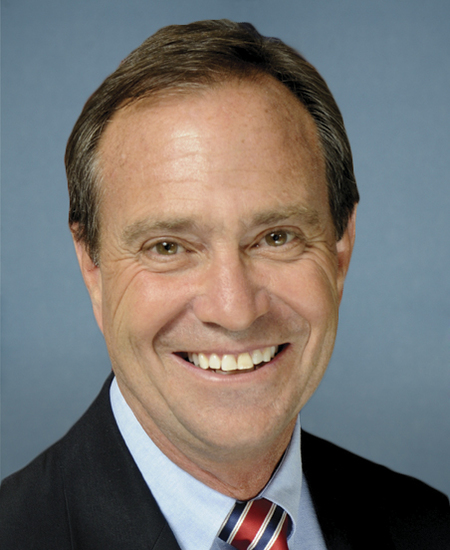
Rep. Ed Perlmutter
Sponsored bills
Repairing Existing Public Land by Adding Necessary Trees Act or the REPLANT Act This bill directs the Department of Agriculture (USDA) annually for each of the 10 years after enactment of this bill to transmit to Congress an estimate of the sums necessary to be appropriated, in addition to the funds available from other sources, to replant and otherwise treat an acreage equal to the acreage to be cut over that year, plus a sufficient portion of the backlog of lands found to be in need of treatment to eliminate the backlog within the 10-year period. After such 10-year period, USDA shall transmit annually to Congress an estimate of the sums necessary to replant and otherwise treat all lands being cut over and maintain planned timber production on all other forested lands in the National Forest System to prevent the development of a backlog of needed work larger than the needed work at the beginning of the fiscal year. Each reforestation activity included in a renewable resource assessment shall be carried out in accordance with applicable Forest Service management practices and definitions, including definitions relating to silvicultural practices and forest management. The Forest Service shall, based on recommendations from regional foresters, create a priority list of reforestation projects that primarily take place on priority land, promote effective reforestation following unplanned events, and may include activities to ensure adequate and appropriate seed availability. USDA shall give priority to projects on the priority list.
Department of Energy Science for the Future Act This bill supports specified research and development activities of the Department of Energy (DOE) Office of Science. The bill establishes various programs, including a basic energy sciences research and development program; a program of research and development for the application of advanced computing practices to foundational and emerging research problems in chemistry and materials science; a web-based platform to develop and provide access to a database of computed information on known and predicted materials properties and computational tools to accelerate breakthroughs in materials discovery and design; a biological systems science and climate and environmental science research and development program; research and development activities in biomolecular characterization and imaging science; earth and environmental systems science research; a coastal zone research initiative; an initiative focused on the development of engineered ecosystems; a program to implement a strategy for achieving computing systems with capabilities beyond exascale computing systems; a program of fundamental research and development of energy efficient computing and data center technologies relevant to advanced computing applications; a Quantum User Expansion for Science and Technology program or QUEST program; a collaborative research and development program of fusion energy technologies; a research program in elementary particle physics and advanced technology research and development to improve the understanding of the fundamental properties of the universe, including constituents of matter and energy and the nature of space and time; research activities on the nature of the primary contents of the universe, including the nature of dark energy and dark matter; a research program to discover and understand various forms of nuclear matter; a program across the DOE for the production of isotopes, including the development of techniques to produce isotopes, that the DOE determines are needed for research, medical, industrial, or related purposes; a midscale instrumentation program to enable the development and acquisition of novel, state-of-the-art instruments ranging in cost from $1 million to $20 million each that would significantly accelerate scientific breakthroughs at user facilities; and a high intensity laser research initiative. The DOE Office of Science shall continue to leverage U.S. participation in the Large Hadron Collider and prioritize expanding international partnerships and investments in the Long-Baseline Neutrino Facility and Deep Underground Neutrino Experiment. DOE shall support construction of a Facility for Rare Isotope Beams to advance the understanding of rare nuclear isotopes and the evolution of the cosmos. DOE shall expand opportunities to increase the number, diversity, equity, and inclusion of highly skilled science, technology, engineering, and mathematics (STEM) professionals working in DOE mission-relevant disciplines and broaden the recruitment pool to increase diversity, including expanded partnerships with Historically Black Colleges, Tribal Colleges, Minority Serving Institutions, emerging research institutions, and scientific societies. DOE shall establish within the DOE Office of Science, a cross-cutting research initiative to leverage the federal government's innovative analytical resources and tools, user facilities, and advanced computational and networking capabilities in order to prevent, prepare for, and respond to emerging infectious diseases, including COVID-19. DOE may not carry out gain-of-function research of concern.
National Science Foundation for the Future Act This bill reauthorizes the National Science Foundation (NSF) through FY2026 and authorizes programs and activities at the NSF. The bill establishes requirements for the NSF, including to enter into a contract with the National Academies of Science, Engineering, and Medicine to assess the status and opportunities for Pre-K through 12 science, technology, engineering, and mathematics, including computer science, (STEM) education research; award grants to establish no fewer than three multidisciplinary Centers for Transformative Education Research and Translation to support research and development of STEM education innovations; provide grants for research on programming that engages students in grades Pre-K through 8, including underrepresented and rural students, in STEM in order to prepare such students to pursue degrees or careers in STEM; award grants to support research and development activities to encourage greater collaboration and coordination between institutions of higher education and industry to enhance education, foster hands-on learning experiences, and improve alignment with workforce needs; award grants to establish a network of centers for science and technical education; award grants to advance research on the nature of learning and teaching at community colleges; award grants to establish traineeship programs for graduate students who pursue artificial intelligence-related research leading to a masters or doctorate degree; award grants to carry out research on the cyber workforce; establish a cybersecurity workforce data initiative; carry out a national initiative to facilitate the development of networks and partnerships to broaden participation in STEM studies and careers of groups historically underrepresented in such studies and careers; maintain a Research Security and Policy office to coordinate all research security policy issues across the NSF; award grants to support research to improve our understanding of the climate system and related human and environmental systems; support research to significantly advance our understanding of the food-energy-water system; award grants to advance knowledge of risk assessment and predictability to improve our ability to predict extreme events and natural hazards, including pandemics; and award grants to support basic research that will accelerate innovation to advance critical minerals mining strategies and technologies. The bill also establishes within the NSF a Directorate for Science and Engineering Solutions to advance research and development solutions to address societal and national challenges.
Equal Access to Contraception for Veterans Act This bill prohibits the Department of Veterans Affairs from requiring payment from a veteran for any contraceptive item that is required to be covered by health insurance plans without a cost-sharing requirement.
Safe Schools Improvement Act of 2021 This bill requires states to direct their local educational agencies (LEAs) to establish policies that prevent and prohibit bullying and harassment of elementary and secondary school students. In particular, these policies must prohibit bullying and harassment based on race, color, national origin, sex, sexual orientation, gender identity, disability, or religion. Further, LEAs must provide (1) students, parents, and educational professionals with annual notice of the conduct prohibited in their disciplinary policies; (2) students and parents with grievance procedures that target such conduct; and (3) the public with annual data on the incidence and frequency of that conduct at the school and LEA level. The Department of Education must conduct and report on an independent biennial evaluation of programs and policies to combat bullying and harassment in elementary and secondary schools. The National Center for Education Statistics must collect state data to determine the incidence and frequency of the conduct prohibited by LEA disciplinary policies.
America's Red Rock Wilderness Act This bill designates specified lands in the following areas of Utah as components of the National Wilderness Preservation System: (1) Great Basin, (2) Grand Staircase-Escalante, (3) Moab-La Sal Canyons, (4) Henry Mountains, (5) Glen Canyon, (6) San Juan-Anasazi, (7) Canyonlands Basin, (8) San Rafael Swell, and (9) Book Cliffs and Uinta Basin. The bill sets forth administrative requirements for (1) the exchange of state-owned lands within such areas, (2) federal reservation of water rights, (3) measurement of setbacks for roads with adjacent wilderness, (4) authorized livestock grazing, and (5) withdrawal of such lands from disposition under certain public land laws.
National Community Violence De-Escalation Training Act of 2021 This bill establishes and expands grant programs for training on de-escalating violence and crisis situations involving individuals with behavioral health issues. Specifically, the Substance Abuse and Mental Health Services Administration (SAMHSA) must award grants to state and local governments, educational institutions, nonprofits, faith institutions, or small businesses for community-based training to de-escalate and avoid violence. As part of this grant program, SAMHSA must also establish an advisory board and develop relevant training standards. The training funded by the grants must apply evidence-based de-escalation and avoidance techniques to potentially violent scenarios that are regularly encountered by community members, including public safety officers, public transit operators, educators, and faith leaders. Additionally, the training must address implicit bias, crisis interventions for those experiencing mental health or substance use issues, and other specified topics. The bill also expands and extends through FY2027 mental health awareness training grants.
Medicare Dental, Vision, and Hearing Benefit Act of 2021 This bill provides for Medicare coverage of dental, vision, and hearing care. Coverage includes (1) routine dental cleanings and exams, basic and major dental services, emergency dental care, and dentures; (2) routine eye exams, eyeglasses, and contact lenses; and (3) routine hearing exams, hearing aids, and exams for hearing aids. With respect to such care, the bill establishes special payment rules, limitations, and coinsurance requirements.
Federal Retirement Fairness Act This bill modifies the federal civilian service that is creditable service under the Federal Employees Retirement System (FERS). Specifically, it expands the nondeduction service that may be creditable under FERS. Nondeduction service is federal service where an employee's pay is not subject to retirement deductions (e.g., service under a temporary appointment). Currently, nondeduction service performed before January 1, 1989, is creditable under FERS so long as a deposit is made into the retirement fund to cover the period of nondeduction service. This bill allows nondeduction service performed on or after January 1, 1989, to be creditable under FERS so long as a deposit is made into the retirement fund.