

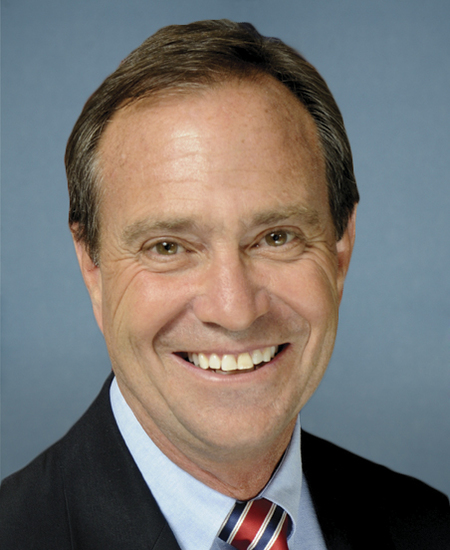
Tax-Free Pell Grant Act This bill excludes from gross income, for income tax purposes, any amount received as a federal Pell Grant. It also expands the definition of qualified tuition and related expenses under the American Opportunity and Lifetime Learning tax credit to include computer or peripheral equipment (up to a maximum of $1,000), child and dependent care expenses, and course materials.
Rep. Ed Perlmutter
Sponsored bills
Better Care Better Jobs Act This bill establishes programs and provides funds for state Medicaid programs to improve home- and community-based services (HCBS), such as home health care, personal care, case management, and rehabilitative services. Specifically, the bill provides funds for the Centers for Medicare & Medicaid Services to award planning grants, develop quality measures, and provide technical assistance to states regarding specified HCBS improvements, particularly with respect to access, utilization, and the associated workforce. The bill also increases the Federal Medical Assistance Percentage (i.e., federal matching rate) for HCBS in states that develop plans and meet specified benchmarks for improvements. The bill also makes permanent (1) the Money Follows the Person Rebalancing Demonstration Program (a grant program to help states increase the use of HCBS for long-term care and decrease the use of institutional care), and (2) certain provisions regarding Medicaid eligibility that protect against spousal impoverishment for recipients of HCBS.
Expanding Health Care Options for Early Retirees Act This bill establishes a Medicare buy-in option for certain qualifying first responders. Specifically, the bill allows first responders aged 50 to 64 to enroll in Medicare if they are retired or otherwise separated from service due to a disability. The Centers for Medicare & Medicaid Services (CMS) must determine enrollment periods and set premiums for the buy-in option established under the bill, in accordance with specified requirements. The CMS must also award grants to states and nonprofit organizations for outreach and enrollment activities relating to the buy-in option.
Therapeutic Fraud Prevention Act of 20 21 This bill prohibits commercial conversion therapy, which is a practice or treatment designed to change a person's sexual orientation or gender identity or otherwise change behaviors, thoughts, or expressions related to gender or sexual attraction. This prohibition does not apply to treatment that assists an individual undergoing a gender transition or facilitates identity exploration and development.
Green Neighborhoods Act of 2021 This bill requires the Department of Housing and Urban Development (HUD) to establish incentives that encourage participants in HUD programs to increase energy efficiency in new and existing housing.
Healthy Future Students and Earth Pilot Program Act of 2021 This bill establishes a pilot program for providing 100% plant-based food and milk options in school meals. The Department of Agriculture must award up to 50 grants to school food authorities. Recipients may use funds for activities including training food service personnel on serving 100% plant-based options and covering additional costs of buying plant-based foods and milks.
Vanessa Guillén Military Justice Improvement and Increasing Prevention Act This bill modifies the process and policy related to the disposition of charges and convening of courts-martial for certain sexual assault cases and other specified offenses under the Uniform Code of Military Justice (UCMJ). Among other elements, the bill provides that the determinations on the preferral, disposition, and referral of charges for specified offenses under the UCMJ must be made by a commissioned officer of the Armed Forces who is designated as a court-martial convening authority (in grade O-6 or higher) and who is available for detail as trial counsel, has significant trial experience, and is outside the chain of command of the member subject to the charges.
Central Liquidity Facility Enhancement Act This bill permanently extends waivers applicable to the National Credit Union Administration Central Liquidity Facility with respect to membership, credit extension, and borrowing requirements. Currently, these waivers expire on December 31, 2021. The facility extends credit to member credit unions experiencing liquidity shortfalls. Specifically, the bill increases the facility's maximum borrowing authority, allows corporate credit unions to borrow for additional purposes, expands agent memberships, and revises the requirements for loan approval.
Minority Business Resiliency Act of 2021 This bill permanently authorizes the Minority Business Development Agency (MBDA) and requires the MBDA to promote and administer programs that assist the development of minority business enterprises (MBEs). Specifically, the bill requires the MBDA to (1) provide assistance to MBEs in domestic and foreign markets by making available specified resources, (2) promote the position of MBEs in local economies, and (3) collect data on the causes of MBE success or failure and research how economic conditions affect the development of MBEs. The bill establishes formal processes for the MBDA Business Center Program and the MBDA Rural Business Center Program through which business centers provide programs and services to support MBEs. The bill also establishes new initiatives to promote economic resiliency for minority businesses, including (1) an annual forum to review problems and programs relating to capital formation by MBEs, (2) a study and report on alternative financing solutions for MBEs, and (3) entrepreneurship education grants for certain institutions of higher education to develop and implement entrepreneurship curricula. Further, the bill establishes grants for (1) certain nonprofit organizations that provide services to MBEs as one of their primary activities, and (2) MBEs for the purpose of supporting MBEs or helping MBEs remain in business. The Government Accountability Office must report on the programs carried out pursuant to the bill.
This bill requires assessments and reports concerning foreign violent white supremacist extremist organizations. The National Counterterrorism Center within the Office of the Director of National Intelligence must report to Congress an intelligence assessment on threats to the United States associated with foreign violent white supremacist extremist organizations, including whether foreign governments provide any support for such white supremacist organizations. The center must share the assessment with (1) the appropriate federal departments and agencies; (2) state, local, and tribal law enforcement officials; and (2) the appropriate foreign governments. The center must also report to Congress on the use of federal laws, regulations, and policies to counter threats to the United States and U.S. persons associated with such white supremacist organizations. The Privacy and Civil Liberties Oversight Board must report to Congress an assessment of the impacts on privacy and civil liberties relating to the use of such federal laws, regulations, and policies, and recommendations to mitigate such impacts. Unclassified versions of the assessment and reports required by this bill must be publicly available.