No Federal Funding for Confederate Symbols Act This bill prohibits federal funds from being used for the creation, maintenance, or display of any Confederate symbol on federal public land or other federal property. An exception to such prohibition is provided (1) if the use of such funds is necessary to allow for the removal of the Confederate symbol to address public safety; or (2) in the case of a Confederate symbol created, maintained, or displayed in a museum or educational exhibit.
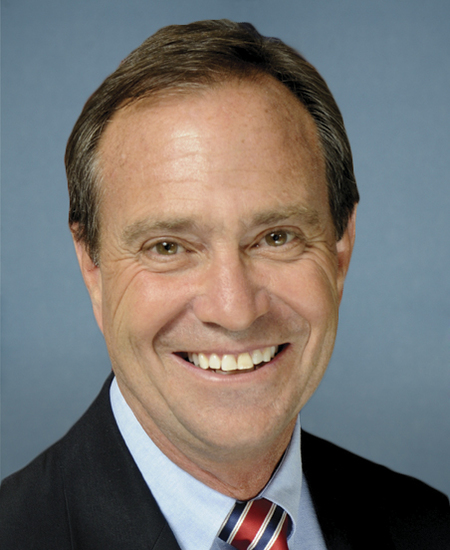
Rep. Ed Perlmutter
Sponsored bills
9/11 Responder and Survivor Health Funding Correction Act This bill increases funding for and otherwise modifies a federal program that provides medical monitoring and treatment to responders and survivors who suffer from health conditions related to the September 11, 2001, attacks on the World Trade Center. Among the changes, the bill allows certain health care providers other than physicians to determine whether an individual's health condition is related to the attacks, and it establishes a research program to study the impacts of the attacks on health and educational outcomes of individuals who were 21 years of age or younger when the attacks occurred.
This resolution supports proceeding with the 2020 Olympic and Paralympic Games in a safe and secure environment. The resolution commends the government of Japan and the Tokyo metropolitan government for their efforts to commit resources to provide such an environment.
Saving America's Pollinators Act of 2021 This bill addresses the use of certain pesticides and the health and status of native bees and other pollinators. First, the bill requires the Environmental Protection Agency (EPA) to establish a Pollinator Protection Board to develop an independent review process for pesticides that pose a threat to pollinators and their habitats. All active ingredients and pesticide products that contain one or more specified neonicotinoid pesticides must be deemed to generally cause unreasonable adverse effects to the environment. Under the bill, the registration of all uses of neonicotinoid pesticides must be immediately and permanently canceled. The EPA must revoke any tolerance or exemption that allows the presence of a neonicotinoid pesticide, or any pesticide chemical residue that results from neonicotinoid pesticide use, in or on food. The continued sale or use of existing stocks of neonicotinoid pesticides is prohibited, and the EPA may not register any such pesticides under the Federal Insecticide, Fungicide and Rodenticide Act. The bill requires the Department of the Interior, the EPA, and the Department of Agriculture to coordinate monitoring activities and report on the health and population status of native bees and other pollinators. Finally, a state or federal agency may be granted an exemption to use neonicotinoid pesticides if the board votes that use of the pesticide is warranted (1) in an emergency situation to avert significant risk to threatened or endangered species, (2) to quarantine invasive species, or (3) to protect public health.
Closing the Meal Gap Act of 202 1 This bill revises the requirements for calculating Supplemental Nutrition Assistance Program (SNAP) benefits. The bill increases the minimum SNAP benefit and requires benefits to be calculated using the value of a low-cost food plan. The Department of Agriculture (USDA) must determine the requirements for the low-cost food plan, which is the diet required to feed a family of four, consisting of a man and a woman 19-50 years of age, a child 6-8 years of age, and a child 9-11 years of age. USDA must (1) reevaluate and publish the market baskets of the plan by January 1, 2027, and every five years thereafter, based on current food prices, food composition data, consumption patterns, and dietary guidance; and (2) make adjustments to the plan to account for household size, changes in the cost of the diet, and the costs of food in specified areas. The bill modifies the requirements for calculating household income to determine SNAP eligibility by (1) authorizing a standard medical expense deduction for households containing an elderly or disabled member, and (2) eliminating the cap on the excess shelter expense deduction. The bill eliminates certain work requirements for SNAP. The requirements apply to able-bodied adults who are ages 18-49 and have no dependent children. The bill allows Puerto Rico, American Samoa, and the Northern Mariana Islands to participate in SNAP. Currently, the three territories receive block grants instead of participating in SNAP.

Space Resources Institute Act This bill directs the National Aeronautics and Space Administration (NASA) to submit a report on the merits of, and options for, establishing an institute related to space resources in order to advance NASA's objectives for maintaining U.S. preeminence in space.
Special Guerrilla Unit Veterans Service Recognition Expansion Act of 2021 This bill expands eligibility for internment in national cemeteries to include certain individuals who the Department of Veterans Affairs determines served honorably with a special guerilla unit or irregular forces in Laos in support of the U.S. Armed Forces between February 28, 1961, and May 7, 1975. Such individuals are eligible if, at the time of their death, they resided in the United States and were a U.S. citizen or alien lawfully admitted for permanent residence in the United States.
Close the Medigap Act of 2021 This bill (1) expands guaranteed issue rights with respect to Medigap policies (Medicare supplemental health insurance policies), (2) eliminates certain limitations on Medigap policies for newly eligible Medicare beneficiaries, and (3) modifies other provisions related to Medigap policies. (Guaranteed issue rights require that a policy be offered to any eligible applicant without regard to health status.)
Rebuilding Economies and Creating Opportunities for More People Everywhere To Excel Act or the RECOMPETE Act This bill establishes a grant program to assist economically distressed local communities and labor markets that meet specified economic criteria, including employment criteria. The Economic Development Administration (EDA) must award 10-year grants to a local government, tribal government, economic development district, or consortium of local government units located in such areas. Each grant recipient must develop and implement a comprehensive strategy to address the economic challenges specific to the area. The grants may be used to increase employment opportunities, increase local per capita income, support economic development, and develop infrastructure and housing. Additionally, the EDA must periodically evaluate each grant recipient based on certain benchmark criteria and annually report on the implementation of the program. The bill specifies formulas for determining the grant amount for each community or market and the federal share of the cost of each program or activity conducted under the program.
This resolution recognizes the selfless dedication to fellow citizens displayed through heroic actions across the country and calls upon the Members of the House of Representatives and all people of the United States to observe a National Heroes Day.