

Maddy summaryHR 9005, the Teacher, Principal, and Leader Residency Access Act, amends the Higher Education Act to allow Federal Work-Study funds to support paid residency programs for aspiring teachers, principals, and school leaders. The bill enables schools to use these funds for compensation during residency training and travel, prioritizing students eligible for Federal Pell Grants. It defines a "residency program" as a structured, year-long apprenticeship where participants work alongside mentor educators while completing coursework in teaching or leadership skills, culminating in full state certification. This directly affects school districts facing teacher shortages, especially in high-need subjects and schools serving low-income or minority students, by expanding access to a proven model that increases educator retention. The policy change focuses on funding mechanisms rather than outcomes, making residency participation financially feasible for participants and institutions.
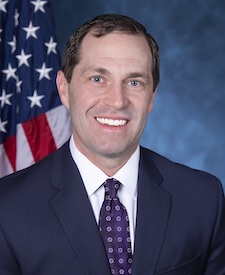
Rep. Jason Crow
Sponsored bills
Maddy summaryThis bill reauthorizes the United States Commission on International Religious Freedom (USCIRF) through fiscal year 2026. It extends the commission's funding authorization from 2023-2024 to 2025-2026 and delays the expiration date of its statutory authorization from September 30, 2024, to September 30, 2026. The bill directly affects USCIRF by ensuring its continued operation and funding without altering its existing mandate or reporting requirements. It is a procedural extension, not a policy change.
Maddy summaryHRES 1355 is a non-binding resolution supporting the designation of July 10 as Journeyman Lineworkers Recognition Day. It honors lineworkers who maintain electrical infrastructure under hazardous conditions, including during disasters, and commemorates Henry Miller, the first president of the International Brotherhood of Electrical Workers, who died on July 10, 1896, while troubleshooting an electrical outage. The resolution encourages public recognition of these workers' contributions but does not create new laws or policies.
Maddy summaryHRES 1350 is a non-binding resolution expressing concern about lead exposure affecting approximately one-third of the world’s children (up to 800 million globally), per WHO and UNICEF data. It calls on the U.S. Agency for International Development (USAID) and relevant agencies to integrate lead exposure prevention into global health, education, and environmental programs, particularly targeting vulnerable communities in low- and middle-income countries. The resolution highlights lead’s irreversible neurological harm to children, its economic costs ($6 trillion globally), and the need for cost-effective interventions like preventing lead in consumer goods and recycling. It does not create new laws but urges existing U.S. international programs to prioritize lead prevention as part of global health and environmental efforts.
Maddy summaryHRES 1349 is a symbolic House resolution recognizing the success of the Food for Peace Act, which provides U.S. humanitarian food aid to global populations facing hunger. It does not create new policy or funding but formally acknowledges the program’s impact - such as reaching 53 million people with emergency aid in 2022 - and highlights global hunger statistics (e.g., 783 million people hungry in 2022). The resolution urges continued U.S. funding prioritization for the program but has no binding effect or direct policy changes. It directly affects no new groups, as it solely expresses congressional support for an existing aid program.
Maddy summaryThe Focus on Learning Act (HR 8993) directs the U.S. Department of Education to study how mobile device use affects students in elementary and secondary schools, examining impacts on learning, mental health, classroom behavior, and school climate. It also establishes a pilot program where school districts can apply for grants to purchase secure containers for storing student mobile devices during school hours, creating a "school environment free of mobile devices." Schools participating in the pilot must maintain communication systems for staff, allow parental contact, and provide exemptions for health needs, students with disabilities, and English learners needing translation. The bill affects all public K-12 schools and requires parental notification before implementing device storage policies. The study results and pilot data will be reported to Congress and made public within two years of enactment.
Maddy summaryHR 8988, the "Get Foreign Money Out of U.S. Elections Act," expands federal law to prohibit foreign-controlled businesses from influencing U.S. elections. It bans contributions or spending by any for-profit business entity where foreign nationals own 50% or more of voting shares, or where foreign entities collectively own 5% or more (or exert control over election activities). Businesses must certify compliance before making election-related spending, including contributions to political committees, and recipients cannot reuse uncertified funds for further election activities. This bill directly affects foreign-owned corporations, partnerships, and similar entities seeking to participate in U.S. elections.
Maddy summaryThis bill amends the Federal Employees' Compensation Act to include physician assistants and nurse practitioners as eligible providers for injured federal workers. It defines "other eligible provider" as a nurse practitioner or physician assistant within their state-authorized scope of practice. The law updates key sections to replace "physician" with "physician or other eligible provider" for treatment, certification, and claim processes. The Secretary must finalize implementing regulations within six months of enactment.
Maddy summaryHR 8923 establishes a dedicated Animal Cruelty Crimes Section within the Department of Justice's Environment and Natural Resources Division to enforce federal animal cruelty laws. The section will coordinate with agencies like the FBI, USDA, and U.S. Marshals to investigate and prosecute animal cruelty cases, which often require specialized handling. It must submit annual reports to Congress detailing prosecutions, convictions, and unfiled investigations, broken down by specific law and state. This bill directly affects federal law enforcement efforts in animal cruelty cases nationwide, aiming to reduce delays and improve enforcement.
Maddy summaryThis bill (HR 2365, Public Law 118-66) directs the U.S. Department of Health and Human Services (HHS) to establish the National Parkinson’s Project. It requires HHS to create and update a coordinated national plan for preventing, diagnosing, treating, and researching Parkinson’s disease and related disorders (including multiple system atrophy and progressive supranuclear palsy), while coordinating federal research and care efforts across agencies like the NIH, CDC, and VA. The law mandates annual progress assessments, an advisory council with patient advocates and diverse experts, and annual reports to Congress on federal Parkinson’s programs and recommendations for improvement. It affects federal agencies managing Parkinson’s-related programs and aims to improve care coordination and research efficiency for patients and caregivers, with the law sunsetting in 2035.